
The most popular advice about YouTube influencer marketing is also the least useful: treat YouTube as an awareness channel, buy reach, report views, and move on. That approach ignores how people use the platform. Viewers search for reviews, tutorials, comparisons, and solutions, then return to the same videos while they research a purchase.
The harder problem isn't finding a creator who can generate attention. It's proving what that attention contributed after the viewer leaves YouTube. A sponsored video may influence a later branded search, direct visit, app install, or purchase that standard last-click reporting assigns somewhere else. Performance teams need creator selection, creative, tracking, and commercial terms built around that reality.
Table of Contents
Why YouTube Outperforms Other Platforms for Performance Marketing
YouTube isn't a television substitute with a comment section. Its strongest performance advantage comes from the combination of creator trust, searchable content, product education, and clickable paths to action. A viewer watching a software walkthrough or camera comparison is doing more than passively consuming an impression. They may be actively narrowing a purchase decision.
That makes the usual cost-per-view comparison incomplete. A short social burst can produce fast exposure, but a useful YouTube video can continue appearing in search and recommendations after publication. The content has a longer commercial life, especially when the creator answers objections that a short ad can't address.
YouTube also has unusual scale among influencer channels. 59% of UK marketers use YouTube for influencer campaigns, while 69% of marketers across Europe do the same, according to Kolsquare's YouTube statistics report. The same source cites 28.4 billion engagements generated by YouTube influencers in the United States in 2024, showing why the platform remains relevant for campaigns that depend on explanation and interaction.
The performance case depends on measurement
A YouTube integration can look expensive if the team evaluates it only through immediate clicks. That model assumes the viewer sees the video, clicks at once, and converts in the same session. Product research rarely works that neatly.
A 2026 analysis of YouTube creator partnerships reported that 40% of video views and 30% of clicks occur more than 30 days after a sponsored video goes live, and recommended a 90-day attribution window for better unit-economic modelling. That doesn't mean every campaign needs the same window. It does mean a short reporting window can systematically undervalue creator content.
MetricYouTubeTikTokInstagramPaid SocialPrimary user behaviorSearch, watch, compare, learnDiscover and scrollDiscover, follow, save, shopTarget, interrupt, convertContent lifespanOften continues through search and recommendationsUsually strongest near publicationDepends on format and distributionUsually tied to active spendProduct educationStrong, especially in long-form videoLimited by shorter viewing patternsModerate, depending on formatControlled by the ad unitConversion pathDescription links, pinned comments, codes, branded searchPlatform-dependent links and landing pathsProduct features, links, profile actionsDirect landing-page clickMain measurement riskDelayed and assisted conversionsFast attention mistaken for intentEngagement mistaken for purchase intentOver-crediting the last click
The practical implication is simple. YouTube works best when the campaign has a clear consideration or conversion hypothesis, not when the team buys a creator solely because the channel has a large audience. Compare creator cohorts and formats using a broader social marketing view, then give YouTube enough time to reveal its delayed contribution.
Practical rule: If a viewer needs to understand the product before buying it, measure YouTube like a sales-assist channel, not like a banner placement.
Choosing the Right YouTube Format for Your Campaign Goals
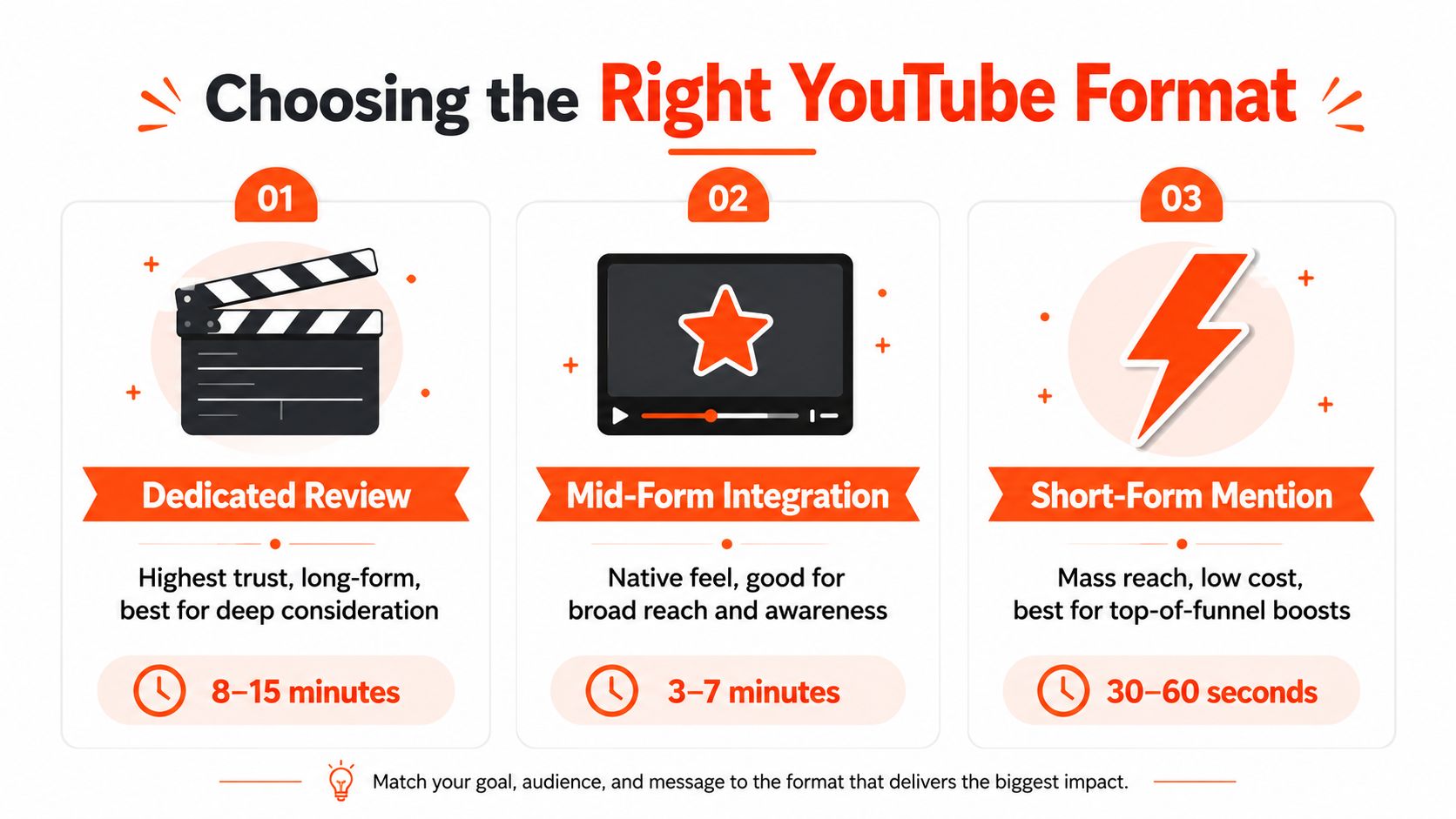
Format determines what the creator can explain, how naturally the product fits, and how much evidence the viewer receives before deciding. A dedicated review gives the brand depth and context. An integration borrows the creator's existing content engine. A Short creates an efficient reminder or discovery layer, but usually can't carry a complicated conversion argument by itself.
The right choice depends on the buying decision. A SaaS platform, financial product, or technical device may need demonstrations and objections handled in sequence. A consumer product with low consideration may benefit more from a natural mention inside a video the audience already wants to watch.
Dedicated reviews
A dedicated review gives the creator the whole narrative. They can introduce the problem, demonstrate the product, compare alternatives, discuss limitations, and explain who should buy it. That depth is valuable for high-consideration categories, where the buyer needs confidence rather than another reminder that the brand exists.
The trade-off is cost and creative risk. A dedicated video takes more planning, product familiarity, and production effort. It can also underperform if the topic doesn't fit the channel's normal editorial pattern. The strongest briefs define the decision the video should help viewers make, then let the creator decide how to structure the explanation.
Integrated sponsorships
An integration places the product inside a planned upload. It generally offers more efficient reach because the video still serves the creator's usual topic, while the sponsor receives a focused segment and a clear call to action.
Placement matters. Early integrations can reach more viewers before audience drop-off, while later integrations may reach a smaller group of highly engaged viewers. Don't choose placement from habit. Test it against the campaign objective and compare conversion quality, not just exposure.
YouTube Shorts
Shorts are useful for discovery, creative testing, reminders, and amplification. They can turn a long-form idea into a concise demonstration or introduce the brand to viewers who won't start with a lengthy review. Their weakness is limited space for nuance, especially when the product requires trust, qualification, or explanation.
Use Shorts as a supporting layer when the core conversion argument lives in long-form content. A campaign can use a Short to create initial interest, a dedicated review to answer objections, and a trackable landing page to capture action. That combination is more coherent than asking every format to produce the same outcome.
How to Select Creators Who Drive Conversions Not Just Views
Subscriber count is a screening signal, not a performance forecast. A channel can have a large subscriber base and still deliver weak commercial results if its current viewers don't match the target market, sponsored content feels unnatural, or the audience came from a different format.
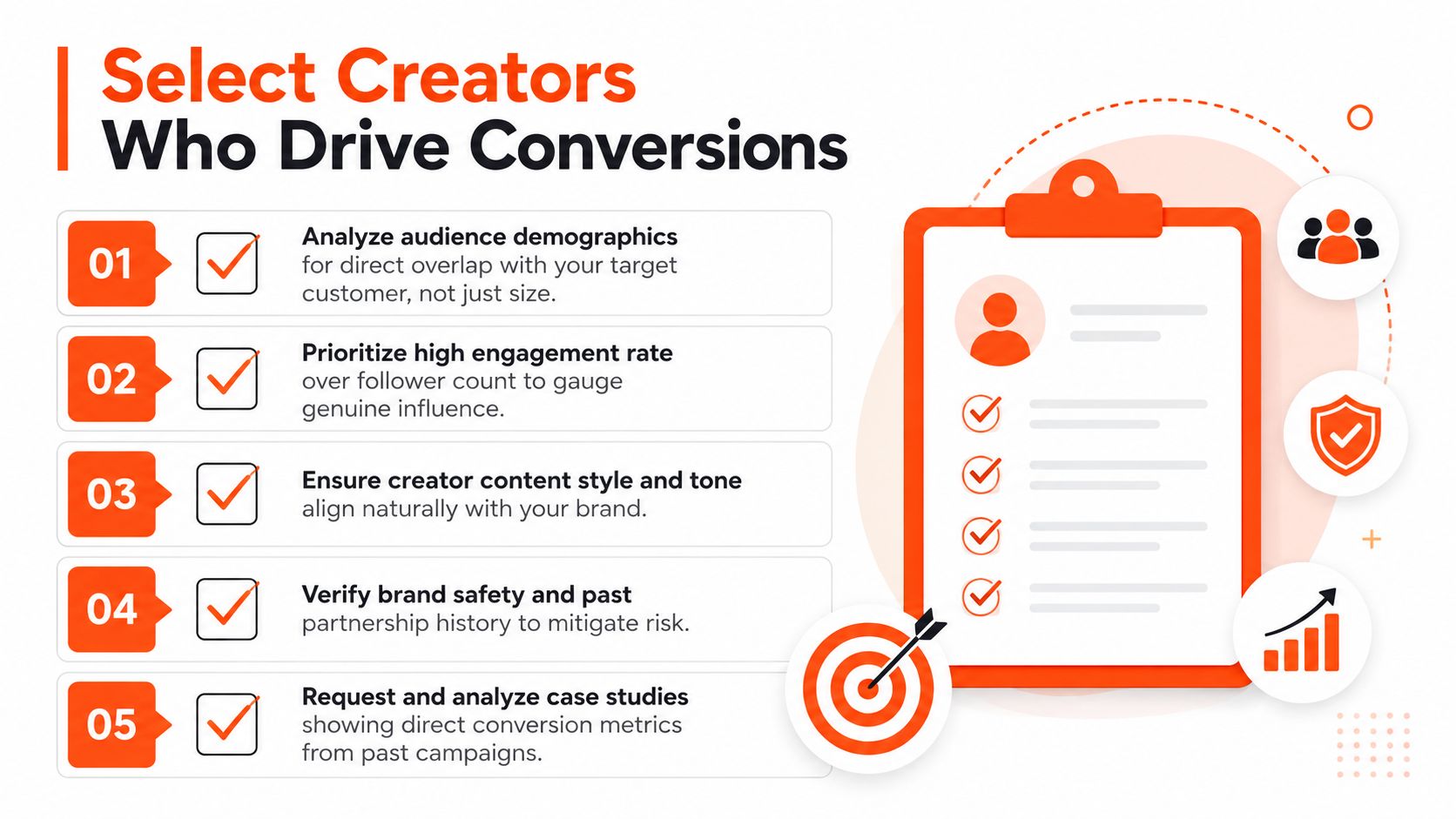
Start with audience fit. Ask for the creator's audience geography, age profile, interests, returning-viewer information, and recent performance by content type. Then read the comments on ordinary uploads and sponsored videos. Look for questions about product use, comparisons, pricing, and real-world problems. Those comments reveal whether viewers treat the creator as an entertainer, an educator, or a buying adviser.
A practical creator review
Build a shortlist, then score each creator consistently instead of selecting the most familiar name.
- Audience alignment: Confirm that the viewers live in the markets where the product is available and resemble the intended customer.
- Content authority: Prefer creators who already explain, test, compare, or teach within the product category.
- Sponsored-content fit: Compare previous sponsored uploads with the creator's normal content. A sharp performance decline can indicate weak audience fit or an integration that felt forced.
- Commercial evidence: Request link clicks, code usage, conversion data, or anonymized campaign summaries from earlier partnerships.
- Operational reliability: Check upload consistency, approval processes, disclosure habits, and willingness to share relevant analytics.
Creators whose growth is concentrated in Shorts deserve additional scrutiny. Their subscriber count may not reflect the audience available for a long-form integration. The question isn't whether Shorts viewers are valuable. It's whether those viewers also watch the format you're buying.
Audience size gets you into the shortlist. Audience behavior decides whether the creator stays there.
Review a creator's niche authority alongside their commercial history. A specialist who regularly handles the buyer's hardest questions may outperform a broad lifestyle channel with a much larger audience. The mid-tier influencer ROI discussion is useful context, but the decision should still come from your own audience and conversion data.
Don't treat analytics access as a courtesy. If a creator refuses to share any audience or sponsored-performance information, price the partnership as an experiment and limit the commitment. You can't build a serious performance program on impressions you can't qualify.
Writing Briefs That Balance Brand Requirements with Creator Voice
A YouTube brief should protect the business without turning the creator into a voice actor reading corporate copy. Audiences notice when a sponsorship interrupts the creator's normal rhythm. The resulting problem isn't only lower engagement. The audience may also discount the product claim because the endorsement sounds borrowed.
Start the brief with the business objective. “Generate qualified trial starts from viewers evaluating project-management software” gives the creator useful direction. “Mention these twelve features in this exact order” gives them a script they may struggle to deliver naturally.
Separate requirements from interpretation
Use three levels of guidance:
- Non-negotiables: Include required disclosures, legally approved claims, product naming, offer terms, prohibited claims, and the primary call to action.
- Useful direction: Share the audience problem, priority benefits, proof points, product demonstration requirements, and suggested placement.
- Creative freedom: Leave the hook, story, humor, pacing, examples, and visual treatment to the creator unless a genuine brand or compliance issue prevents it.
A discovery call before the final brief often produces better creative than another round of edits. Ask the creator how they would introduce the product, where it belongs in the video, what objections viewers may raise, and which demonstrations fit their usual style. Their answers can expose a stronger angle than the initial brand concept.
A brief that creators can use
Include the campaign objective, audience, product facts, approved claims, disclosure language, required links, code details, deadline, review stages, usage rights, and escalation contact. For dedicated videos, add the proposed title angle, search themes, product access requirements, and a concept-approval step before filming.
Keep revision requests precise. “The product section feels too short” is not actionable. “Please make the setup demonstration clearer and retain the approved pricing language” tells the creator what needs to change without rewriting their personality.
The best brief leaves the creator with a clear job and a meaningful amount of control. Your brand owns accuracy and compliance. The creator owns the delivery that makes viewers keep watching.
Setting Up Attribution That Captures YouTube's Delayed Impact
A viewer can watch a review on Monday, search the brand on Wednesday, compare alternatives on Friday, and purchase after returning through a direct visit. A last-click report may assign that conversion to organic search or direct traffic. The creator influenced the decision, but the report has no simple way to show it.
This is why YouTube needs a deliberate measurement design before publication. The tracking system should identify the creator, video, format, placement, and offer while also collecting evidence from people who don't click immediately.
Build several identification paths
Use a unique UTM-tagged URL for every creator and placement. Put the link near the top of the description and repeat the call to action in a pinned comment when appropriate. Give each creator a distinct promo code as a second identifier, but don't treat code redemptions as the complete result because many viewers remember the brand without remembering the code.
Add a post-purchase survey question such as, “Where did you first hear about us?” Keep the options specific enough to distinguish a YouTube creator from generic YouTube discovery. Survey responses won't capture every conversion, but they can reveal assisted demand that clickstream reporting misses.
A blended dashboard should separate:
- Direct response: Tracked clicks, code uses, sign-ups, installs, or purchases.
- Assisted response: Survey-attributed conversions, branded-search movement, and post-view behavior.
- Incrementality evidence: Geographic, audience, or creator-level comparisons designed to estimate what changed beyond existing demand.
Don't assign every later conversion to the creator. That creates the opposite error. Use a consistent attribution rule, disclose its limits, and compare the rule against controlled tests whenever the budget allows.
Use the right window for the decision cycle
The available evidence argues against treating the first few days as the final answer. A 2026 industry analysis said traditional attribution tools risk causing brands to cut about 40% of top YouTube creators, because those systems can undervalue delayed creator-driven conversions.
Attribution windowTech reviewsBeauty and skincareFinance and SaaSGaming and appsShort windowCaptures immediate buyers, misses research-led purchasesCaptures impulse response, misses repeat considerationMisses longer evaluation cyclesCaptures fast installs, misses later returnExtended windowReveals search and comparison effectsCaptures delayed product testing and purchaseBetter suited to multi-touch decisionsCaptures delayed installs and re-engagementBlended viewCombines links, codes, surveys, and liftSeparates direct response from assisted demandConnects creator influence to pipeline qualityDistinguishes volume from retained users
The exact window should follow the product's buying cycle, but YouTube partnerships often need more patience than standard paid-social reporting. A longer window doesn't make weak creative look good. It gives strong creative a fair chance to receive credit.
Measuring Campaign Performance Beyond Vanity Metrics
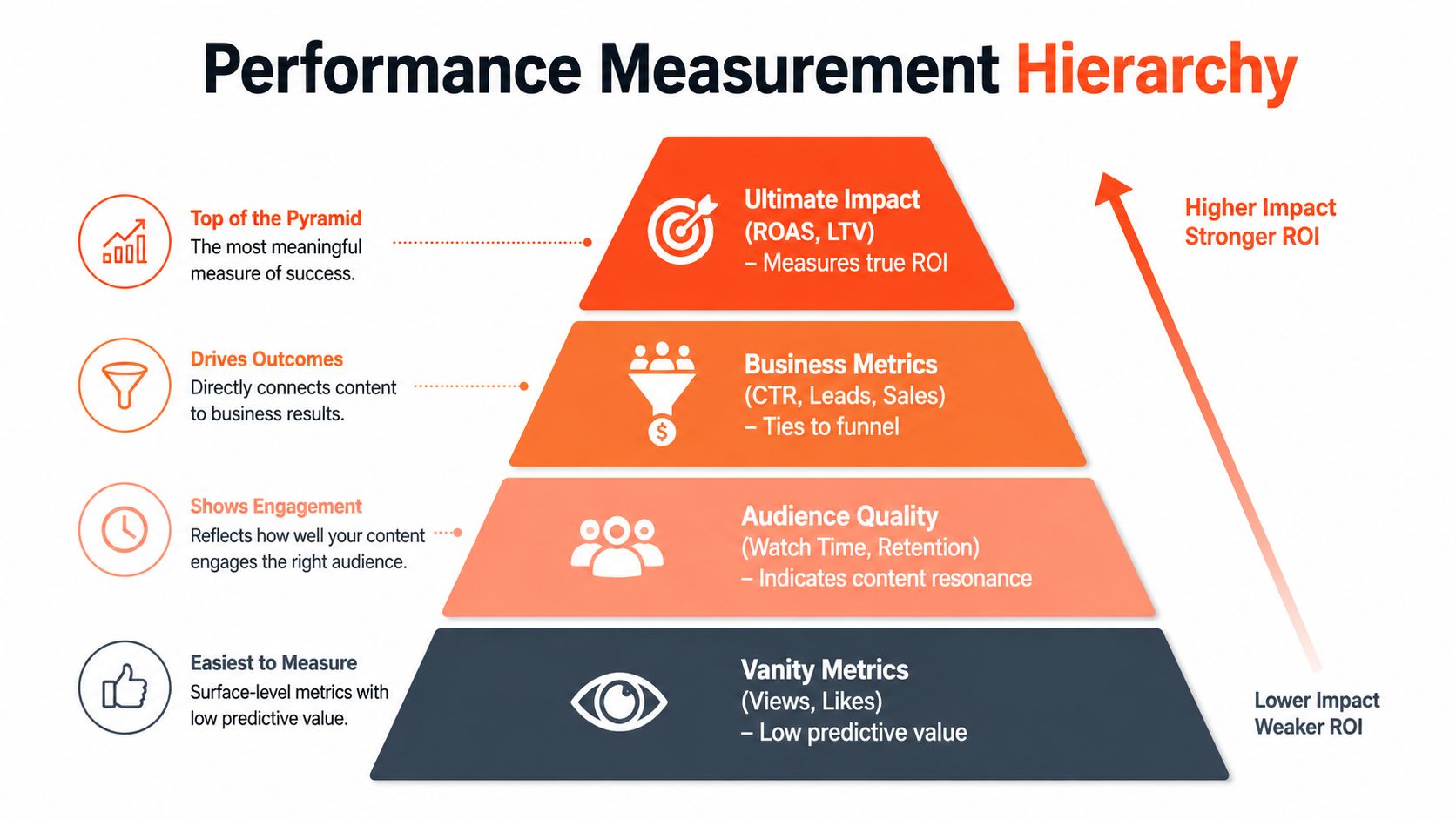
Views are useful for delivery. They aren't proof of business impact. Likes and subscriber growth can indicate audience response, but they don't tell a growth team whether the campaign generated qualified demand or profitable customers.
A useful scorecard moves upward through four layers. The lower layers help diagnose content. The upper layers determine whether you should renew the creator.
The four measurement layers
Delivery metrics include views, reach, impressions, and completion behavior. These answer whether the creator delivered the purchased exposure.
Audience-quality metrics include watch time, retention through the sponsored segment, comment quality, and returning-viewer behavior. These help explain whether the audience stayed long enough to hear and process the message.
Business metrics include link clicks, landing-page sessions, leads, installs, purchases, revenue, CPA, and ROAS. These connect the video to the commercial funnel.
Long-term value includes repeat purchases, retained app users, customer quality, and lifetime value by creator cohort. A creator who produces fewer initial conversions may still deserve renewal if those customers remain more valuable.
Turn reporting into decisions
Create a scorecard with a primary KPI and supporting diagnostics for each campaign objective. For a direct-response SaaS campaign, conversions and qualified trials may carry the most weight, while retention and audience fit explain whether the result can scale. For a launch campaign, reach may matter more, but the team should still track branded demand and assisted action.
Review performance in two moments. Early data helps identify obvious delivery problems, such as the creator placing the integration after most viewers leave. Later data should incorporate the extended attribution period described above.
A creator report should end with a decision, not a screenshot.
Ask which creator to renew, which format to change, which placement to test, and which audience segment to exclude. A measurable influencer ROI framework can help teams connect those choices to commercial reporting, but the underlying discipline matters more than the dashboard vendor. If the team can't explain what it will do differently after reading the report, it isn't measuring performance yet.
Structuring Deals That Align Creator and Brand Incentives
A flat fee pays for delivery. It doesn't necessarily encourage the creator to improve the hook, place the call to action clearly, or keep the product relevant after publication. Flat fees still make sense for awareness campaigns and early creator tests, especially when conversion history doesn't exist. For mature partnerships, a hybrid deal usually creates a better conversation.
Use a guaranteed base fee for production and access, then add a performance component tied to a clearly defined action. The action might be an install, qualified lead, purchase, or revenue threshold. Set the tracking method before signing, including the URL, code, attribution window, refund treatment, reporting cadence, and payment timing.
Deal modelStructureBest forRisk allocationFlat feeFixed payment for agreed deliverablesAwareness and initial testsBrand carries most performance riskAffiliatePayment tied to tracked conversions or revenueProven direct-response creatorsCreator carries more delivery riskHybridBase fee plus commission or bonusesOngoing performance partnershipsRisk is sharedTiered hybridBase fee plus escalating rewards at agreed thresholdsCreators with reliable historical dataBoth parties benefit from upside
Don't ask creators to accept unlimited uncertainty. Explain the base fee as payment for planning, filming, editing, and distribution. Explain the bonus as a way to reward measurable business impact. A tiered structure can also prevent the negotiation from becoming a binary choice between a high guaranteed fee and an unattractive commission-only offer.
YouTube budgets are increasingly material. Industry reporting places YouTube at roughly 15% to 25% of global influencer spend, making it the third-largest platform by budget allocation, according to InfluencerFee's 2025 YouTube statistics analysis. That scale makes incentive design more important, not less.
Social Cloud plans and manages creator campaigns across YouTube and other major platforms, combining creator selection, briefs, tracking links, promo codes, post-purchase surveys, and performance reporting. If you need to replace view-based reporting with per-creator attribution and outcome-linked fees, visit Social Cloud to discuss a measurable YouTube influencer marketing program.