
Most advice about performance based influencer marketing starts with the wrong question: “How do we get more reach?” Reach matters, but it doesn't tell you whether a creator can generate installs, qualified actions, revenue, or profitable repeat customers. A creator campaign becomes a performance channel only when the commercial model, creative brief, attribution system, and optimization rules all point toward a defined business outcome.
That shift creates real tension. Outcome-linked fees can reduce a brand's upfront risk, but they can also make creators cautious about taking on campaigns they can't control. Aggressive conversion targets may improve accountability, yet they can push content toward hard-selling formats that weaken trust. The work isn't choosing performance over brand. It's designing a system where both can survive.
Table of Contents
- Start with the economics
- Vet for audience and commercial fit
- Brief the outcome, not the script
- Contract and report without handoffs
Why Influencer Marketing Is Now a Performance Channel
Influencer marketing isn't limited to awareness anymore. Growth teams can plan creator activity around conversions, revenue, installs, leads, and return on ad spend, then compare those outcomes with other paid acquisition channels. The important change isn't that every creator placement suddenly converts well. It's that marketers can now structure campaigns so each placement has a measurable commercial job.
Industry benchmarks help explain why the category has attracted more serious media budgets. Multiple 2026 industry roundups report an average return of $5.78 for every $1 spent, equal to 578% ROI, with top-performing campaigns reaching $18 to $20 per dollar and some optimized programs reporting higher returns, as summarized by Influee's influencer marketing statistics roundup. Those figures are benchmarks, not promises. They show why brands increasingly expect creator programs to carry explicit return targets rather than rely on impressions alone.
A historical shift is visible in formal media effectiveness research. The IPA's 2025 influencer marketing report recorded an influencer short-term ROI index of 99, close to the all-channel average of 100. Its longer-term ROI index reached 151, while longer-term sales contribution reached 6.2%. The same report measured short-term sales contribution at 4.5%, indicating that creator activity can contribute both immediate sales and effects that accumulate over time.
What changes for growth teams
Treating creators as performance media changes the operating brief. Instead of buying a post and reviewing likes afterward, the team defines:
- The outcome: An install, qualified action, purchase, or attributable revenue.
- The economics: A target CPI, CPA, or ROAS range that reflects margin and customer value.
- The decision rule: What gets paused, revised, amplified, or extended.
- The evidence: Creator-level tracking that separates organic activity from paid amplification.
That last point is where many programs fail. A campaign can produce attractive engagement and still lose money. A smaller creator can look unremarkable on reach but generate efficient conversions from a tightly matched audience. Social Cloud's market report is useful background for teams evaluating how creator activity fits into a broader marketing mix.
Accountability doesn't eliminate brand value
A direct-response framework shouldn't force every creator to behave like a coupon distributor. The IPA findings support a broader view: creator marketing can produce near-term outcomes while also contributing to longer-term commercial value. The practical implication is to judge creators against the role they were hired to perform.
A conversion creator needs a clear path to action. A trusted category voice may be valuable because their content improves demand before someone clicks. Strong programs keep those roles distinct instead of forcing every placement into the same last-click report.
Traditional Influencer Deals vs Performance-Based Models
A flat-fee partnership buys agreed deliverables. A performance-based partnership ties at least part of the creator's compensation to a defined outcome. Neither model is automatically superior. The right choice depends on how much control the brand has over the conversion path, how much creative risk the creator is taking, and whether the campaign's objective is measurable within a reasonable attribution window.
Flat fees make sense when a brand is buying a specific creative asset, a launch moment, or access to a creator's established audience. They also give the creator predictable economics, which can protect production quality and make the partnership easier to plan. The weakness is obvious: the brand carries most of the downside if the content gets attention but doesn't create action.
Performance terms move some financial risk to the creator. That can improve alignment when the creator has strong audience-product fit and meaningful control over the CTA, offer, and placement. It becomes less fair when the brand controls the landing page, checkout, pricing, approval process, or tracking setup, then holds the creator responsible for every conversion failure.
| Dimension | Traditional Flat-Fee | Performance-Based |
|---|---|---|
| Risk allocation | Brand pays for agreed exposure or assets regardless of outcome | Brand links some payment to installs, actions, revenue, or ROAS |
| Creator income | Predictable before publishing | Variable and dependent on tracked results |
| Creative freedom | Usually negotiated around deliverables and brand requirements | Can narrow if creators optimize aggressively for conversion |
| Best fit | Brand lift, launches, premium storytelling, and asset production | Direct response, app acquisition, ecommerce, and measurable lead generation |
| Optimization | Often happens after the campaign through content analysis | Can happen during the campaign by creator, offer, platform, or placement |
| Main failure mode | Strong-looking content with weak commercial accountability | Unfair attribution, distorted creative, or creators rejecting excessive risk |
The strongest compromise is often hybrid
A lean base fee plus a performance component can protect both sides. The base acknowledges the creator's production time, audience access, and opportunity cost. The variable component rewards outcomes the creator can reasonably influence.
That structure only works when the contract defines the basics clearly: what counts as a conversion, which attribution source has priority, how cancellations or refunds are handled, when reporting closes, and whether paid amplification is included. “Performance-based” is not a contract. It's a label that needs operational detail.
Practical rule: Don't transfer conversion risk to a creator until you've tested the conversion path yourself.
A flat fee still has a place when the brand's primary goal is reach or brand memory. Performance terms work better when the product has a short, trackable path to action and the creator's audience already understands the category. The commercial model should follow the campaign objective, not the other way around.
Pricing Models That Actually Work for Creator Campaigns
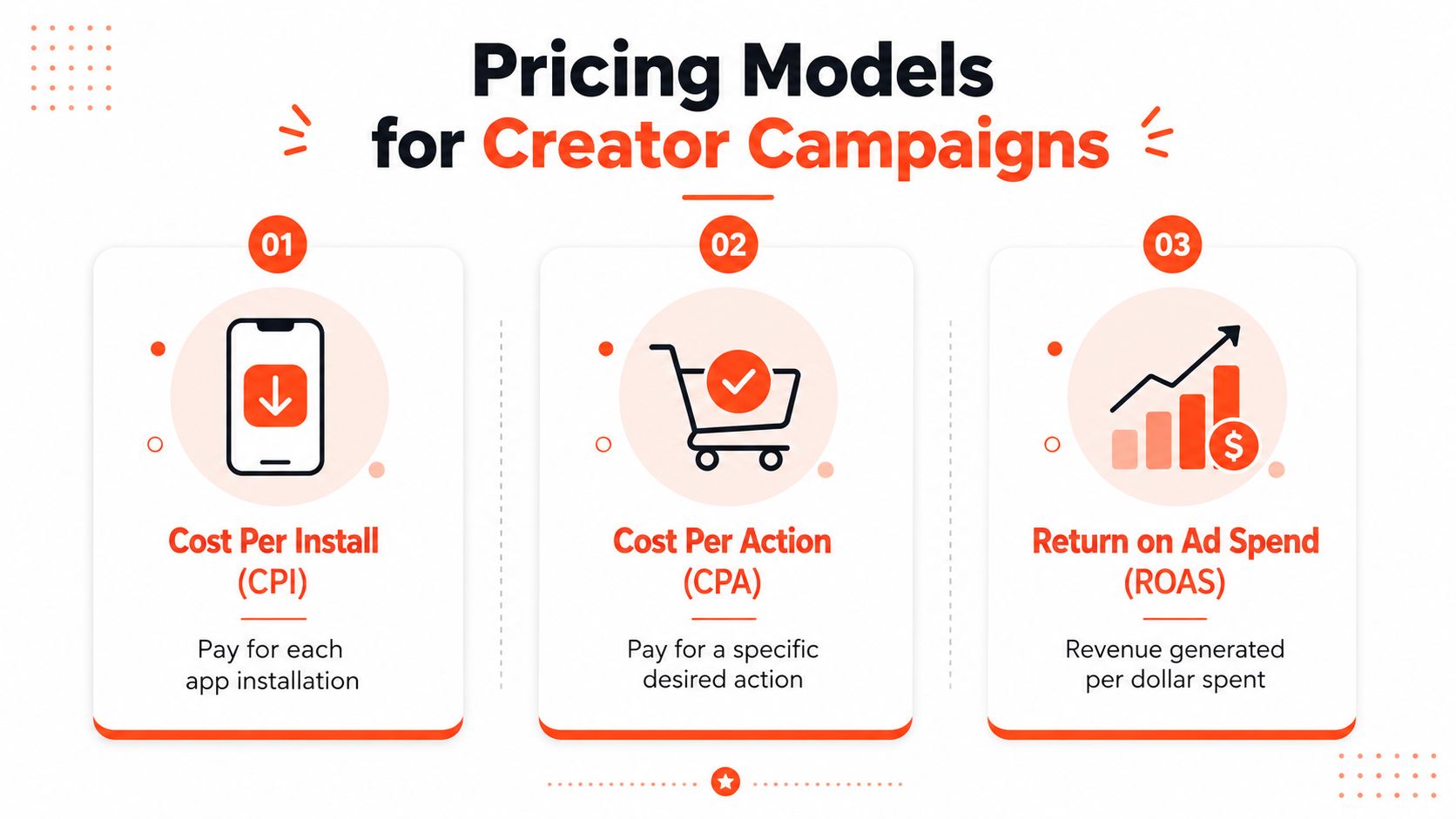
Performance pricing becomes useful when the outcome is defined tightly enough for both sides to audit. The three common models are cost per install, cost per action, and return on ad spend. Each rewards a different stage of the customer journey, so choosing one isn't a matter of preference.
Cost per install
CPI fits mobile apps where the immediate objective is a completed installation. The brand pays for each qualifying install attributed to the creator, usually through a tracking link or mobile measurement setup. This model is straightforward, but it can reward volume without proving that users open the app, complete onboarding, or become valuable customers.
Use CPI when the app can validate install quality and when the creator can drive a clear, low-friction action. The brief should explain the store destination, audience eligibility, attribution window, and any disallowed acquisition behavior. If the brand needs registration or first purchase, CPI is probably too shallow as the primary commercial metric.
Cost per action
CPA works when the desired event is more meaningful than an install or click. The action might be a completed signup, qualified lead, subscription, purchase, or another event defined in the contract. The more valuable the event, the more carefully the parties need to document validation and rejection rules.
CPA is often a good fit for ecommerce, SaaS trials, gaming progression, and lead generation. It can suit niche creators particularly well when their audience has strong intent, even if their reach is modest. The danger is setting a CPA target without accounting for the creator's production burden or the conversion rate of the brand's own funnel.
Return on ad spend
ROAS is calculated as attributable revenue divided by attributable spend. It connects creator activity directly to commercial value, but it also puts more responsibility on the attribution system and the brand's economics. ROAS can look healthy while gross margin, refunds, fulfilment costs, or retention remain weak, so finance and growth teams should agree on what the number is meant to decide.
The benchmark guidance in this performance measurement framework recommends using ranges rather than single-point targets, locking peer comparisons by platform, niche, creator tier, and geography, and separating organic performance from paid amplification. That prevents a creator from being judged against an unsuitable benchmark.
Make the deal workable for both sides
Before negotiating, calculate the maximum amount the brand can pay for the outcome while preserving its economics. Then separate controllable variables from uncontrollable ones. A creator can influence the hook, explanation, CTA, and audience trust. They can't fully control checkout errors, shipping delays, tracking failures, or a last-minute offer change.
Hybrid structures reduce that conflict. The base fee compensates production, while the variable portion creates upside for outcomes. Transparent budget pass-through also matters. Creators are more likely to trust a program when they can see what the brand is paying for media, usage, amplification, and their own work.
The best performance deal is not the cheapest deal. It's the deal that gives both parties a reason to improve the same outcome.
Building an Attribution Stack for Every Creator Placement
Attribution should be designed before creators publish. If a team waits until reporting week, it usually discovers that several placements share a link, promo codes were mistyped, paid amplification is mixed with organic reach, or platform reporting uses definitions that don't match the brand's analytics.
Start with a creator-level identity for every placement. Assign a unique tracking link, a unique promo code where appropriate, and a consistent naming convention across platforms. For ecommerce, add a post-purchase survey question such as how the customer heard about the brand. Survey responses won't replace digital tracking, but they can reveal creator influence when customers see content, remember the recommendation, and purchase later through another route.
Build the measurement layer
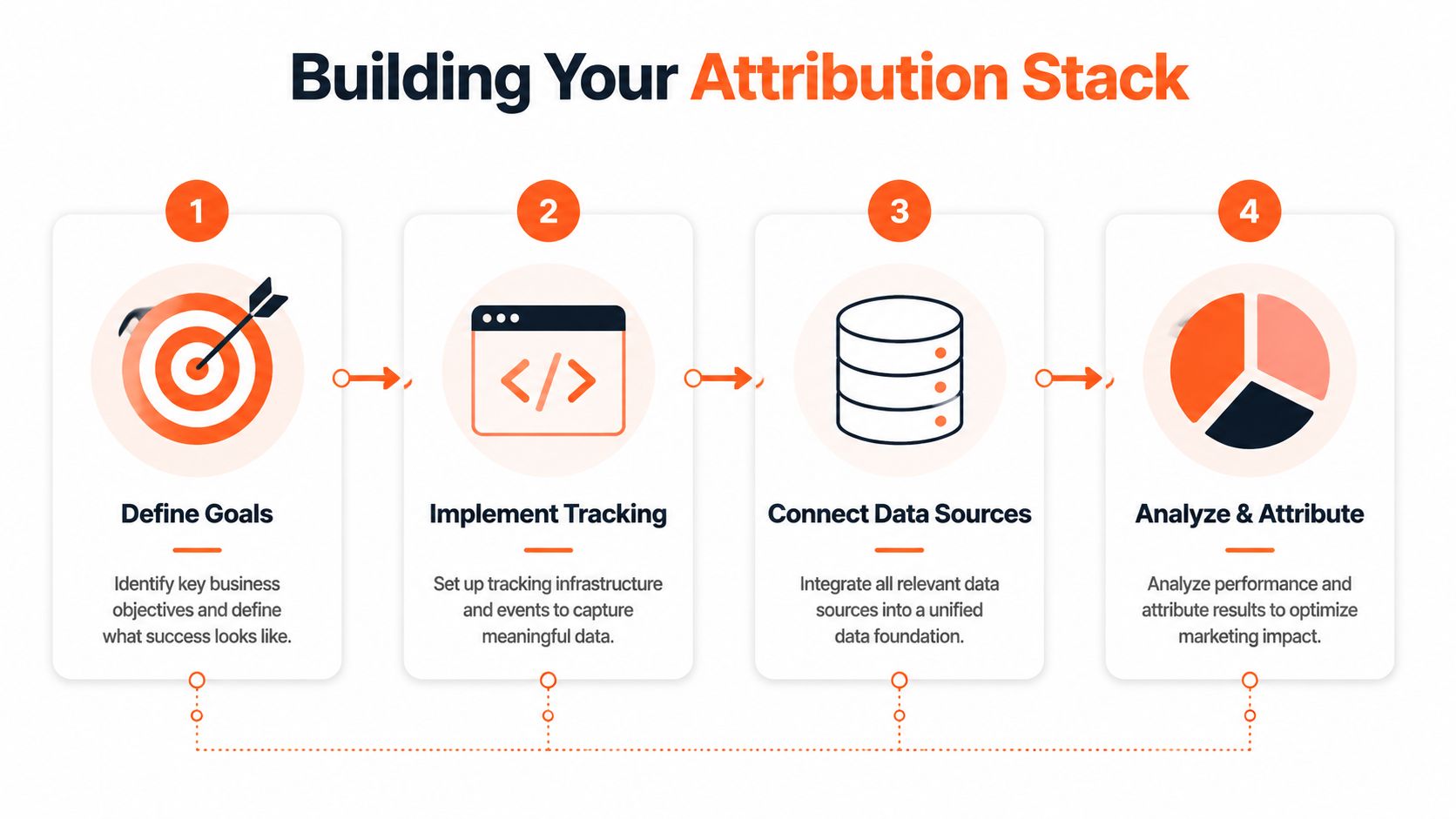
Use first-party analytics, platform data, affiliate or creator software, and your conversion database as connected inputs. The exact stack varies by business, but the logic stays consistent:
- Define the event. Decide whether success means an install, registration, qualified lead, purchase, or revenue.
- Create the identifiers. Give each creator and placement its own link, code, landing page parameter, or app attribution key.
- Record the spend. Separate creator fees, commissions, production, shipping, usage rights, and paid amplification.
- Validate the outcome. Remove duplicates, refunds, fraudulent actions, and conversions outside the agreed rules.
- Report by creator. Compare clicks, conversions, revenue, CPA, CPV, CPM, and ROAS using consistent definitions.
Raw engagement is a poor universal benchmark because platforms and formats expose creators to different audience behaviors. Independent guidance recommends a locked peer set by platform, niche, tier, and geography, then comparing organic creator performance separately from paid amplification. A creator should be evaluated against relevant peers, not against a platform-wide average that hides the differences.
Don't let last-click take all the credit
Last-click ROAS is useful for direct-response decisions, but it can undervalue creators who introduce the product earlier in the journey. A viewer may discover a brand through a creator, search for it later, and convert through a branded channel. The final click is measurable, but it doesn't necessarily represent the entire contribution.
Add incrementality testing when the budget and audience allow it. Holdout designs, geographic comparisons, or controlled exposure tests can help estimate whether creator activity caused additional demand rather than merely captured existing intent. Marketing mix modeling can provide another view for larger programs, especially when creator media runs across platforms and its effects aren't fully visible in user-level paths.
This guide to measuring influencer marketing ROI can help teams organize the operational details. The decision framework should combine attributable revenue with modeled lift, customer quality, and creator-level efficiency. When direct response is weak but modeled demand rises, don't automatically cut the creator. First determine whether the placement is serving an upper-funnel role or whether the attribution system is incomplete.
How to Launch a Performance-Based Influencer Program
A program should launch with decision rules, not just a list of creators. The operating sequence below keeps commercial terms, creative production, compliance, and reporting connected.
Start with the economics
Define the business outcome and work backward to a target CPI, CPA, or ROAS range. Use contribution margin, expected customer value, and funnel conversion assumptions rather than copying a benchmark from another brand. Set thresholds before launch, including the conditions for revising the hook, changing the offer, pausing a creator, or increasing spend.
Forecasting should also include the cost of creative production and usage. A creator who delivers a strong organic post may become more valuable when the brand can amplify it through TikTok Spark Ads, Shorts, or Reels variants. That usage needs to be negotiated before publication, not added after a post starts performing.
Vet for audience and commercial fit
Follower count is a weak screening shortcut. Review audience geography, content consistency, comment quality, category relevance, prior sponsored work, and the creator's ability to explain a product clearly. Micro-influencers can often outperform larger creators on efficiency, but the right tier depends on the objective and the creator's relationship with the audience.
A vetted network can speed discovery, but human review still matters. Ask whether the creator has a natural reason to recommend the product and whether their usual content can carry a CTA without looking forced.
Brief the outcome, not the script
Give creators the product truth, audience problem, required disclosure, proof points, CTA, landing page, and restrictions. Leave room for the creator to choose the opening, visual language, pacing, and delivery. A scripted testimonial may satisfy internal approvals while failing in the feed.
Run creative as a learning system. Test different hooks, demonstrations, objections, and CTAs, but change one meaningful variable at a time where possible. If watch time is strong and conversions are weak, inspect the offer and landing page before blaming the creator.
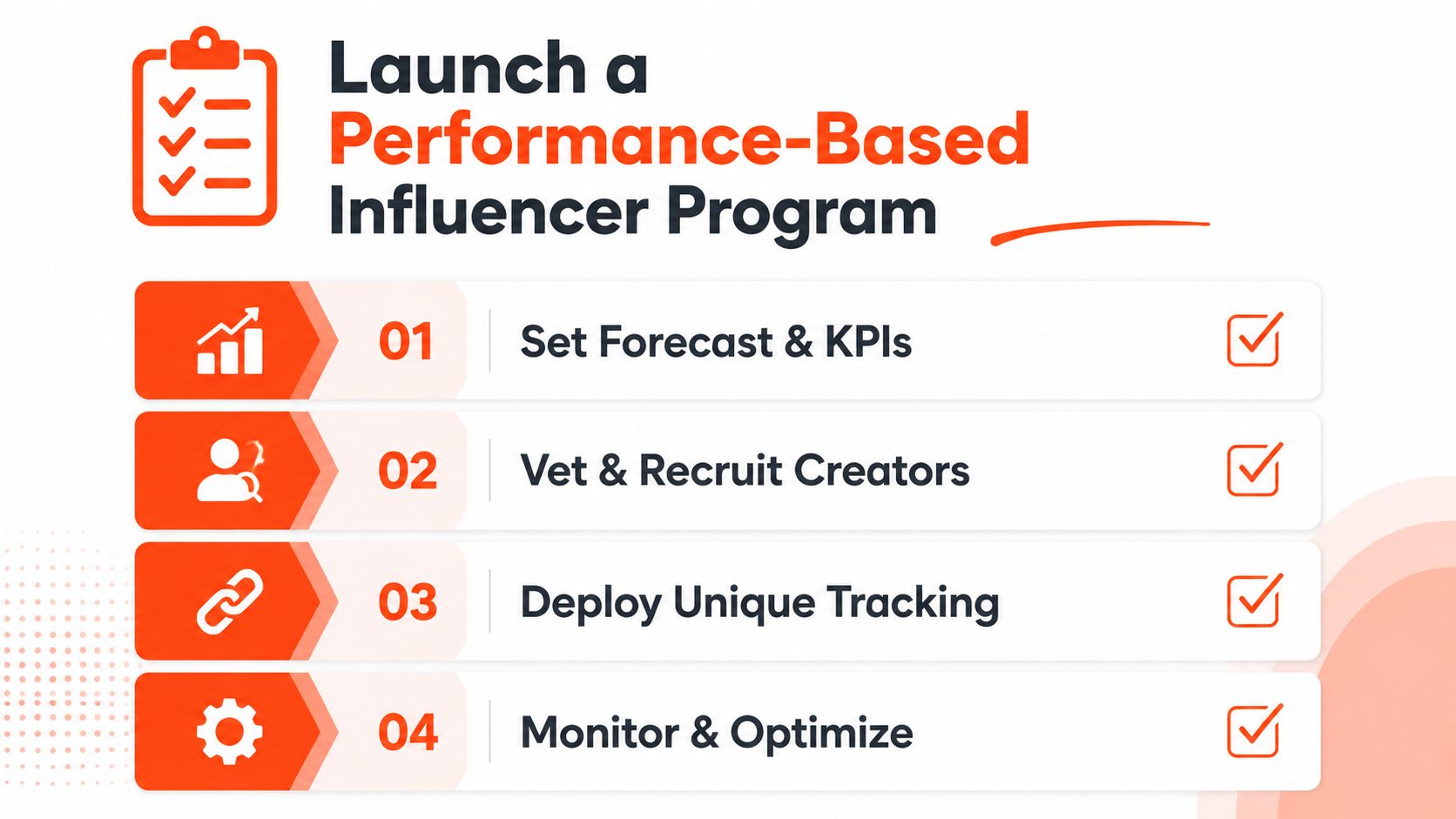
Contract and report without handoffs
The agreement should cover deliverables, compensation, validation, disclosure, approval limits, usage rights, paid media permissions, exclusivity, reporting access, and payment timing. Compliance needs to sit inside the workflow, not appear as a final legal obstacle.
Weekly reporting should show what changed and what the team will do next. Include views, clicks, conversions, ROAS, creative observations, and platform comparisons by creator. A single accountable team handling strategy, production, legal, launch, and reporting reduces the gaps where tracking and approvals usually break.
This practical campaign planning resource can support the setup, but the principle is simple: launch a controlled test, learn at creator level, and scale only after the evidence supports it.
Real Campaign Results from Performance-Focused Agencies
The most credible performance agency proof is not a headline number detached from methodology. It's a result connected to a clear objective, a defined attribution method, a creator selection process, and a decision that followed the data.
The available agency positioning for Social Cloud describes documented campaign metrics across ROAS uplifts, CPI reductions, and tracked install volumes, with programs spanning ecommerce, apps, SaaS, gaming, fintech, and health. Those categories require different conversion events and compliance controls, so a result from one vertical shouldn't become a universal expectation for another.

What a useful case result should reveal
Ask an agency to show the mechanism behind the outcome:
- Selection logic: Why did the team choose those creators, tiers, niches, and platforms?
- Attribution coverage: Did every placement receive a unique tracking identity?
- Commercial structure: Was compensation flat, commission-based, or hybrid?
- Optimization path: Which creative, audience, or placement changes improved the result?
- Amplification role: Did the brand use creator content in Spark Ads, paid social, or other formats?
- Quality controls: Were installs, leads, purchases, or revenue validated after the initial event?
Precision gifting and seeding can create a different kind of performance asset. The initial goal may be organic UGC from creators with genuine product affinity. The strongest content can then become a candidate for paid amplification, provided the brand has secured usage rights and the creator is comfortable with the extension.
A documented result still needs context. A lower CPI may reflect better creator selection, a stronger app store page, an improved offer, or a favorable audience mix. ROAS uplift may come from creative iteration, paid amplification, better attribution, or a combination of factors. The agency's job is to separate those variables as clearly as possible.
Treat case studies as operating evidence, not as guarantees. The question is how the team produced the result and whether that process fits your funnel.
Balancing Performance Pressure with Creator Authenticity
Outcome-linked compensation changes the creator relationship. It favors people who understand their audience, can make a recommendation feel useful, and are willing to review performance data. It can also discourage excellent creators whose value is real but difficult to capture through an immediate click or purchase.
The most suitable creators usually combine category credibility with a clear path to action. A mid-tier specialist may explain a technical product better than a household name. A niche creator may produce fewer total views but stronger purchase intent. A larger creator can offer scale and recognizable social proof, yet their efficiency may be weaker if the audience is broad or the placement feels generic.
Protect the creative conditions
Performance pressure becomes destructive when brands prescribe every word, force repetitive CTAs, or revise content until the creator's voice disappears. The creator needs enough freedom to choose the story, objection, demonstration, and pacing that make sense for their audience.
Brands should also separate creative feedback from outcome judgment. A post can miss the target because the offer is weak, the page is slow, the event is misconfigured, or the product isn't a fit. Penalizing the creator for every downstream problem creates a poor partner economy and eventually reduces the supply of credible creators willing to accept performance terms.
Use outcome data as a conversation, not a verdict. Compare conversion results with watch-through, audience quality, comment sentiment, repeat exposure, and modeled demand where available. The broader measurement direction described in CreatorIQ's standardized metrics coverage reflects the need to evaluate accountable media beyond a single sales-only metric.
Know when to change the deal
A performance deal improves alignment when the creator can influence the conversion journey and the brand provides reliable tracking, a credible offer, and fair validation rules. It distorts the relationship when the creator absorbs risks they can't control or when the brand uses low compensation to shift all production and media risk onto the partner.
The sustainable answer is usually a hybrid structure, transparent reporting, realistic ranges, and enough creative autonomy to preserve trust. Performance based influencer marketing works best when creators aren't treated as interchangeable traffic sources. They're commercial partners whose judgment is part of the product.
The Influencer Strategists performance report also highlights the unresolved economics of outcome-based partnerships, including how compensation affects creator mix and creative freedom. Growth teams should ask not only whether a deal tracks results, but whether it creates the conditions for good creators to keep participating.
Social Cloud plans and manages creator campaigns across YouTube, Instagram, TikTok, and Twitch, with creator-level tracking links, promo codes, post-purchase surveys, weekly reporting, and outcome-linked fees tied to installs, conversions, or ROAS. If you want to replace unmeasured influencer spend with a forecasted, attributed program, visit Social Cloud to discuss your campaign objectives and creator mix.
Drafted with the Outrank app