Follower count is the weakest signal for choosing a cybersecurity creator. A 2025 survey of 200 IT security practitioners found that 91% use influencer content to guide cybersecurity choices, and 74% discover influencers while researching a specific security problem (Merritt Group's cybersecurity influencer survey). Buyers meet these creators mid-evaluation, while they are comparing tools and pressure-testing claims. A sponsored segment that teaches nothing gets skipped. A credible demonstration can move someone from research to a demo request.
That sets a hard filter on partner selection. This audience is technical, skeptical of generic promotion, and quick to verify claims against firsthand experience. The seven cybersecurity influencers below fill distinct campaign roles, from hands-on technical education to live industry programming and story-led bug bounty content. Match each creator to audience intent, content format, and brand-safety requirements, then tie the placement to one measurable action: a qualified visit, lead, install, demo request, or event registration.
Table of Contents
1. John Hammond
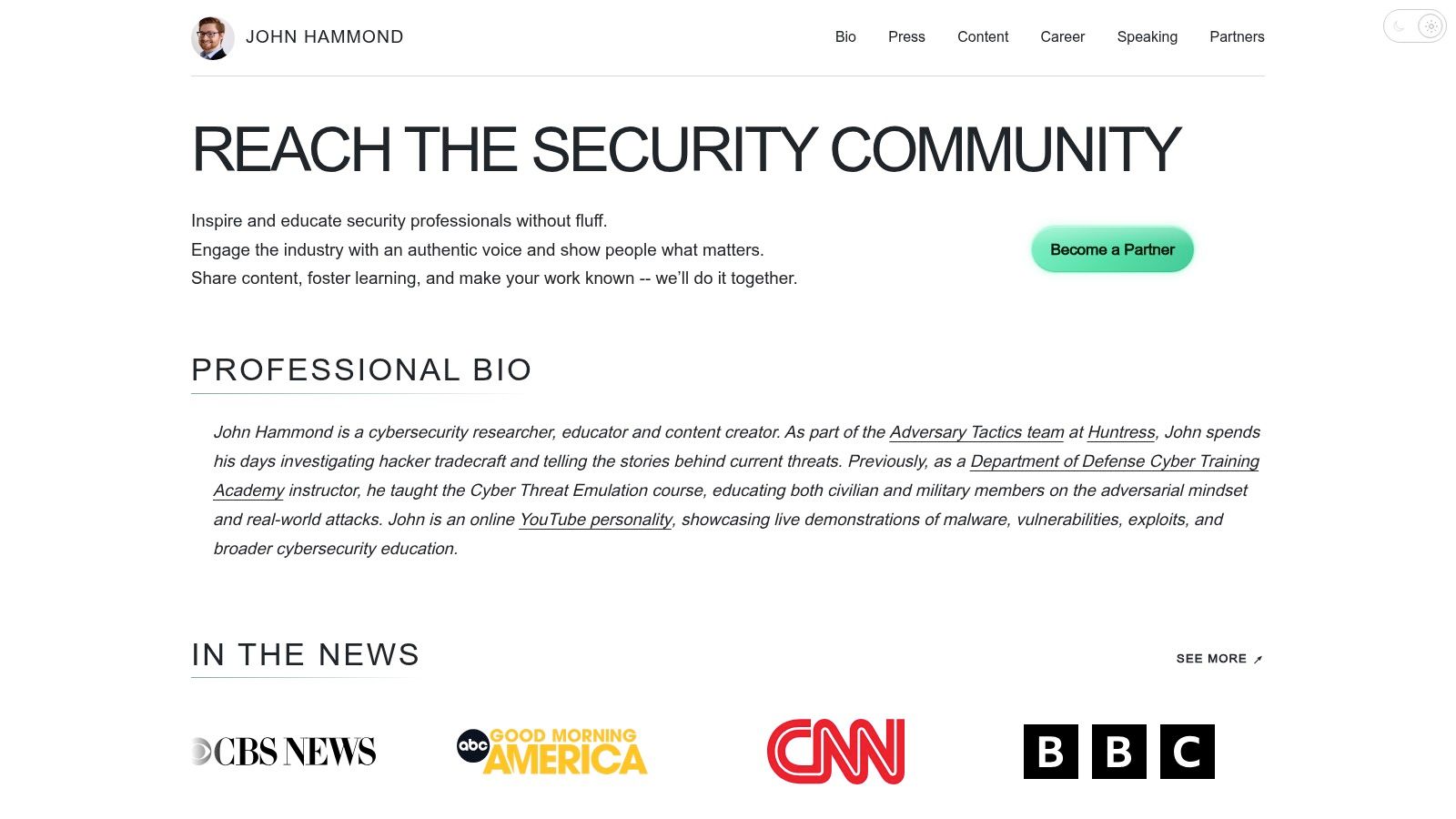
John Hammond is a strong fit when a campaign needs technical substance rather than a broad, lightly connected cybersecurity mention. His videos explore malware analysis, incident response, red-team techniques, and CTF challenges, giving security tools and developer platforms a practical setting for demonstrations. For workforce training, his educational style can also connect a product to a skill people want to build.
His presence across YouTube, X, and LinkedIn gives teams options for extending a campaign beyond one video. The John Hammond website also describes sponsorship expectations and analytics, which gives prospective partners a clearer starting point for discussing campaign scope. Still, don't assume his audience will automatically respond to a product pitch. Technical viewers expect the demonstration to teach something useful.
Campaign fit: Build the sponsored segment around a real workflow, such as investigating a suspicious file or explaining a defensive response. Track qualified visits and trial starts, not just views.
For a performance-minded campaign, agree on trackable links and post-campaign reporting before production. His live-learning approach may help hold attention, but the technical depth can make a message harder to follow for non-technical buyers. Keep the call to action specific, and add enough context that the product's value is clear without flattening the technical explanation.
Sponsorship demand and turnaround availability should be confirmed directly, since public rates aren't listed. Teams planning a YouTube activation can use this guide to YouTube influencer marketing to think through the role of format and placement. For Hammond, the key measurement question is whether the content attracts the right practitioner, not whether it produces the biggest raw audience.
2. NahamSec (Ben Sadeghipour)
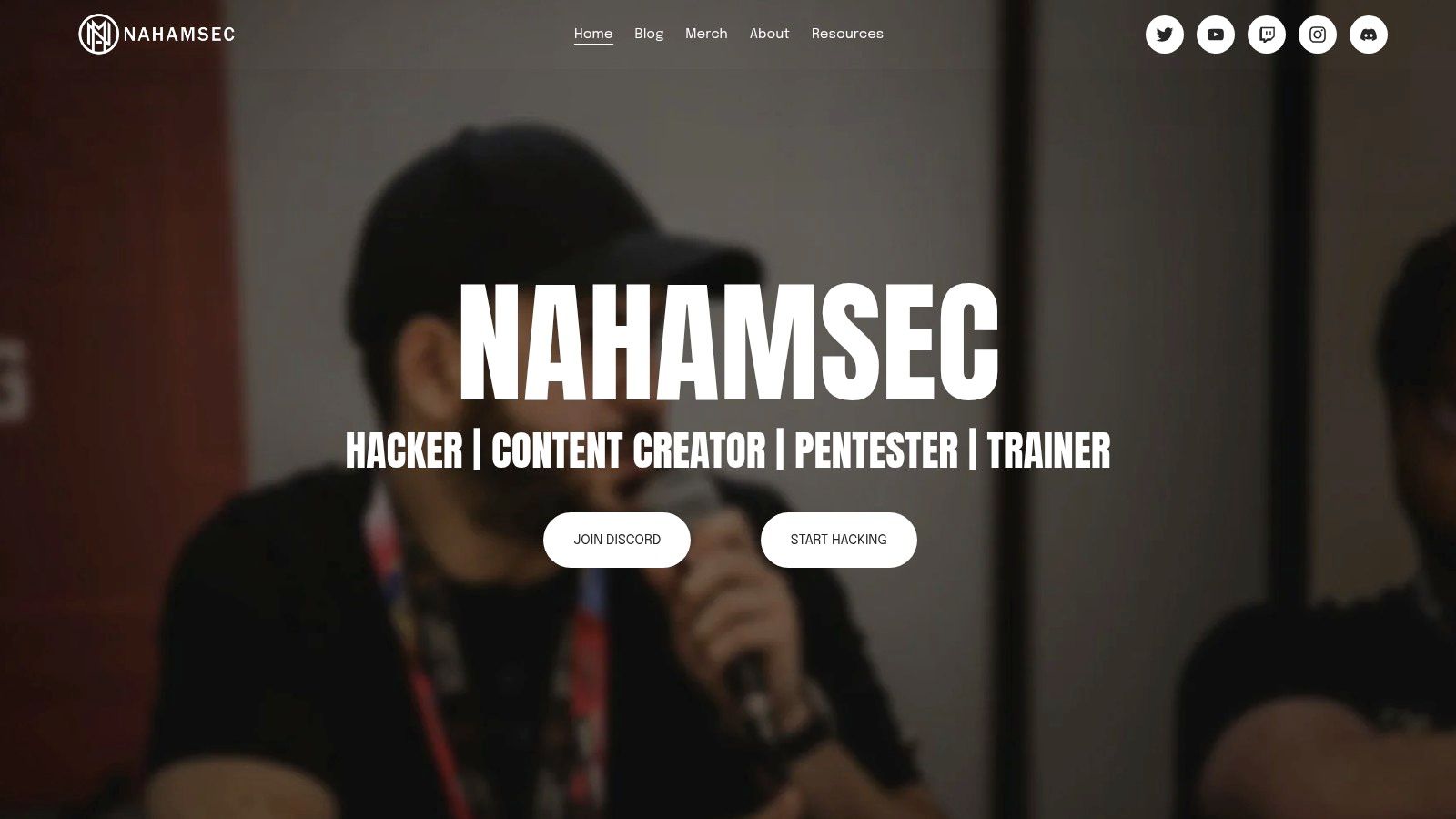
NahamSec's content sits close to the work application security teams and bug bounty hunters do. His practical coverage of reconnaissance and web hacking, alongside conference material, can make an application security product easier to evaluate than a generic feature rundown. His website is a starting point for discussing a partnership.
The audience fit is especially relevant for appsec tools, developer-focused security products, and training. YouTube and Twitch support longer demonstrations and live explanation, while Discord and community activity can add ways to invite discussion or user-generated content. Those formats can help a campaign earn meaningful interaction, but the brand needs to make sure the message supports authorized, responsible security work.
Brand-safety check: Set clear boundaries for demonstrations, tool claims, and calls to action. Offensive-security content can be a valuable educational format, but conservative brands may need more review before publication.
The practical test isn't whether a video uses exciting hacking language. It's whether viewers understand the product's intended use and can take the next step without confusion. A sponsor segment might invite qualified developers to a product walkthrough or direct security teams to a technical demo. Use a dedicated landing page and campaign link to distinguish those actions from general traffic.
Live streams and conference schedules can make timing less predictable, and a public rate card isn't listed. Confirm dates, approvals, content reuse rights, and any live-placement expectations early. A performance-based influencer marketing approach can help teams define a conversion goal before committing budget, which matters when several formats and placements are in play.
3. The Cyber Mentor (Heath Adams)
Not every cybersecurity campaign should target experienced red-team practitioners. The Cyber Mentor, Heath Adams, combines ethical hacking education with certification guidance, lab setup advice, and career mentoring. That mix can reach people learning security as well as practitioners building skills, making him a consideration for training providers, lab products, and workforce development programs.
His website connects to an education ecosystem that includes TCM Security Academy. That overlap can be an advantage when a sponsor's offer complements hands-on learning, but it needs to be handled transparently. If a campaign promotes an outside course or training tool, clarify how it differs from existing academy offerings and avoid suggesting endorsement of a competing product without an agreed fit.
Make the learning path part of the pitch
YouTube tutorials can give a product a lasting educational context, while Twitch creates room for live demonstrations and audience questions. For a training campaign, a useful action might be registering for a course preview or downloading a lab resource. For a security tool, the goal could be starting a guided trial. Either way, the next step should feel like a natural extension of the lesson rather than an interruption.
Career-focused viewers may not respond to consumer privacy messaging unless the connection is explicit. Tailor the brief to the audience's practical interests, and ask for placement-level tracking so you can assess whether educational attention becomes a qualified action. The influencer marketing strategy guide can help teams align the creator, message, and campaign objective before outreach.
Public sponsorship rates aren't listed, so confirm pricing and availability directly. Also agree how academy-related references will be handled, especially if a sponsor wants to compare learning paths or promote a separate training offer. The best fit is a campaign that adds useful instruction and gives viewers a clear reason to continue.
4. LiveOverflow
LiveOverflow is built for viewers who want technically detailed explanations, not a quick overview. Its videos cover exploit development, CTFs, and security engineering, often in a carefully structured format. That makes the channel a natural candidate for advanced training, developer security tools, and products that benefit from showing how a technical workflow works.
The LiveOverflow website identifies Security Flag GmbH and points viewers toward the channel's broader ecosystem, including Patreon and memberships. The content's depth can give an integration room to explain a product in context. The trade-off is that advanced material may be a poor match for broad consumer campaigns or buyers who need a simple introduction before they can act.
Evergreen tutorials can continue to attract viewers after publication, so campaign reporting should distinguish early performance from ongoing activity. Give the placement a trackable link, and use a landing page written for technical visitors. If the intended conversion is a demo request, explain the product's relevance quickly rather than assuming every viewer will connect the tutorial topic to the offer.
Measurement idea: Judge the campaign by qualified product interest and continued referral activity, not by the initial view count alone.
Upload cadence may be slower than teams expect, so build in lead time for planning, review, and publication. There's no public sponsor page or rate card listed. Ask about availability and content requirements directly, then make sure the creative gives the creator enough room to explain the technical value without turning the video into a feature list.
5. NetworkChuck
NetworkChuck is a broader-reach option for campaigns that need to speak to IT generalists and career-changers as well as security practitioners. His topics span networking, Linux, cybersecurity labs, and homelab projects. Visual, step-by-step demonstrations can make tools and technology gear easier to understand, especially for viewers who are still building technical confidence.
The creator's NetworkChuck links point to a multi-platform presence that includes YouTube, TikTok, Instagram, and Twitch. He also has experience with products and education offerings of his own, including NetworkChuck Cloud Browser and an online academy. That can help make product-focused content feel familiar, but it also raises the importance of positioning: the sponsor's offer should have a clear role rather than blending into a stream of unrelated promotions.
Use breadth without losing qualification
A broad audience can support awareness, short-form testing, or a product demonstration aimed at new users. It doesn't guarantee that a campaign will reach the security specialists who influence enterprise buying. Set the outcome accordingly. A consumer-oriented tool may prioritize installs, while a B2B security product could use a dedicated landing page to separate qualified business interest from general traffic.
Some community members criticize frequent sponsorships, so the creative should earn attention through a useful demonstration instead of relying on the endorsement alone. That concern is a reason to review recent sponsored content and comments before booking, not a conclusion about future campaign performance. Compare the sponsored placement's response with the creator's usual content and track the audience actions that match the campaign goal.
A promo code or tracked link can help attribute direct response, but don't treat a code as proof of fit by itself. Pair it with a focused landing page and follow-up question where appropriate. The channel may offer less niche depth than a specialist focused entirely on offensive security, so make sure the product benefits from broader IT reach.
6. Simply Cyber (Gerald Auger, PhD)
Some campaigns need a timely briefing environment more than a deep product tutorial. Cyber's weekday Daily Cyber Threat Brief, podcast, and LinkedIn presence create a mix of repeat programming and professional discussion. For B2B security vendors, that can support practical calls to action tied to threat awareness, webinar registration, or a sales conversation.
The Simply Cyber website describes collaboration options such as host reads, logo placement, pinned copy, and livestreams, along with Simply Cyber Con opportunities. That makes it easier to discuss specific placements than with creators whose partnership details are less visible. The format also gives brands more than one potential touchpoint, but each placement should have its own attribution so a team can see what produces qualified interest.
Give the audience a useful next step
The briefing's utility-first character is a creative constraint. A hard sell can feel out of place beside news and education, so connect the sponsor message to a concrete audience need and keep the call to action direct. A short link to a threat resource, webinar, or product demo can be easier to act on than a broad request to contact sales.
Live programming may invite chat engagement and immediate link clicks, while podcast and LinkedIn placements can extend the campaign across formats. Don't assume those surfaces perform the same way. Use distinct tracking links or landing-page variants to compare lead quality by placement, then follow up with the creator's team about audience context and sponsored-content expectations.
The listed morning schedule may limit flexibility in ad length or position, and rates require an inquiry. Confirm the placement details before setting a launch date. For demand generation, prioritize qualified registrations and demo requests over impressions alone, and make sure the sponsor segment offers something useful to the security audience.
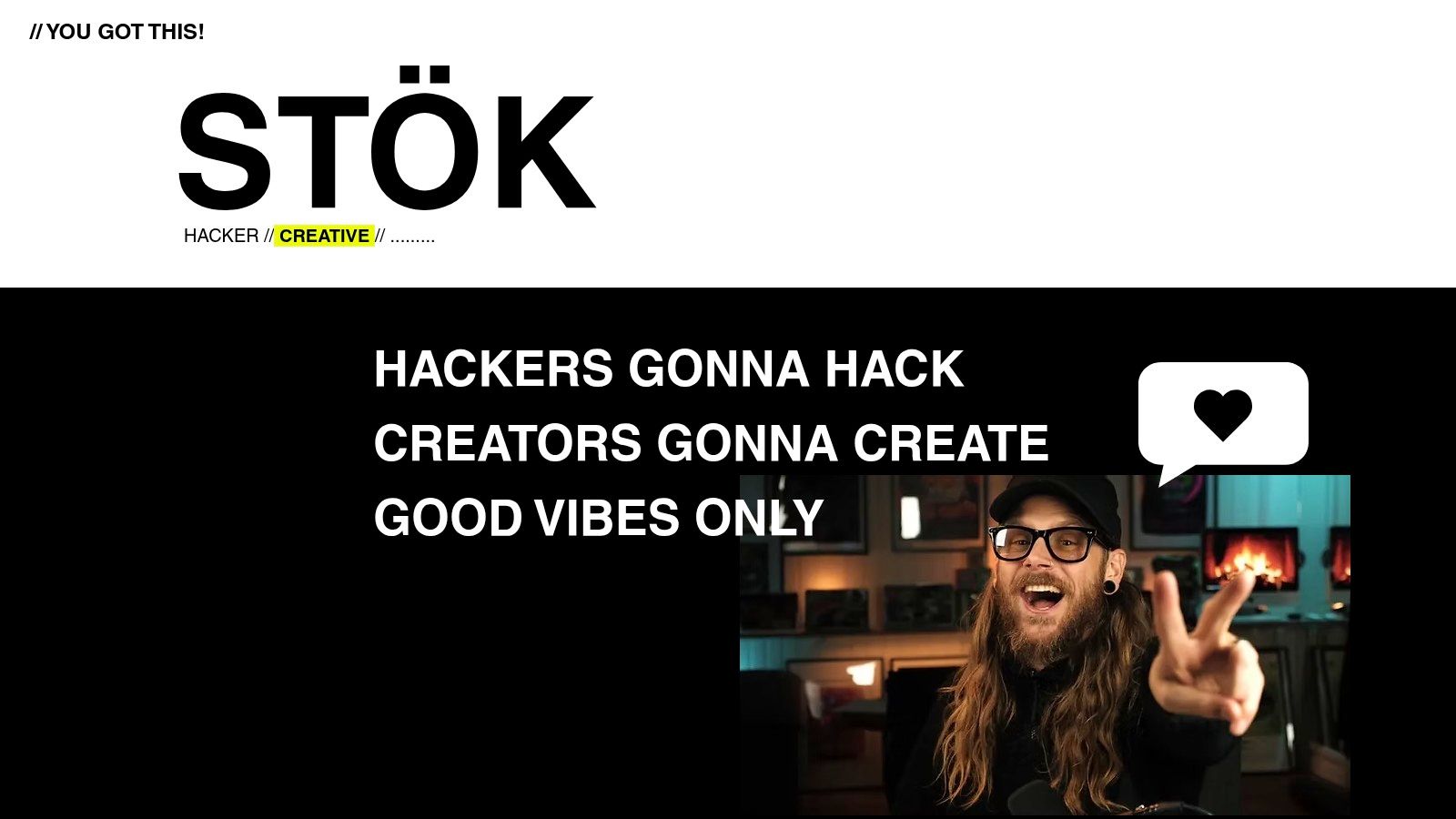
7. STÖK (Stök Fredrik)
STÖK brings a story-led style to bug bounty and security content. The cinematic Bug Bounty Life series, live Q&As, and security-tool or workflow material can give a campaign a narrative hook that stands apart from a conventional software walkthrough. That makes him a potential fit for developer tools, security products, conferences, and gear brands seeking attention within the bug bounty community.
The STÖK website is the place to begin a partnership conversation. Creator links also reference Instagram and TikTok, giving teams potential routes to adapt a campaign beyond YouTube. Vlogs and conference collaborations can support event awareness, while a tool-focused segment may suit a tracked visit or product evaluation. Match the format to the action: event registration is a more natural fit for a conference story than an unqualified sales-demo push.
Campaigns need room for production. Uploads can be episodic, and international travel may complicate tightly timed U.S.-only launches. Confirm the schedule, audience geography, and approval process early. A compelling narrative can build recall, but it still needs a clear, trackable next step if the goal is more than awareness.
For event campaigns: Pair a story-led placement with a dedicated registration page, then track completed sign-ups rather than relying on link clicks as the final result.
There are no public sponsorship rates listed, so ask about availability, deliverables, and usage rights directly. Also review the creator's recent content and comments to assess whether the audience matches your product. For a security tool, the strongest integration will make the product part of a believable workflow, not an unrelated interruption.
Top 7 Cybersecurity Influencers Compared
| Creator | Core Content and Audience | 🔄 Implementation Complexity | 📊 Expected Campaign Impact | ⭐ Ideal Use Cases | 💡 Key Advantage / Consideration |
|---|---|---|---|---|---|
| John Hammond | Malware analysis, incident response, red-team and CTF education; technical practitioners | Moderate; sponsorship process and reporting are described, but rates require inquiry | Strong potential for technical trust and cross-platform reach | Security tools, SaaS, developer platforms, workforce training | Credible, educational format; technical messaging may need context for broader audiences |
| NahamSec (Ben Sadeghipour) | Bug bounty, web hacking and reconnaissance; hackers, appsec engineers and developers | Moderate; coordinate around live streams and events; rates require inquiry | Potential for engaged tool interest and community participation | Application security products, developer tools, security training | Practical demonstrations support calls to action; offense-focused content may need brand guardrails |
| The Cyber Mentor (Heath Adams) | Ethical hacking, certifications and career guidance; practitioners and aspiring professionals | Moderate; align sponsorship with academy offerings; rates require inquiry | Potential for tutorial engagement and deeper training funnels | Training, security software, homelab products, workforce development | Live demos and Q&A enable interaction; audience fit may vary by product |
| LiveOverflow | Exploit development, CTFs and security engineering; advanced learners and practitioners | Higher; slower upload cadence may require longer lead times | Evergreen tutorials may continue attracting views after launch | Technical tools, training, developer-focused security products | Detailed, internationally relevant content; dense subject matter may limit broad appeal |
| NetworkChuck | Networking, Linux, cybersecurity and homelabs; IT generalists, career-changers and practitioners | Moderate; multi-platform campaign options; rates require inquiry | Broad awareness potential and opportunities to test short-form content | Technology tools, courses, gear and awareness campaigns | Visual demonstrations suit product calls to action; sponsorship frequency has drawn some audience criticism |
| Simply Cyber (Gerald Auger, PhD) | Cybersecurity news, daily briefings, podcast and LinkedIn content; security-focused audiences | Moderate; multiple formats are available, with rates by inquiry | Repeat programming may support recall, engagement and B2B leads | B2B lead generation, news-driven offers, event promotion | Regular schedule and defined sponsor formats; messaging should be useful rather than overly sales-led |
| STÖK (Stök Fredrik) | Bug bounty stories, security tools, workflows and live Q&As; bug bounty community | Higher; episodic uploads and travel may require advance planning | Story-led content may support brand recall and event awareness | Developer and security tools, conferences, gear | High production value and community ties; tight timelines may be challenging |
Turn a Shortlist Into a Measurable Campaign
A strong shortlist reads like a media plan: each creator has a role, a defined audience, and one action the campaign can count. As noted earlier, security professionals place little trust in creators without an established industry reputation, so reach should support the choice rather than make it. Ask for current platform analytics, audience demographics, typical sponsored views, comment quality, prior campaign results, usage-rights terms, and disclosure practices before pricing is discussed.
Set one primary conversion per placement: tracked link click, qualified lead, app install, demo request, or event registration. Give every creator a unique URL, promo code, landing-page variant, and post-purchase survey question. Compare results with a baseline or control where budget allows. That separates a partner who creates pipeline from one who mainly adds impressions.
Treat optimization as part of delivery. Review views, clicks, conversions, and lead quality by creator and placement while the campaign is live, then shift creative, format, or spend toward the combinations that produce action. For video-heavy programs, repurposing can extend a strong placement; this guide on how to turn videos into shorts shows one way to adapt longer creator content for shorter formats.
Social Cloud supports this operating model with data-led creator selection, platform-level forecasting, centralized contracting, and attribution tied to each placement. For cybersecurity marketers, the practical gain is tighter control over brand safety, technical review, disclosure, and conversion tracking in one plan, with spend judged against leads, installs, demo requests, or registrations.
Social Cloud plans, runs, and measures creator campaigns across YouTube, Instagram, TikTok, and Twitch, with creator vetting, campaign attribution, and outcome-linked fees. If you're choosing cybersecurity influencers for qualified leads, installs, or demo requests, visit Social Cloud to discuss a campaign built around measurable outcomes.


