
A finfluencer is a social-media creator whose content shapes financial decisions, and 26% of people in one FINRA Foundation survey said they had made investment decisions based on social-media personalities. Brands must treat the channel like regulated financial promotion, not lifestyle content.
A growth lead is ready to approve a large creator placement because the last finance video generated millions of views. Then compliance asks the questions that stop the approval: Is this post a financial promotion? Does the disclosure meet the relevant rules? Can the brand support every product claim? What happens if viewers lose money and connect that loss to the campaign?
That tension defines finfluencer marketing. A creator isn't just borrowing their audience to sell a product. They're distributing information that viewers may use to choose a broker, open an account, buy an asset, take on debt, or move savings. Reach matters, but it doesn't make a campaign defensible. Vetting, contracting, attribution, disclosure, and post-launch monitoring do.
Table of Contents
- Vet the person behind the audience
- Put guardrails in the contract
- Onboard for judgment, not memorization
Why Finfluencer Campaigns Look Different From Other Creator Deals
A sneaker campaign can often survive a weak creative decision. A finance campaign may not survive a weak risk statement, an unclear affiliate relationship, or a creator presenting a promotional talking point as personal conviction.
The difference appears before launch. A performance team usually evaluates audience fit, expected reach, cost per view, and conversion potential. A finfluencer campaign needs those inputs plus a record of who the creator is, what they're allowed to say, how the promotion will be disclosed, and how the brand will respond if the creator publishes something outside the brief.
Practical rule: If compliance can't explain the campaign to an auditor using the signed brief, approved script, disclosure record, and placement-level data, the campaign isn't ready to scale.
Start with five approval questions:
- Who is the creator? Check credentials, previous financial recommendations, commercial relationships, and public regulatory concerns.
- What is the format? A general budgeting explanation creates a different review burden from a named stock, crypto token, credit product, or trading platform.
- Where is the disclosure? The viewer should see and understand the commercial relationship before relying on the content.
- How will attribution work? A tracked link alone won't tell you whether the creator drove a qualified, funded, and retained customer.
- What is the exit path? The contract needs takedown rights, escalation contacts, and a process for pausing spend when creative creates consumer or brand risk.
The audience also changes the economics. A creator may generate strong click-through rates from people who aren't suitable for the product, can't pass verification, or don't understand its risks. A campaign can therefore look efficient in a platform dashboard while creating expensive downstream work for customer support, legal, and compliance.
Treat the creator as a regulated distribution channel. That single decision improves the brief, changes the KPI hierarchy, and prevents the team from approving a media buy based on views alone.
What a Finfluencer Actually Is and Who Is Watching
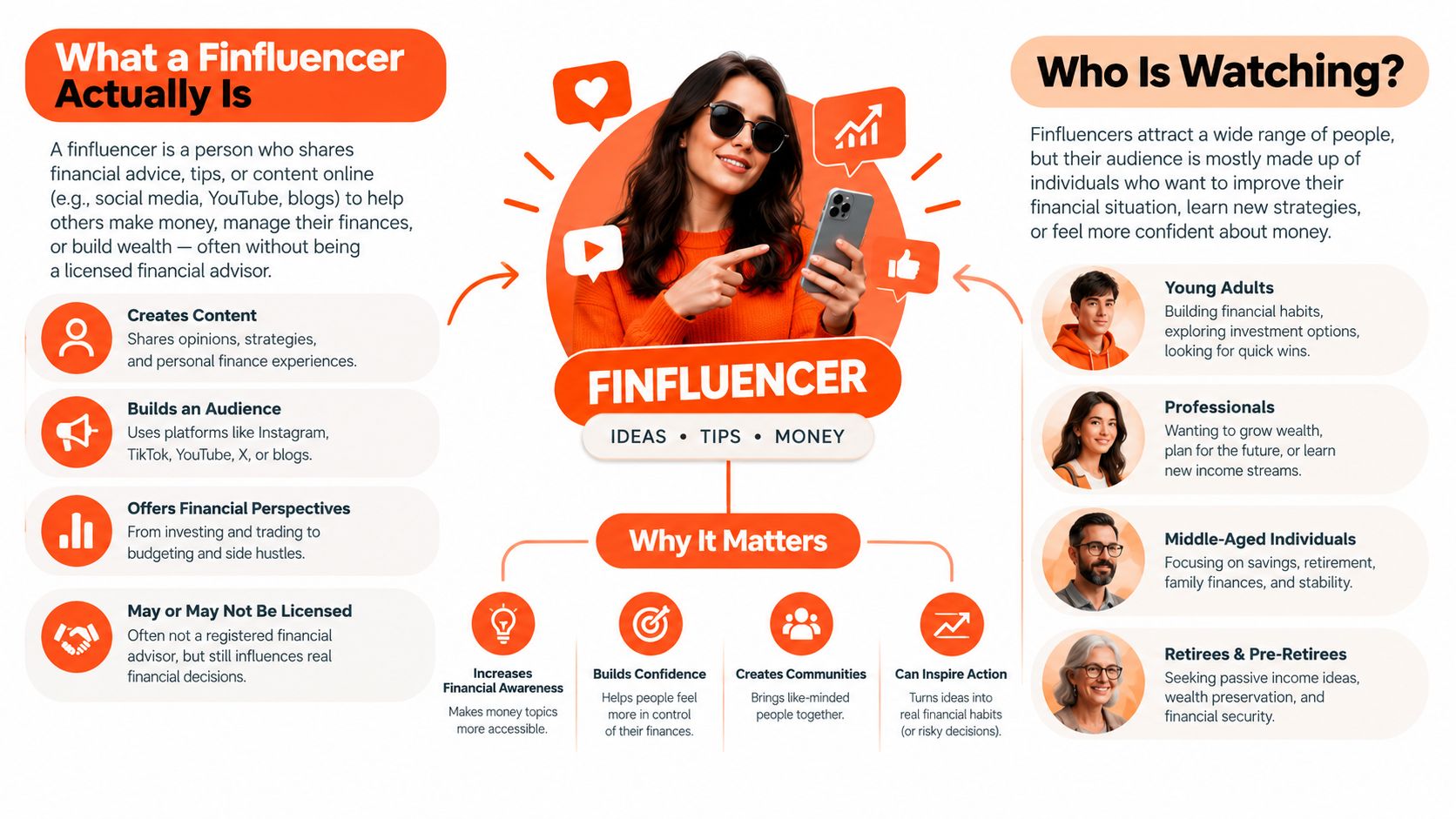
A finfluencer is a digital creator whose content influences decisions about money. That includes investing, saving, banking, credit, insurance, personal budgeting, lending, and crypto. The label describes audience impact, not professional status. A registered adviser can be a finfluencer, but a popular creator isn't automatically qualified to give personalized advice.
The audience is often younger and more mobile-native than the audience for traditional finance media. Some viewers are opening their first investment account. Others are comparing banking products, learning how credit works, or looking for a simple explanation of a market event. That makes accessibility valuable, but it also means a creator's confidence can be mistaken for competence.
Australian research illustrates the channel's influence. A YouGov study published in July 2022 found that 35% of investing-app users relied on social media or finfluencers to research and learn about investing, placing the source joint-second with online communities and forums. Among Australian investment-app users who consumed investment content on social media, 83% said it had shaped their choice of investment platform to some extent, while 79% said it had influenced particular investment decisions (YouGov's Australian finfluencer research).
Match the format to the decision
Common formats include:
- Short-form explainers: Budgeting, tax basics, savings habits, and market terminology on TikTok, Instagram Reels, or YouTube Shorts.
- Long-form analysis: Portfolio reasoning, platform reviews, market recaps, and product comparisons on YouTube, podcasts, Substack, or blogs.
- Recommendation content: Stock picks, crypto commentary, trading setups, and “what I'm buying” videos.
- Personal finance stories: Debt journeys, savings challenges, household budgets, and financial confessions that build trust through relatability.
- Community content: Live streams, Discord groups, Telegram channels, and paid communities where the perceived relationship becomes more direct.
The platform changes the creative risk. A long-form video may leave room for assumptions, limitations, and risk explanations. A short clip compresses the message and can turn a nuanced product into a memorable claim. Performance teams should optimize for the decision the audience may make, not the number of followers watching it.
For a practical overview of how finance-focused creator campaigns are structured, see this guide to finance influencers. A financial journalist, traditional adviser, and lifestyle creator who occasionally mentions money aren't interchangeable with a finfluencer. The relevant question is simple: does the creator's content cause viewers to consider or take a financial action?
Why Finfluencer Content Is a Regulated Channel, Not Lifestyle Sponsorship
A paid post about skincare usually asks whether the creator clearly identifies the sponsorship and avoids unsupported product claims. A paid post about an investment platform asks those questions plus whether the content could influence a regulated financial decision, whether the creator has presented risks fairly, and whether the audience could interpret the message as advice.
The regulatory treatment depends on the product, jurisdiction, wording, audience, commercial arrangement, and creator activity. In the UK, the Financial Conduct Authority has treated social-media promotion as a serious financial-promotion issue. In January 2025, the FCA reported that 62% of 18-to-29-year-olds followed social-media influencers, and 74% of those followers trusted their advice. It also reported that nine in ten young followers said influencer content had encouraged a change in financial behavior. The same enforcement update described interviews under caution with 20 finfluencers and 38 alerts concerning social-media accounts that might contain unlawful financial promotions (FCA financial promotions data).
The US framework involves bodies such as the SEC, FINRA, and FTC, while European campaigns may involve national regulators and frameworks aligned with ESMA principles. The exact obligations differ, so a global campaign can't rely on one universal hashtag or disclaimer. Guidance such as Kons Law compliance guidance can help teams identify issues, but product counsel should approve the final workflow.
Compare the approval burden
| Dimension | Lifestyle Sponsorship | Finfluencer Content |
|---|---|---|
| Primary audience action | Try, buy, or consider a consumer product | Open an account, transfer money, invest, borrow, insure, or trade |
| Core claim review | Product features and substantiation | Features, eligibility, suitability signals, returns, fees, risks, and limitations |
| Disclosure | Clear sponsorship identification | Clear sponsorship identification plus material interests and relevant promotion disclosures |
| Creator review | Brand fit and audience quality | Credentials, recommendation history, commercial incentives, and regulatory risk |
| Measurement | Views, clicks, sales, and customer value | Qualified actions, funded or completed accounts, complaints, unsuitable activity, and incrementality |
| Incident response | Edit, pause, or remove creative | Pause distribution, preserve evidence, notify stakeholders, review affected users, and assess reporting duties |
A #sponsored label on a serum doesn't make a stock pick compliant. A savings claim without the relevant rate, conditions, fees, or limitations may also create a different review problem from a general lifestyle comment. Risk information needs to be visible and proportionate to the benefit being promoted, not hidden in a caption beneath a strong promise.
The commercial relationship matters even when the creator says they “personally use” the product. Affiliate commissions, referral payments, deposits, trading volume, token allocations, paid communities, and performance bonuses can all affect how a reasonable viewer interprets the recommendation. Disclosure is therefore not a branding nicety. It's the control that determines whether the audience can judge the message with the right context.
Formats, Platforms, and Disclosure Mechanics Brands Are Buying
A finfluencer deal buys more than a video. It buys a specific combination of attention, context, audience trust, platform distribution, usage rights, and compliance exposure.
A YouTube explainer can support a careful product walkthrough, while a YouTube live stream creates a much harder moderation problem because the creator may answer personalized questions in real time. TikTok and Instagram Reels can make budgeting or tax content accessible, but short runtime encourages compression. Podcasts and Substacks give the creator more room to explain assumptions. X, Discord, and Telegram can spread market commentary quickly, but the conversation may continue outside the brand's approved post.
Start the inventory review with the deliverables:
- Asset type: Scripted video, live stream, carousel, story, podcast segment, newsletter, community post, or comment response.
- Placement rights: Organic publication, paid amplification, whitelisting, reposting, or use in acquisition creative.
- Audience path: Direct sign-up, landing page, app store, referral code, product comparison, or private community.
- Moderation duty: Whether the creator or brand must answer comments, remove misleading replies, or escalate complaints.
- Disclosure placement: Spoken introduction, on-screen text, caption, platform-native paid partnership label, and landing-page disclosure.
A strong example is a tiered ETF explainer that states the commercial relationship, describes the product accurately, identifies material limitations, and uses visible risk language. A weak example is a hype-led video naming a small-cap asset, implying immediate upside, and leaving the viewer to discover a vague sponsorship note after the call to action.
Disclosure must survive the format
Use the platform's native paid-partnership tool where available, but don't treat it as the entire disclosure system. The brief should specify the exact wording, location, timing, and duration of the disclosure. For video, require a verbal disclosure and readable on-screen treatment when the format and rules call for it. For live content, define how the creator repeats the disclosure and handles questions that move from education into apparent personal advice.
The stack may include #ad, #sponsored, #partner, a platform-native paid partnership label, and jurisdiction-specific wording. A hashtag buried among unrelated tags isn't a reliable control. The viewer should understand the relationship before acting on the recommendation.
| Format | Platform | Typical Deliverable | Disclosure Requirement |
|---|---|---|---|
| Short explainer | TikTok, Instagram Reels, YouTube Shorts | Concise budgeting, tax, or product education | Visible disclosure in the opening creative and caption where required |
| Long-form review | YouTube, podcast, Substack | Product walkthrough, comparison, or market explanation | Spoken and written disclosure, with claims and limitations reviewed |
| Live stream | YouTube, Twitch, Instagram | Market recap, Q&A, or platform demonstration | Repeated disclosure, moderation rules, and escalation process |
| Market commentary | X and similar networks | Short updates, threads, or reactions | Disclosure close to the recommendation, not detached from it |
| Private community | Discord, Telegram, paid groups | Signals, discussions, or product referrals | Contractual monitoring, clear commercial disclosure, and strict limits on advice-like content |
The Gap Between Reach and Real Financial Outcomes
A view is an exposure. It isn't proof that the audience understood the product, could use it, or made a suitable decision.
A 2025 peer-reviewed study examined 453 recommendations from 21 Dutch financial influencers covering 243 stocks and 61 cryptocurrencies. The recommendations showed strong short-term momentum bias. Influencers tended to promote assets with unusually strong recent performance, while those assets generally produced negative returns after publication. The study estimated recommendation-related average daily coefficients of 0.123% for stocks and 0.112% for cryptocurrencies, equivalent to approximately 17% and 23% on a semi-annualized basis, respectively (the peer-reviewed finfluencer recommendation study).
The implication is uncomfortable for performance teams: an immediate price move or engagement spike doesn't establish durable investment value. A creator may be excellent at identifying what is already attracting attention and poor at helping an audience evaluate what happens next.
The Ontario Securities Commission found a direct behavioral difference in its experiment. 24% of participants exposed to finance-related social-media posts purchased the promoted assets, compared with 7% of participants who weren't exposed. In the regulator's comparison among investors, exposure led 21% to purchase the promoted asset, versus 29% of non-investors in the comparison (OSC research on social media and retail investing).
Change the KPI hierarchy
Impressions, saves, comments, and follower growth still help diagnose creative distribution. They belong in the upper funnel. They shouldn't decide whether the next budget increase is approved.
Track the downstream signals that a finance lead can defend:
- Qualified account opening: The applicant passes the required identity and eligibility checks.
- Funded account: The customer completes the meaningful funding action defined in the campaign plan.
- First contribution or transaction: The account shows the intended product behavior, not just an install or registration.
- Complaint and suitability signals: Customer-service contacts, unsuitable activity, misleading-claim reports, and fraud exposure are reviewed alongside conversions.
- Durable value: Retention, repeat contribution, and net revenue are compared with acquisition cost where the product model supports it.
A campaign that drives cheap installs from unsuitable users can create a misleading CAC story. Finance and legal won't see only the media dashboard on review day. They'll see whether the audience understood the product, whether the claims were supported, and whether the campaign created avoidable harm.
How to Vet, Contract, and Onboard a Finfluencer
Don't start with the creator's media kit. Start with the risk profile of the product and the decision the campaign wants the audience to make. A budgeting education campaign needs a different creator screen from a campaign promoting margin trading or a crypto platform.
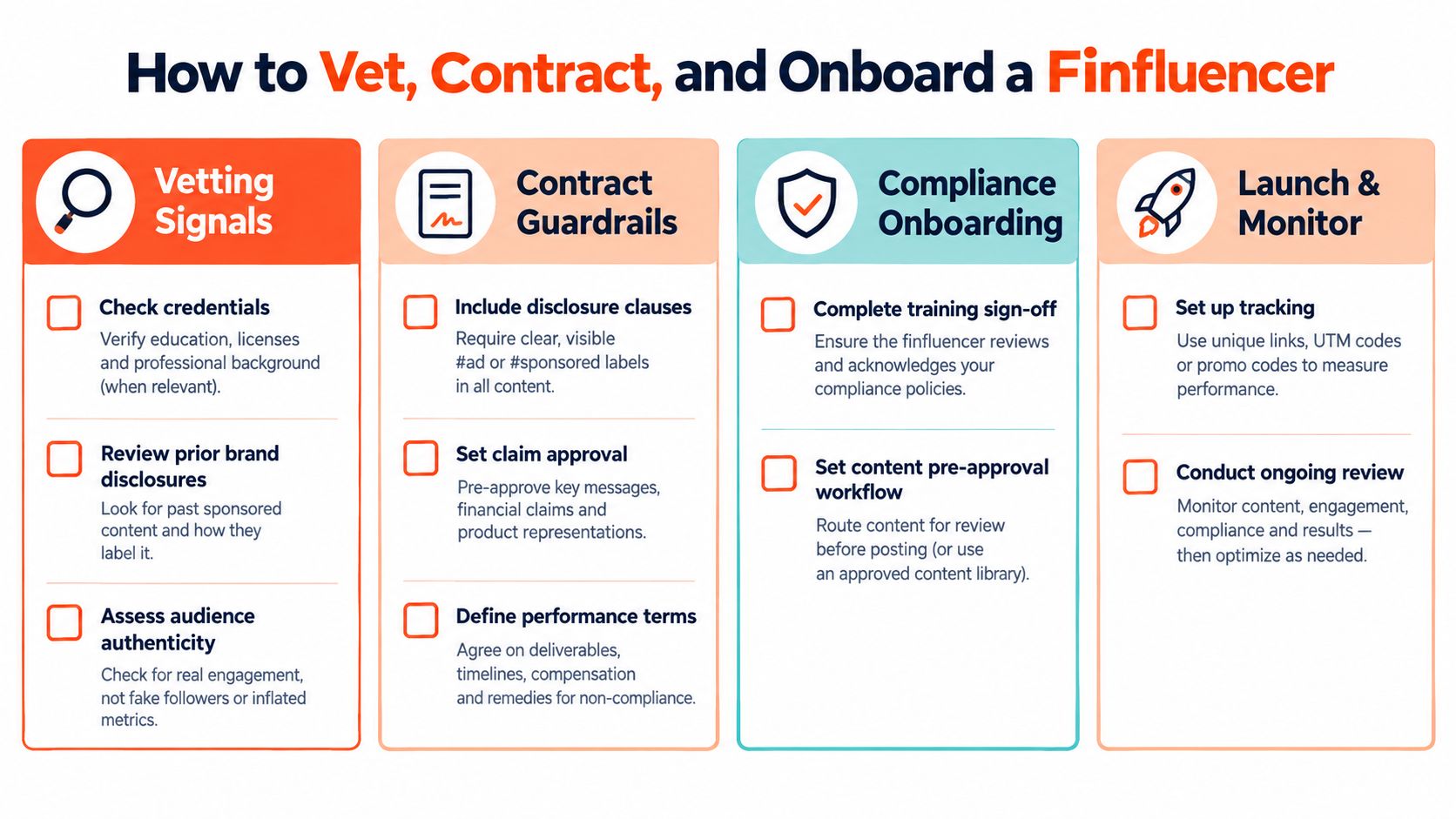
Vet the person behind the audience
Review the creator's public body of work, not just the proposed deliverable. Look for repeated return claims, one-sided risk framing, unexplained changes in recommendation, deleted disclosures, and promotional language that turns education into urgency.
Check:
- Credentials and status: Verify relevant registrations, qualifications, and the creator's stated professional role in the markets where the campaign will run.
- Recommendation history: Record prior recommendations and assess whether the creator explains outcomes candidly rather than showcasing only winners.
- Commercial incentives: Identify sponsorships, affiliate relationships, referral fees, paid communities, token interests, and other compensation.
- Audience quality: Examine geography, age suitability, concentration, suspicious engagement patterns, and whether the audience matches the product's permitted market.
- Enforcement and complaints: Search available regulatory notices and public concerns, then document what was checked and when.
The CFA Institute's 2025 review of 51 Indian finfluencers found that 63% failed to adequately disclose sponsorships or financial affiliations, only 2% were SEBI-registered, and 33% made explicit stock recommendations (CFA Institute review of finfluencer credibility). The lesson isn't that every creator is unsafe. It's that visible popularity cannot replace documented disclosure and credential checks.
Put guardrails in the contract
The agreement should require approved claims, disclosure language, pre-publication review, correction rights, takedown rights, and cooperation with audits. Define whether the brand can use the content in paid media, how long usage lasts, and whether category exclusivity prevents conflicting promotions.
Include a clear kill-switch. The brand should be able to pause a post or campaign when the creator departs from the approved script, answers comments with personalized advice, changes the product claim, or publishes adjacent content that creates a conflict.
A practical contract checklist can sit beside your legal team's review in this influencer contract template. The template isn't a substitute for product counsel, especially where financial-promotion rules differ by market.
Onboard for judgment, not memorization
Give the creator a plain-language brief with approved talking points, prohibited claims, required risk language, disclosure examples, escalation contacts, and a response protocol for comments. Ask for verbal disclosure in video where appropriate, not only a caption hashtag. Require a signed training or briefing acknowledgement before production begins.
Finally, define turnaround times. A creator who can't wait for claim approval isn't a good fit for a regulated campaign. Fast publishing is useful only when the process can preserve accuracy.
Attribution, Reporting, and KPIs That Hold Up Internally
Finfluencer attribution should work as a stack, not a single pixel. Every layer answers a different question, and the layers should reconcile rather than compete.
Layer one is placement tracking. Give every creator a unique tracking link and, where suitable, a unique promo code. Route links through your redirector so UTMs, click IDs, platform data, and attribution-partner records use a consistent structure. Name campaigns by creator, platform, format, product, and market. If a creator publishes multiple assets, separate each placement instead of allowing one code to hide creative-level differences.
Layer two is account and revenue validation. Connect the campaign identifier to the account-opening event, KYC outcome, funding event, first transaction or contribution, and relevant revenue window. Don't count a registration as a funded account. Don't count a funded account as a valuable customer until the product's own retention and quality criteria are met.
Layer three is post-action verification. Add a post-purchase or post-sign-up survey asking how the customer heard about the product. Compare survey responses with tracked links and codes. Where lawful and appropriate, use aggregated email-domain or customer-identity overlap checks to identify assisted conversions. Run holdout analysis when the campaign size and product conditions make it credible.
Measurement rule: Report vanity metrics for context. Make budget decisions using qualified outcomes and incrementality.
Build the weekly view
Your weekly report should show:
- Delivery: Views, watch time, reach, clicks, saves, comments, and disclosure status by placement.
- Funnel quality: KYC-passed accounts, funded accounts, first transaction or contribution, and cost per funded account.
- Comparison: Incrementality against the paid-social baseline or an agreed control design.
- Risk signals: Complaints, misleading comments, disclosure variance, takedown requests, and unresolved creator questions.
- Decision: Continue, revise, pause, or stop, with an owner and reason recorded.
A useful general reference for designing the wider reporting architecture is this marketing measurement guide. For influencer-specific implementation, document the tracking taxonomy, survey wording, attribution windows, and reconciliation rules before launch. This guide to measuring influencer marketing ROI can support that process.
Keep a separate brand-safety log. Save the approved script, final asset, disclosure screenshot, publication URL, comments requiring action, approval timestamps, and any edits. That record turns compliance from an opinion into an auditable workflow.
A Quarter-Long Playbook for Performance Teams
A quarter is enough to test whether a finfluencer channel deserves more budget, provided the team treats the first phase as controlled distribution rather than a publicity push.
Weeks one and two
Audit previous creator spend. Pull the regulator guidance relevant to your product, audience, and markets. Agree on disclosure language, prohibited claims, product facts, review ownership, and the maximum time allowed between script submission and approval.
Set the decision rule before selecting creators. For example, the pilot can require a qualified account outcome, a funded-account threshold chosen by finance, acceptable complaint signals, and a documented absence of material disclosure failures. Keep the rule specific to your product rather than borrowing a generic influencer benchmark.
Weeks three and four
Build a shortlist based on audience quality, content fit, credentials, commercial transparency, recommendation history, and brand-safety record. Review the creator's actual posts, including sponsored content and comment responses. A polished media kit doesn't reveal how someone behaves when viewers ask, “Should I buy this?”
Select a small pilot group that gives you useful variation in platform, format, audience, and creator style. Don't select only the largest accounts. A smaller creator with careful explanations may produce more defensible customers than a high-reach creator whose content depends on urgency.
Weeks five through eight
Launch with a capped budget, approved scripts, placement-level links, unique codes, and mandatory disclosure checks. Review the final asset before publication. Monitor comments and adjacent creator posts, not only the sponsored asset.
Pause quickly when the creator makes an unsupported claim, changes the product positioning, answers a personal financial question as if giving advice, or fails to disclose the relationship clearly. A controlled pause is cheaper than allowing a problematic post to compound through paid amplification.
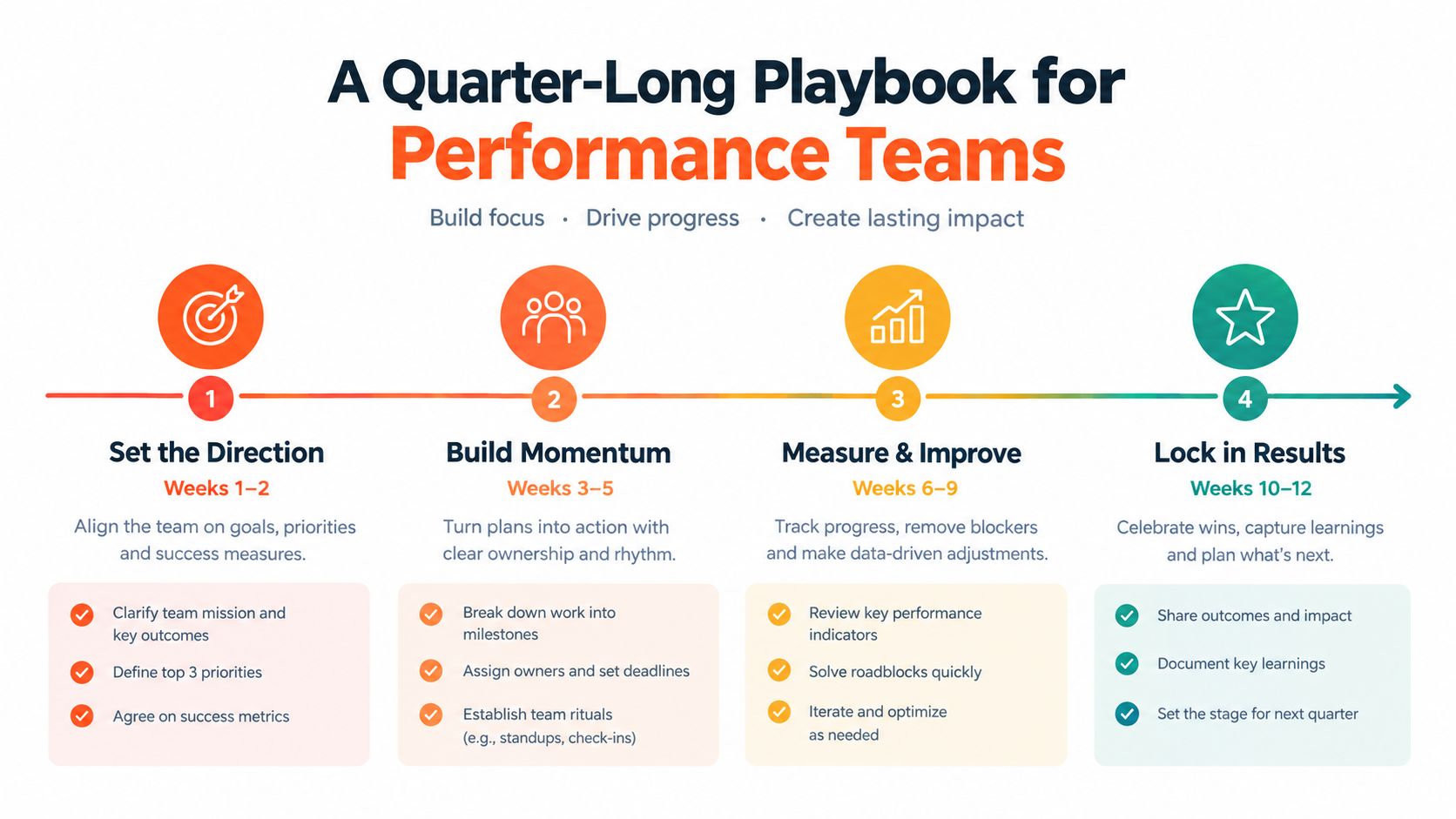
Weeks nine through twelve
Reconcile links, codes, platform reports, account records, and post-purchase survey responses. Compare cost per funded account with the paid-social baseline. Review retention and complaint signals where the product cycle allows it. Separate creator performance from creative performance, because a weak script can make a suitable creator look ineffective.
At the end of the quarter, choose one of three paths:
- Scale: The creator produces qualified outcomes, disclosures hold, and risk signals remain acceptable.
- Renew with changes: The audience is promising, but the format, script, landing page, or approval workflow needs revision.
- Cut: The campaign depends on vanity metrics, produces poor-quality users, or creates compliance debt that the economics can't justify.
Write down what the next team should repeat, reject, and monitor. The strongest finfluencer programs don't merely buy attention. They build a repeatable distribution system where every creator can be vetted, every claim can be defended, and every reported conversion can be traced to a real customer action.
Social Cloud plans and measures creator campaigns across YouTube, Instagram, TikTok, and Twitch, with creator selection, contracting, disclosure coordination, tracking links, promo codes, surveys, and placement-level reporting for measurable outcomes. If your finance or fintech team needs a campaign workflow that connects creator vetting with attribution and brand-safety review, visit Social Cloud to discuss the program.