

You're on day one of a fintech campaign. The paid team wants installs, the product team wants completed onboarding, the CEO wants growth by Monday, and a regulator's email is sitting unanswered in your inbox. Meanwhile, creators are asking for talking points, finance is asking about payback, and nobody agrees on whether the bottleneck is acquisition or identity verification.
That's the core fintech marketing strategy problem. You're not choosing channels from a neat menu. You're balancing reach against trust, speed against approval, personalization against privacy, and every marketing dollar against the moment a user becomes a verified, funded, retained customer. A useful starting point is to treat fintech marketing as an operating discipline, not a collection of promotional tactics.
Table of Contents
- Create a claims architecture
- Make review fast by making it predictable
- Turn constraints into creative material
What a Fintech Marketing Strategy Actually Solves
A strong strategy answers three questions before anyone buys media.
First, which audience is ready for which promise? A first-time fintech user may need a plain explanation of how the service works, while an experienced user may compare pricing, security, speed, and interoperability. Broad messaging can earn attention, but it rarely resolves the specific hesitation that blocks account creation or funding.
Second, which channel can do the job without creating avoidable risk? Paid acquisition can generate volume quickly, but it may struggle to explain complex fees or permissions. SEO can answer high-intent questions, but it usually needs time to build authority. Creators can make financial products understandable, but their claims, disclosures, and scripts need controls that fit the markets where the campaign runs.
Third, what outcome defines success? An install is an early signal. A completed identity check, linked bank account, funded account, first transaction, and recurring use are closer to commercial value. If the team reports only impressions or clicks, it can mistake curiosity for customer quality.
Start with the bottleneck
Map the journey from discovery to retained usage. Then identify the first stage where users drop, hesitate, or fail. If account creation is healthy but verification is weak, adding more reach won't fix the business. The message, form, support flow, or trust evidence needs attention.
Build around trade-offs
Your plan should make the compromises visible:
- Reach versus qualification: Broad campaigns create demand, but narrow audiences may produce better verified-account economics.
- Personalization versus privacy: More data can improve relevance, yet intrusive targeting can undermine trust.
- Creator freedom versus claim control: Natural delivery matters, but financial promotions need documented review.
- Speed versus evidence: Fast launches are useful only when tracking can connect spend to funded-account outcomes.
The strategy is working when a growth manager can defend the channel mix, explain the approval process, and show why the next dollar should go to one audience or placement rather than another.
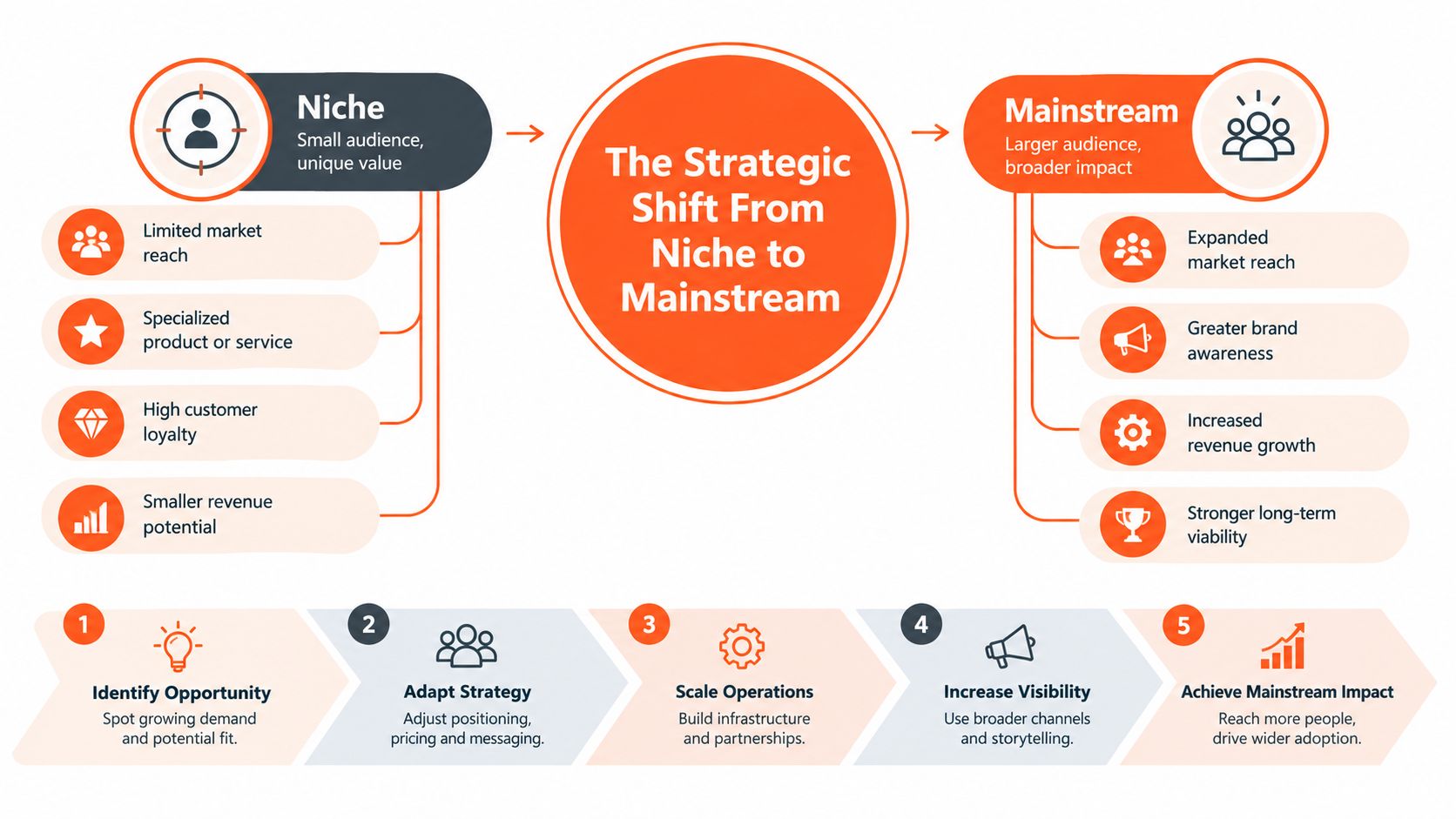
The Strategic Shift From Niche to Mainstream
Fintech marketing changed when digital financial services stopped being primarily an early-adopter story. EY's Global FinTech Adoption Index found that 64% of digitally active consumers worldwide had used at least one fintech service in 2019 according to the benchmark summarized by Invoice Quickly. That milestone matters because the audience is no longer limited to technology enthusiasts or people underserved by traditional institutions.
Mainstream users bring different expectations. They don't need to be convinced that digital payments, transfers, investing, or insurance can exist. They want to know whether a particular product is safer, faster, easier, more affordable, or better suited to their routine than the alternatives they already use.
Position around an outcome
The category is crowded from both directions. A fintech competes with established banks and with specialist businesses across payments, lending, wealth management, insurance, infrastructure, and embedded finance. Generic language about innovation doesn't help a user choose between credible options.
A sharper position names the customer outcome:
- Faster movement of money for users who value convenience.
- Lower or clearer fees for people comparing alternatives.
- Better access for customers who struggle with traditional processes.
- More control for users who want visibility over spending, saving, or investing.
- Stronger interoperability for businesses connecting financial services to existing workflows.
McKinsey projected that the global fintech market could generate approximately $650 billion in revenue by 2025, or about 4% of the overall financial-services industry in its analysis of the next age of fintech. That projection describes a durable commercial segment, not a side category waiting for mainstream acceptance.
Efficiency becomes the constraint
As more companies compete for the same users, budget discipline matters. Track customer acquisition cost, funded-account rate, transaction frequency, churn, lifetime value, and contribution-margin payback by channel and audience cohort.
The shift changes budget decisions too. Awareness still matters, but a campaign that cannot distinguish a qualified account from a casual click shouldn't receive unlimited funding. Mainstream fintech growth needs memorable positioning at the top and disciplined activation measurement underneath.
Mapping Business Objectives to the Growth Funnel
A fintech funnel isn't just awareness, consideration, and conversion. Financial products add trust checks and activation events that make the middle of the journey unusually important.
At the awareness stage, the job is recognition and problem framing. Content, PR, broad paid media, and creator education can introduce a customer problem and make the brand easier to recall. The primary signals are reach, quality engagement, branded search, and visits from relevant audiences, not funded accounts yet.
Consideration requires evidence. Prospects want clear pricing, eligibility, security information, product demonstrations, and answers to objections. SEO pages, comparison content, expert explainers, webinars, retargeting, and creator FAQs can support this stage. The KPI should move closer to qualified visits, account starts, and completed product education.
Activation is where many fintech plans become too vague. Separate identity verification, bank-account linking, funding, and the first transaction. Each event reveals a different problem. Verification may fail because the process is confusing, funding may fail because the value proposition is unclear, and first use may fail because the product doesn't guide the user toward a meaningful action.
Retention depends on recurring value. Lifecycle email, in-app prompts, useful education, customer support, and feature adoption campaigns should encourage the behaviour that makes the account worth keeping. Retained users and usage frequency are more informative than an initial sign-up.
Use the funnel as a decision tool
| Funnel Stage | Primary KPI | Best-Fit Channels | Common Bottleneck |
|---|---|---|---|
| Awareness | Qualified reach and branded discovery | PR, creator education, broad paid media, SEO | Weak differentiation |
| Consideration | Qualified visits and account starts | Comparison content, retargeting, creators, partnerships | Unclear pricing or risk information |
| Activation | Verified-account rate and funded-account rate | Paid UA, onboarding content, lifecycle messaging, product education | Identity or funding friction |
| First transaction | First-use rate | In-app guidance, email, creator demonstrations, support | No immediate use case |
| Retention | Recurring usage and retained-user LTV | Lifecycle programs, product content, community, partnerships | Limited ongoing value |
A useful internal review asks one question: which stage is currently limiting funded accounts? Assigning every channel to every stage creates duplicated work and makes budget decisions political. Assign each campaign a primary stage, a primary KPI, and a downstream quality check.
A short product walkthrough can help the team align on the journey before selecting media.
Channel Mix for Fintech Growth Teams
Four channel families usually form the planning matrix: paid user acquisition, content and SEO, PR and thought leadership, and partnerships that include influencers and creators. They shouldn't compete for the same job.
Paid user acquisition is useful when the team has a defined audience, a clear conversion event, and enough signal to optimize beyond installs. It leaks when creative promises more than the product experience delivers, or when the platform reports cheap acquisition without showing verification and funding quality. Use distinct campaigns for discovery, retargeting, and activation, then compare cohorts rather than treating all acquired users as equal.
Content and SEO work best when users actively research a financial problem. Explain fees, eligibility, security, permissions, disputes, and practical use cases in language a customer can understand. Thin articles that repeat generic definitions may attract visits without resolving purchase hesitation. Content should lead to a relevant next action, such as a calculator, product comparison, eligibility check, or verified-account start.
PR and thought leadership create third-party credibility and help a brand show up before a prospect is ready to convert. The trade-off is weaker immediate attribution. A regulatory explainer, expert interview, or industry contribution may influence branded search and direct traffic without receiving last-click credit.
Partnerships and creators can borrow trust from communities that already discuss money, work, commerce, or technology. Creator-led education is particularly useful when the product needs demonstration rather than a slogan. The brief should define permitted claims, required disclosures, prohibited promises, approved product facts, and the conversion event that matters.
For teams comparing channel ideas, a practical reference on modern banking growth tactics can help broaden the planning conversation beyond app-install advertising.
Weight the mix by evidence
Start with the funnel bottleneck, not the loudest stakeholder. If awareness is weak, fund reach and authority. If verification is weak, improve education, trust evidence, and onboarding before buying more traffic. If retention is weak, shift budget toward lifecycle and product adoption.
A fixed budget should include a learning allocation, but every test needs a defined success event. For creator placements, that means unique links or codes and downstream reporting. For SEO, it means identifying which pages assist qualified account starts. For PR, it means tracking branded discovery and assisted conversions rather than pretending every influence appears in a direct click.
Trust, Personalization, and the Privacy Trade-Off
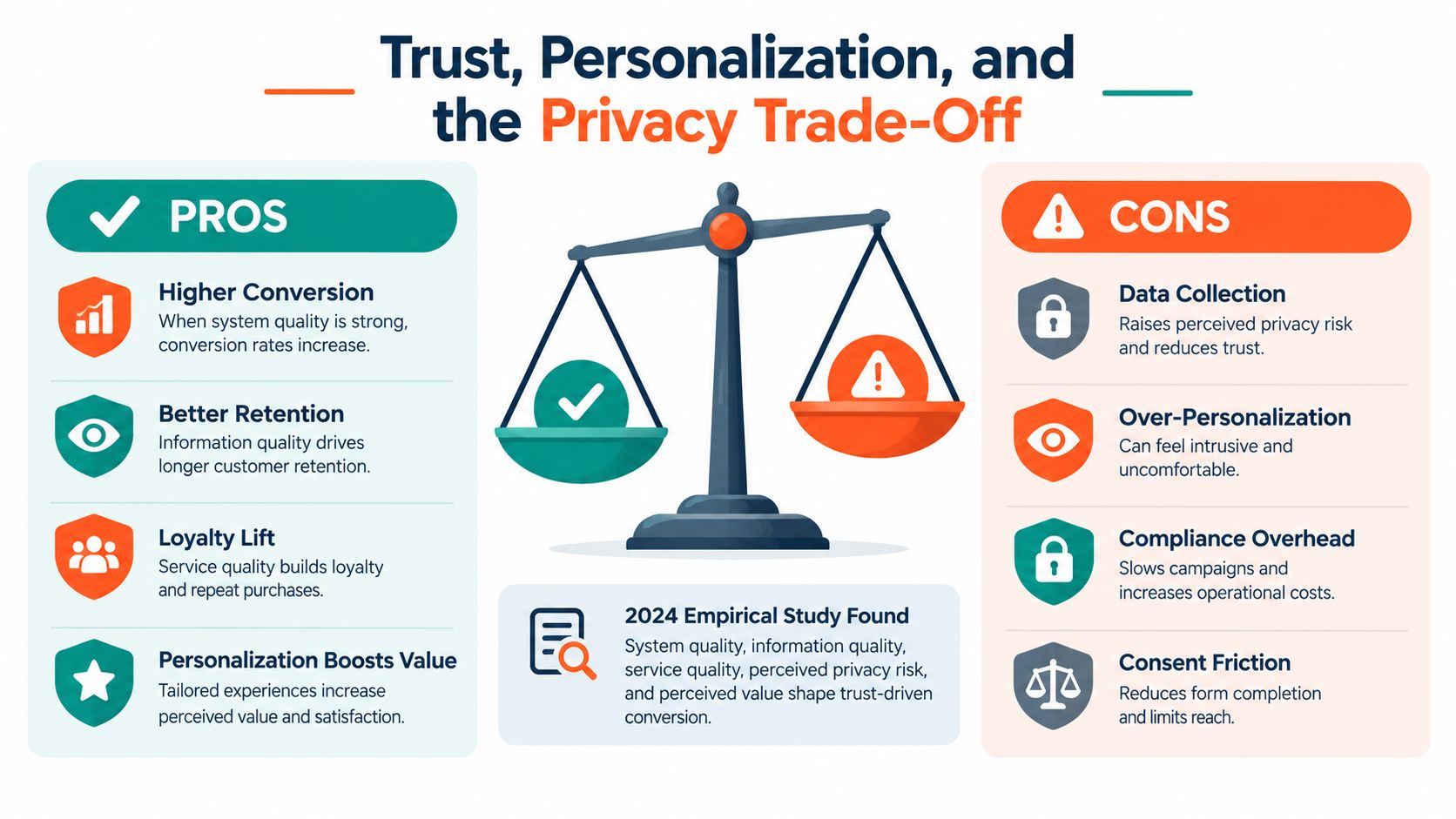
Trust isn't a decorative brand value in fintech. It changes whether a person is willing to share information, complete verification, link an account, and use the product.
A 2024 empirical study of fintech consumers in China found that system quality, information quality, service quality, perceived security, and privacy protection contribute to consumer trust. Trust then improves attitudes toward fintech services and increases usage intentions, as described in the study record available through this empirical fintech trust research.
That gives growth teams a practical causal chain. Clear information and visible safeguards reduce perceived risk. Lower perceived risk makes the next action easier. Better activation then gives the team a stronger basis for evaluating the channel that brought the user in.
Put proof into the creative
A creator or paid ad shouldn't only say that a product is simple. It should show how fees work, what data permissions mean, how authentication protects the account, what happens when a transaction is disputed, and where a customer can get help.
Use this rule set in briefs:
- Explain relevance: Tell users why a recommendation or feature is being shown.
- Minimize data collection: Ask only for information required for the campaign or product action.
- Avoid sensitive inferences: Don't imply that the brand knows a person's financial condition, creditworthiness, or private behaviour.
- Make the next step visible: Explain what happens after the click, sign-up, or verification.
- Test trust messages separately: Compare security explanations, product demonstrations, and user-outcome narratives at the funnel stage where each is intended to work.
The personalization paradox matters here. Behavioural data can make targeting more relevant, but research on fintech users also finds that personalization can increase perceived surveillance. Privacy concerns can strengthen the negative effect of surveillance on retention intentions.
Practical rule: Relevance should feel like a service the user understands, not an inference the brand is hiding.
Measure the trade-off
Don't judge a personalized campaign only by conversion rate. Track opt-outs, complaints, retention, cost per verified customer, and qualitative feedback about trust and message recall. Compare contextual targeting with consented first-party audiences before moving to more granular financial attributes.
That approach protects the user and improves learning. A campaign that wins a click by making someone feel watched may create a poor-quality account and a retention problem later.
Compliance-First Creator Marketing That Preserves Speed
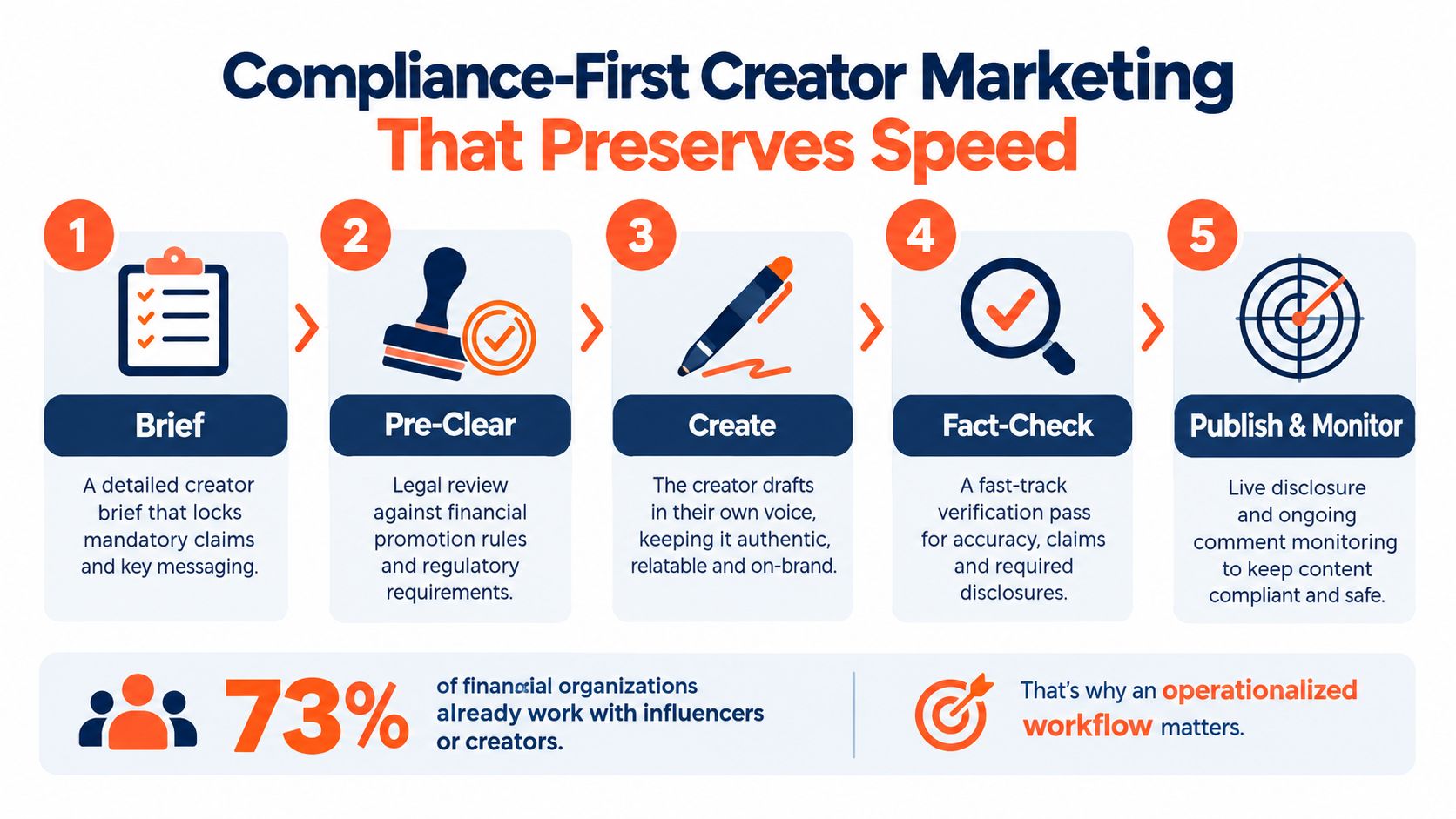
Creator marketing becomes slow when compliance enters after the creative has already been written. The fix isn't to remove the creator's voice. It's to define the safe playing field before the brief goes out.
The operational pressure is real. 73% of financial organizations require pre-approval for all social posts, and 67% report that compliance concerns delay campaigns by at least two weeks, according to the financial-services marketing compliance report. Treat those figures as a process warning. If every post starts from scratch, approval becomes a bottleneck instead of a quality control system.
Create a claims architecture
Before selecting creators, prepare four documents:
- Permitted claims: Product facts, supported benefits, clear explanations of eligibility, fees, safeguards, and service limitations.
- Prohibited promises: Guaranteed outcomes, exaggerated savings, unsupported security language, and claims that imply suitability for everyone.
- Escalation rules: The questions creators can answer, the questions that need compliance or customer support, and the situations that require pausing comments.
- Market templates: Disclosure language, risk wording, approval owners, and record-keeping requirements for each market.
This approach gives creators room to speak naturally inside known boundaries. A creator can explain a product in their own style, but they shouldn't improvise a promise about returns, approval, or personal financial outcomes.
Make review fast by making it predictable
Use a workflow with named owners:
- Brief: Lock the objective, audience, approved claims, disclosure, call to action, and verified conversion event.
- Pre-clear: Review the factual framework before the creator writes the script.
- Create: Let the creator draft in a natural voice.
- Fact-check: Compare every material statement against approved evidence.
- Publish and monitor: Check disclosure visibility, comments, edits, and user questions.
Keep versioned approvals, final files, contracts, usage rights, and publication records together. A documented process protects the brand when a regulator, platform, or internal reviewer asks how a claim reached the public.
For teams building this capability, a practical guide to finance influencer marketing can sit alongside legal playbooks and platform-specific disclosure requirements.
Turn constraints into creative material
Compliance can improve the content. A transparent fee walkthrough is more useful than a vague lifestyle endorsement. A demonstration of authentication is more credible than “secure” in isolation. A credentialed creator who explains a complex product carefully can attract better-qualified users than a broad personality campaign built around hype.
Judge the campaign on qualified engagement, verified accounts, and downstream applications. High reach isn't a win if it attracts users the product can't serve or creates claims the team can't defend.
Measurement, Attribution, and Budgeting for Real Outcomes
A fintech measurement system should connect the forecast, the event taxonomy, and the budget decision. Start with the outcome, then work backward.
If the business wants funded accounts, define the required stages: impression or view, click, account start, identity verification, bank linking, funding, first transaction, and retained use. Give each event a timestamp, source, campaign, audience, creator or placement identifier, and consent status where applicable.
Use the right KPI at the right depth
CPI and CPA are useful for early comparisons, but they can hide poor customer quality. Add funded-account rate, verified-account CPA, contribution-margin payback, transaction frequency, churn, and retained-user LTV. ROAS can help compare revenue-producing campaigns, but it should be interpreted alongside margin and retention.
A basic forecast should include:
- Target CPI or CPA
- Expected views or reach
- Click and account-start assumptions
- Verification and funding assumptions
- Platform-level budget allocation
- A stop or reallocation rule tied to verified outcomes
The point isn't to predict perfectly. It's to expose which assumption is failing. If views are strong but account starts are weak, creative or landing-page relevance may be the issue. If verified accounts are healthy but funded accounts lag, the product journey deserves investigation.
Don't let last click make the decision
The journey may run from a creator video to an AI assistant, then to a comparison page, branded search, and an app store listing. Last-click attribution gives the final touch too much credit and ignores the education that made the final action possible.
Use a mixed measurement model:
- Placement-level tracking: Unique links, promo codes, and landing pages.
- Assisted discovery: Branded search, direct visits, and post-sign-up source surveys.
- Cohort analysis: Compare verification, funding, transactions, and retention by source.
- Incrementality tests: Hold out audiences or placements where the traffic volume supports a meaningful test.
- Qualitative checks: Ask users which message or creator helped them understand the product.
Teams working across recurring revenue can also benefit from understanding subscription revenue attribution, especially when they need to separate acquisition influence from later revenue events.
For creator programs, influencer marketing ROI measurement should end at verified accounts and retained value, not views alone. Reallocate budget when a channel under-delivers on customer quality, even if its impression report looks impressive.
Execution Checklist for the First 90 Days
The first 90 days should produce a working growth system, not a large pile of assets.
The first two weeks
Audit the funnel from landing page to recurring use. Document account starts, verification, funding, first transaction, and retention baselines. Identify the largest drop-off and assign an owner.
Prepare the compliance foundation before approaching creators:
- Claims library: Approved facts, evidence, disclosures, and prohibited language.
- Approval map: Named legal, compliance, product, and marketing reviewers.
- Creator criteria: Audience fit, financial-content experience, brand safety, and communication quality.
- Tracking plan: Unique links, codes, landing pages, and downstream events.
- Reporting template: Views, CTR, account starts, verified accounts, funded accounts, and retention.
Weeks three to six
Launch controlled tests across paid UA, educational content, SEO, PR, and creator partnerships. Give every test one primary audience, one main message, one funnel stage, and one success event.
An influencer partner should provide a forecast within 48 hours of the brief, distinct tracking links and codes for every placement, weekly views and CTR reporting, and ROAS analysis tied to installs and later conversion quality. Ask for the assumptions behind the forecast, not just a polished total.
Weeks seven to twelve
Review attribution by channel, creator, audience, and cohort. Stop placements that generate attention without qualified progression. Increase investment where verified-account economics and retention support the case, then update the claims library and briefing templates with what the tests taught you.
A manager should be able to answer:
- Which audience produces the strongest verified-account rate?
- Where does the onboarding journey lose users?
- Which claims or explanations improve trust without increasing privacy concerns?
- Which creators drive funded accounts, not just clicks?
- What will the next budget change accomplish?
That checklist keeps the team honest. It also gives compliance, product, finance, and marketing a shared definition of progress.
Social Cloud plans and measures compliant creator campaigns across YouTube, Instagram, TikTok, and Twitch, with creator-level tracking links, promo codes, forecasting, approvals, and weekly outcome reporting. If you need to connect creator education to verified-account results, visit Social Cloud and discuss the campaign objective with its team.