The most popular advice about health influencer marketing is also the least useful: find a creator with reach, add a sponsorship disclosure, and count the clicks. That model treats health content like fashion or food. It misses the central commercial problem. People may watch a creator they like while doubting the advice, misunderstanding the evidence, or failing to recognize that a personal story is also a paid promotion.
A better campaign treats trust, claim governance, and measurable health understanding as performance variables. The job isn't only to generate attention. It's to connect the right audience with accurate information, make the commercial relationship obvious, preserve material risk information, and attribute meaningful action back to each creator and placement.
Table of Contents
- YouTube for explanation and consideration
- TikTok for discovery and message testing
- Instagram for context and lifestyle fit
- Campaign identity
- Commercial targets
- Medical claim guardrails
- Creator requirements
- Production and approval
- Measurement and learning
The Trust Deficit in Health Creator Campaigns
Health creator campaigns fail when teams treat reach as a proxy for belief. In the 2025 KFF Health Information and Trust Tracking Poll, 1,283 U.S. adults were surveyed from July 8 to 14, 2025. The poll found that 15% of social-media users, equal to 14% of the public overall, regularly got health information or advice from social-media influencers. It also found that fewer than half considered most or some health information on individual social platforms trustworthy, and fewer than 10% considered most of it trustworthy.
That gap matters more than raw exposure. Among regular consumers, 61% believed health influencers were mainly motivated by their own financial interests, while 39% believed they were mainly motivated by serving the public interest, according to the same poll. If the audience assumes the creator is selling first and informing second, high engagement can still produce weak conversion quality, poor retention, and heavier compliance review on the brand side.
Exposure is only the first gate
A view shows delivery. It does not show whether someone trusted the claim, understood the sponsorship, remembered a limitation, or chose an appropriate next step.
In health, that difference is commercial, not just legal. A creator can drive clicks with a dramatic claim and still hurt performance if the traffic arrives confused, skeptical, or expecting an outcome the offer cannot support. I have seen campaigns with strong top-line engagement stall because the content created curiosity, not informed intent. The cost shows up later in lower conversion rates, messy comment sections, and more time spent cleaning up claims that should have been governed before launch.
The better selection question is practical. Which creator can explain the offer accurately to the right audience, keep the claim inside approved boundaries, and still motivate action? That standard puts perceived expertise, audience fit, source behavior, disclosure quality, and claim discipline ahead of follower count.
Practical rule: Treat engagement as an input to investigation, not proof of credibility.
Trust belongs in the measurement plan
Strong health programs still track views, watch time, click-through rate, conversions, and revenue. They also measure whether people understood the commercial relationship, whether comments introduced misinformation, and whether traffic behaved like qualified demand rather than low-intent curiosity.
That is where compliance starts to improve performance. Clear claim boundaries reduce rework. Accurate explanations and visible support can improve credibility. The campaign should reward attention and informed action together, because attention without understanding is a poor signal in health.
Moving Beyond Basic Sponsorship Disclosures
A sponsorship label answers one question: Is there a material commercial relationship? It doesn't answer whether the health claim is supported, whether risks are visible, or whether the creator has presented an anecdote as if it were clinical evidence.
Commercial intent is common across the category. A 2026 analysis of more than 500,000 posts on Instagram, TikTok, and YouTube from over 6,000 health and wellness influencers found that 38% promoted a product, service, or subscription. Among posts discussing over-the-counter medicines or dietary supplements, approximately two-thirds contained a promotional element, while only 9% referred to an outside source while making a health claim, according to the Scripps News analysis.
That combination creates a practical risk. Audiences can see a post marked as sponsored and still receive an incomplete picture of the product.
Disclosure is necessary, not sufficient
A University of Sydney-led study of 982 Instagram and TikTok posts promoting five controversial medical screening tests found that 87% mentioned benefits, but only 15% mentioned potential harms. Just 6% discussed overdiagnosis or overtreatment, and 6% cited scientific evidence. Personal anecdotes appeared in 34% of posts, while 68% of account holders had a financial interest in the promoted test, as reported by the University of Sydney.
The lesson isn't that personal experience has no place in creator content. Personal experience can make an explanation accessible. The problem appears when the story carries the persuasive force of evidence without clearly separating what happened to one person from what a product can reliably do.
Turn claim governance into an operating system
For each sponsored asset, create a claim register with four fields:
- Claim: The exact statement the creator wants to make.
- Evidence: The approved source supporting that statement.
- Limit: The population, condition, timeframe, or uncertainty that narrows the claim.
- Risk language: The warning, contraindication, or instruction the audience needs.
Apply the same process to supplements, diagnostics, medical services, and wellness apps. A wellness app may need careful language around outcomes. A supplement may require boundaries around efficacy and safety. A diagnostic product may need prominent discussion of false positives, overdiagnosis, or the need to consult a qualified professional.
A practical review also needs platform and market checks. The PostPulse developer compliance resource can help teams think through how disclosure and compliance requirements fit into the broader publishing workflow, but it shouldn't replace medical, legal, and regulatory review for the specific product and market.

Use clear disclosure, balanced claims, source visibility, and preserved risk information as one system. The FTC states that material connections should be disclosed clearly and conspicuously, endorsements should reflect the endorser's honest opinion, and endorsers can't make claims the marketer couldn't legally make, as described in the FTC endorsement guides.
Vetting Creators for Medical Domain Expertise
Follower count is a discovery filter, not a qualification. A creator can have strong community engagement and still be a poor fit for a product that requires precise medical language. Vetting should examine what the creator has said before, how they handle uncertainty, and whether their audience matches the people who need the information.
Start with a historical content audit
Review a meaningful sample of recent sponsored and organic posts. Don't just record engagement. Look for repeated patterns:
- Evidence behavior: Does the creator cite studies, public health authorities, product information, or qualified professionals when making health claims?
- Claim discipline: Do they distinguish “I experienced” from “this product treats”?
- Risk handling: Do they mention limitations, contraindications, side effects, or when to seek professional advice?
- Correction behavior: Do they acknowledge mistakes and update old content?
- Commercial context: Do they make frequent health claims across unrelated sponsorships?
A creator who consistently turns every product into a miracle solution creates downstream risk, even if the audience is highly responsive. Parasocial closeness can make a personal narrative feel more authoritative than it is, which is why the review should examine language, not just credentials.
Score fit, not fame
Build a weighted scorecard covering medical-domain expertise, licenses or certifications, source citation, communication quality, audience fit, and historical compliance. Keep the threshold product-specific. A general wellness app and a prescription-related campaign shouldn't use identical approval criteria.
Ask for audience geography, age ranges, interests, prior sponsored content, and placement-level performance. Then inspect the comments. Repeated questions about dosage, diagnosis, or safety may reveal that the creator's audience needs more context than the initial creative concept provides.
The Social Cloud guide to key opinion leader marketing is a useful reference when the campaign needs a more formal expert-partnership model rather than a purely lifestyle-led creator activation.
For regulated campaigns, document the decision. Save the creator's credentials, content audit, approved claims, rejected claims, audience fit notes, disclosure requirements, and usage rights in one review record. That file helps legal and marketing teams make consistent decisions instead of reopening the same questions at every asset stage.
A creator's value comes from the combination of expertise, clarity, audience relevance, and operational reliability. Reach can amplify those qualities, but it can't manufacture them.
Platform Strategies for YouTube TikTok and Instagram
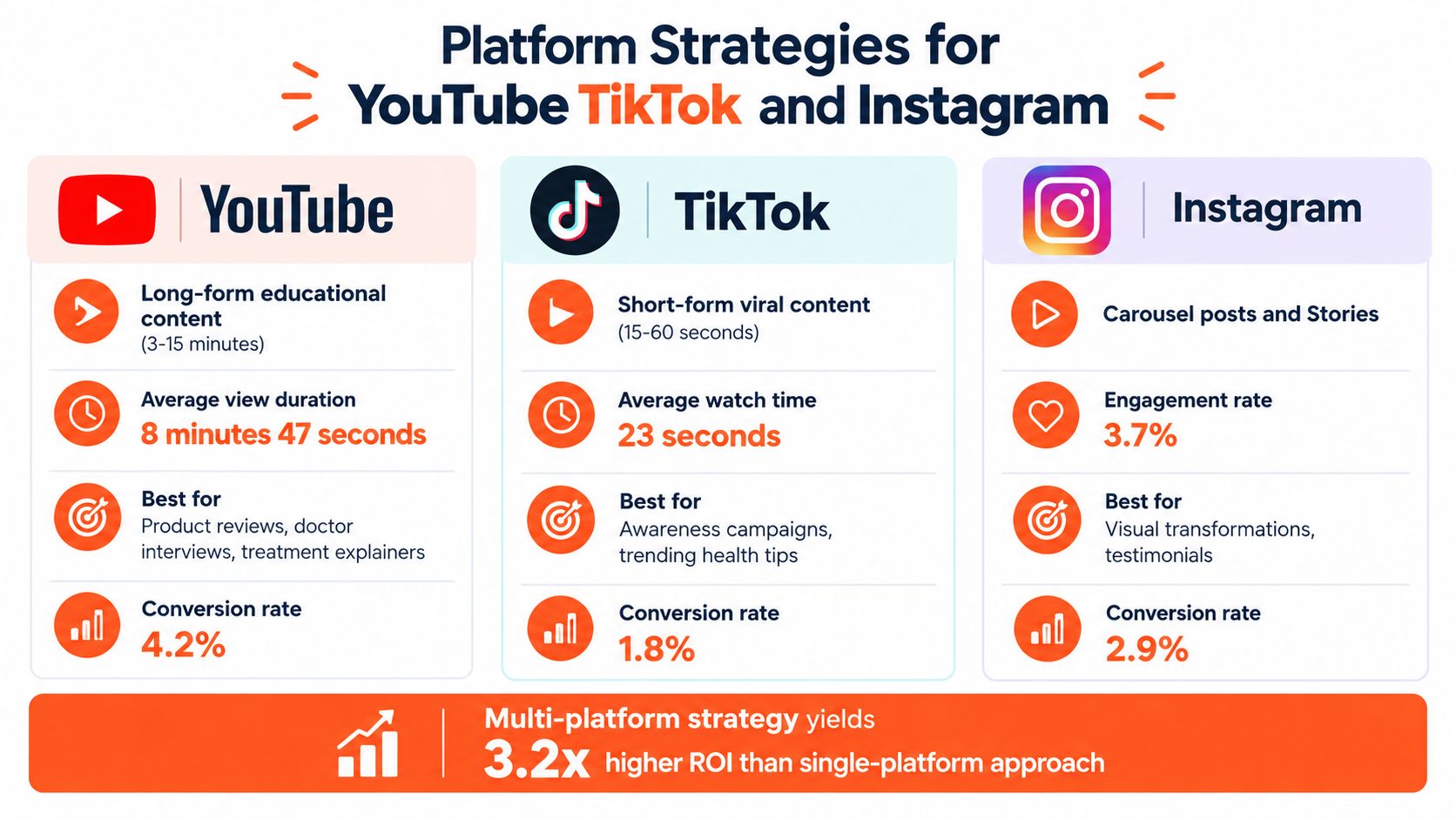
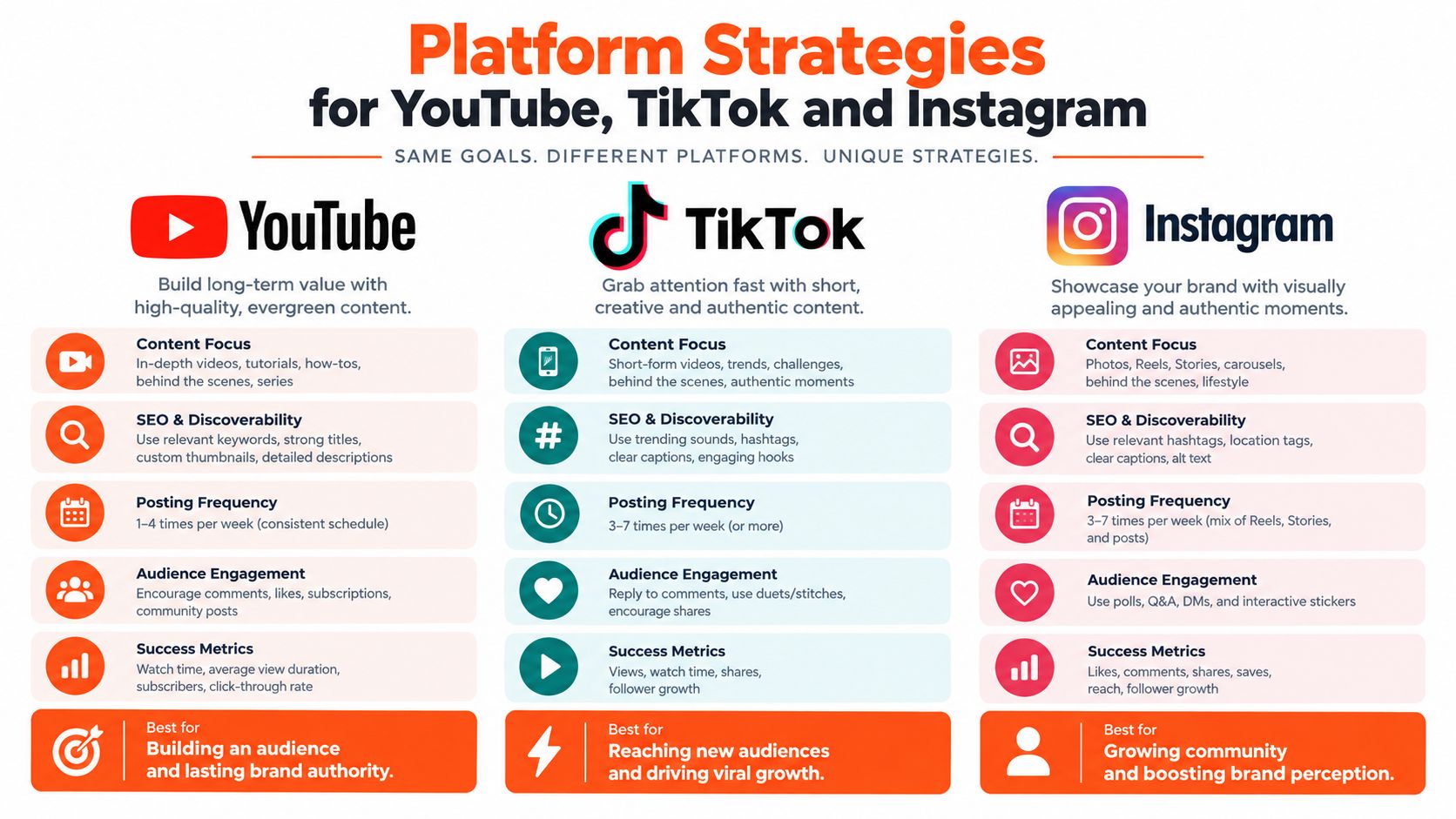
Each platform creates a different trust environment. YouTube gives a creator room to explain context and limitations. TikTok can make a useful point memorable at speed, but the format leaves less space for qualifications. Instagram often sits between education and lifestyle integration, which can make a product feel native while also blurring the boundary between recommendation and promotion.
YouTube for explanation and consideration
Use YouTube when the audience needs a product review, treatment explainer, doctor interview, or detailed demonstration. A longer format allows the creator to define the problem, state what the product does, explain what it doesn't do, and point viewers toward evidence or professional guidance.
The trade-off is production time and slower creative iteration. A weak script can create a long, polished record of an unsupported claim. Review the full edit, not just the title and description, because risk can appear in an offhand statement several minutes into the video.
TikTok for discovery and message testing
TikTok suits short educational hooks, myth correction, creator demonstrations, and awareness campaigns. Its speed is useful for testing which questions attract qualified attention, but it can reward oversimplification. Never remove a necessary safety sentence just to make the first seconds sharper.
A scheduling workflow can help teams coordinate approvals, publishing windows, and version control. For teams comparing tools, a TikTok scheduling platform can be evaluated alongside the campaign's review requirements, rather than selected only for calendar convenience.
Instagram for context and lifestyle fit
Instagram works well when the product needs visual demonstration, a carousel explanation, Stories with question stickers, or a carefully framed testimonial. Carousel formats can separate the hook, the product information, the limitations, and the next action instead of compressing every idea into one caption.
Plan cross-platform reuse carefully. A YouTube explanation may produce a short clip, but the clipped version needs its own review because the surrounding qualification may disappear. The practical differences between the formats are explored in this TikTok versus YouTube comparison.
Choose the platform based on the decision stage and information burden, not habit. Awareness content can invite a question. Consideration content should answer it. Conversion content should make the next step clear without making the health promise broader than the evidence allows.
Building Risk Adjusted Creative Briefs
The best creative brief gives a creator enough room to sound like themselves while making the unsafe version of the message difficult to produce. It doesn't hand over a paragraph of legal language and hope the creator translates it correctly.
Begin with a simple distinction:
- Product claim: What the brand can substantiate and legally communicate.
- Personal experience: What the creator personally noticed, without implying a universal outcome.
- Audience action: What the viewer should do next, such as reading approved information or speaking with a qualified professional.
- Limit or risk: What the viewer needs to know before acting.
Write the guardrails before the hook
List approved claims in plain language, then list prohibited expansions. For example, “supports” shouldn't become “treats,” and “may help” shouldn't become “will fix.” Identify required evidence links, approved efficacy wording, safety language, contraindications, age or population limits, and any mandatory instruction to consult a professional.
Give the creator a message hierarchy:
- The audience problem.
- The product's permitted role.
- The evidence or explanation.
- The relevant limitation and risk.
- The transparent sponsorship disclosure.
- The tracked next step.
This structure protects the information that edits most often remove. It also leaves the creator freedom to choose the opening, visual style, personal framing, and vocabulary that suit the audience.
Review the whole asset, not only the caption
Require a script, storyboard, on-screen text, spoken claims, caption, comments plan, landing page, and disclosure placement. Review the final export after edits because a crop, subtitle change, or shortened cut can remove a qualification that was present in the approved version.
A compliant brief doesn't make content bland. It makes the persuasive boundary visible.
Include a correction protocol. If a creator posts an inaccurate statement or audiences repeat a misleading claim in comments, assign ownership, define response language, and record the correction. This protects the brand from treating post-launch monitoring as an afterthought.
Attribution and Outcome Based Pricing Models
Health influencer measurement should connect every placement to an action path. Use a dedicated tracking link for each creator and platform, a creator-specific promo code where appropriate, and a post-purchase survey that asks how the customer discovered the product. Keep the parameters consistent across paid amplification, organic posts, Stories, and repurposed video.
Last-click reporting is easy to read and often incomplete. A viewer may see a YouTube explanation, search for the brand later, click a retargeting ad, and convert through the brand's site. The final click gets credit unless the measurement design records the earlier influence.
Pair commercial and responsible influence KPIs
A useful dashboard shows whether the campaign generated business value without hiding communication quality.
| Metric Category | Commercial KPI | Responsible Influence KPI |
|---|---|---|
| Attention | Qualified views, watch time, reach | Evidence visibility and risk-language visibility |
| Traffic | Tracked clicks, landing-page sessions | Qualified traffic and audience questions |
| Conversion | Installs, purchases, leads, CPA, ROAS | Informed-consent indicators and post-purchase understanding |
| Trust | Conversion by creator and placement | Survey-measured trust and sponsorship recognition |
| Safety | Refunds, complaints, rejected assets | Misinformation flags, compliance defects, correction speed |
A 2025 study reported a significant correlation between perceived influencer credibility and healthcare-choice behavior, r = 0.51, p < 0.01, while engagement correlated with behavioral impact, r = 0.43, p < 0.01. It also found a positive association between sponsorship transparency and consumer behavior, r = 0.21, p < 0.05, as reported in the Journal of Public and Social Affairs study. These findings support testing transparency as part of performance design, not assuming that disclosure automatically harms conversion.
Make incentives reward accuracy
An outcome-based contract can combine a base fee with a performance component tied to agreed installs, conversions, or ROAS. Add quality gates before the performance component pays: approved disclosure, no unresolved claim defects, required risk language present, and no material misinformation left unaddressed.
The performance view should include qualified conversion rate, assisted conversions, survey attribution, adverse feedback, and post-purchase understanding. A dashboard such as this influencer marketing ROI measurement framework can help teams organize those dimensions, but the KPI definitions still need to reflect the product's risk profile.
Social Cloud is one operational option for teams that want creator-level tracking links, promo codes, post-purchase surveys, weekly reporting, and outcome-linked fees across major social platforms. The same measurement architecture can also be built with an agency, analytics stack, and internal compliance workflow.
The Performance Health Campaign Brief Template
Use the following template before contacting creators. The purpose isn't to eliminate creative judgment. It's to make the commercial objective, evidence boundary, approval path, and attribution setup explicit before anyone publishes.
Campaign identity
- Brand and product: State the legal entity, product name, market, and product category.
- Campaign objective: Choose one primary objective, such as qualified traffic, app installs, product purchases, lead generation, or informed product education.
- Audience: Define the intended audience, relevant conditions or needs, geography, age requirements, and exclusions.
- Decision stage: Label the campaign awareness, consideration, conversion, retention, or education.
- Primary message: Write one sentence describing what the audience should understand after viewing the asset.
Commercial targets
- Target CPI or CPA: Set the target before creator outreach and define which conversions count.
- Secondary KPI: Add qualified CTR, assisted conversions, survey attribution, or repeat purchase where relevant.
- Attribution window: Document the window used for links, codes, view-through influence, and post-purchase survey responses.
- Placement tracking: Create a unique tracking link, promo code, campaign ID, and naming convention for every creator and placement.
- Reporting cadence: Set the review rhythm and identify who owns weekly performance, compliance, and optimization decisions.
Don't promise a target that rewards sensationalism without checking quality. If the campaign pays only for cheap clicks, creators have a reason to exaggerate the hook and minimize the limitations.
Medical claim guardrails
- Approved claims: List each permitted product statement and attach the supporting evidence.
- Prohibited claims: Include guarantees, universal outcomes, unsupported comparisons, disease-treatment language, and claims outside the approved indication.
- Personal experience rules: Require creators to identify personal experience as personal experience. It must not imply that every viewer will have the same result.
- Risk language: State required contraindications, side effects, uncertainty, usage limits, and professional-guidance language.
- Source behavior: Specify which evidence links, product information, or public health resources must appear on-screen, in the caption, or in the description.
- Audience safety: Define who shouldn't use the product or interpret the content as a substitute for diagnosis or treatment.
Creator requirements
- Credentials and expertise: Record relevant degrees, certifications, licenses, publications, communication skills, and audience fit.
- Historical audit: Review prior health claims, sponsorships, corrections, disclosures, and comment behavior.
- Creative boundaries: Explain what the creator can choose, including hook, format, tone, visual style, and personal framing.
- Disclosure: Specify clear sponsorship language, placement, timing, spoken wording, on-screen treatment, and market-specific requirements.
- Rights: Document usage territory, duration, paid amplification, edits, whitelisting, and repurposing permissions.
Production and approval
- Deliverables: Define platform, format, length, caption, Stories or comments, deadlines, and revision rounds.
- Review sequence: Route the script, evidence, medical review, legal review, final export, and publishing plan through named owners.
- Version control: Store approved files and ensure every cut retains required risk information.
- Monitoring: Watch comments and responses after launch. Record misinformation, complaints, safety concerns, and corrections.
- Escalation: Define the response owner and timeline for a claim defect, regulatory question, adverse event, or platform removal.
Measurement and learning
At launch, record the baseline for each creator and placement. After launch, compare commercial outcomes with evidence visibility, disclosure recognition, risk-language presence, comment misinformation, sentiment, qualified clicks, conversion, and post-purchase understanding.
A 2025 intervention illustrates why training belongs in the operating plan. After evidence-based training, 90% of participating TikTok creators mentioned that weight-loss supplements weren't FDA-approved, compared with none before training, and creators more often discussed risks such as liver damage, according to the PdxScholar intervention record. Training shouldn't be treated as a one-time compliance presentation. Use it to improve briefs, creator selection, review checklists, and post-launch monitoring.
Finish each campaign with a decision, not just a report. Scale creators who produce qualified action and accurate understanding. Revise creators whose content attracts attention but creates confusion. Stop placements that require repeated claim corrections or generate unsafe interpretations, even when the attributed sales look attractive.
Social Cloud helps health and wellness teams plan creator campaigns, vet partners, manage compliance, and connect every placement to tracked outcomes across YouTube, Instagram, TikTok, and Twitch. If your current program still relies on views and last-click reporting, visit Social Cloud to discuss a campaign structure built around claim governance, creator-level attribution, and accountable performance.