
Most advice about influencer marketing on YouTube still treats the platform like a soft-awareness play. That's the wrong frame. If you're managing budget, YouTube should sit next to paid search and paid social as a channel you can model against CPI, CPA, and ROAS, especially because long-form reviews, tutorials, and integrated sponsorships can support deeper product education and purchase intent over time as industry coverage has noted.
The better question isn't whether creators can “build buzz.” It's which YouTube format, creator, and measurement stack produce trackable business outcomes. YouTube now captures a meaningful share of creator spend, and independent 2026 coverage estimated that it accounted for about 15% to 25% of global influencer marketing spend, or roughly $3 billion to $6 billion in annual creator spending given an overall market size of about $21 billion to $24 billion source. That kind of budget share doesn't happen in a vanity channel.
Table of Contents
- Long-form is for consideration
- Shorts is for fast acquisition testing
- Livestreams are for urgency and real-time proof
- Start with audience quality
- Use sponsored performance as a screen
- Reduce risk with a vetted partner network
- Forecast from the outcome backward
- Brief for retention, not just compliance
- Update the forecast once signals arrive
Why YouTube Is a Performance Channel Now
The biggest mistake growth teams make is treating YouTube as a brand-only buy. It can drive brand lift, but it also behaves like search, creator media, and a conversion surface in one place. That matters because the channel supports measurable CPI, CPA, and ROAS decisions instead of vague awareness goals, especially when long-form reviews, tutorials, and integrated sponsorships shape product understanding before the click source.
Long-form content does the heavy lifting
Long-form YouTube is where product education happens. A strong creator can show the problem, explain the fix, and handle objections in one video, which is why the platform fits high-intent demand capture so well. Independent 2026 marketing data put YouTube creator campaigns at about $11.20 returned for every $1 spent, compared with an all-platform influencer average of about $8.90 per $1, which is the kind of gap performance teams notice quickly source.
That advantage shows up most clearly in categories where buyers need context before they act. SaaS, fintech, health, and complex consumer products rarely convert on first exposure. They convert after a creator explains the offer clearly enough that the viewer can self-qualify.
Practical rule: if a creator can explain your offer better than your landing page, YouTube deserves a real performance budget.
Upper-funnel and lower-funnel aren't separate here
YouTube creator ads also do something many teams undercount. Kantar's meta-analysis found that creator ads and creator partnerships, when combined with brand ads, increased aided brand awareness by 9% and long-term brand equity by 9% source. That is not a reason to ignore conversion. It is a reason to stop splitting brand value and direct response into separate conversations.
I'd model YouTube creator spend as a multi-touch input. Use it to drive installs, signups, purchases, and assisted conversions, then compare that with the incremental brand effect it creates. If your team only reports last-click revenue, you will undercount the channel and cut the placements that help the pipeline later.
Choosing Between Long-Form, Shorts, and Livestreams
Format choice is where most YouTube programs either get disciplined or get messy. Teams that try to make every creator deliver the same thing usually end up with weak creative, weak attribution, or both. The better approach is to assign each format a job based on how the buyer behaves.
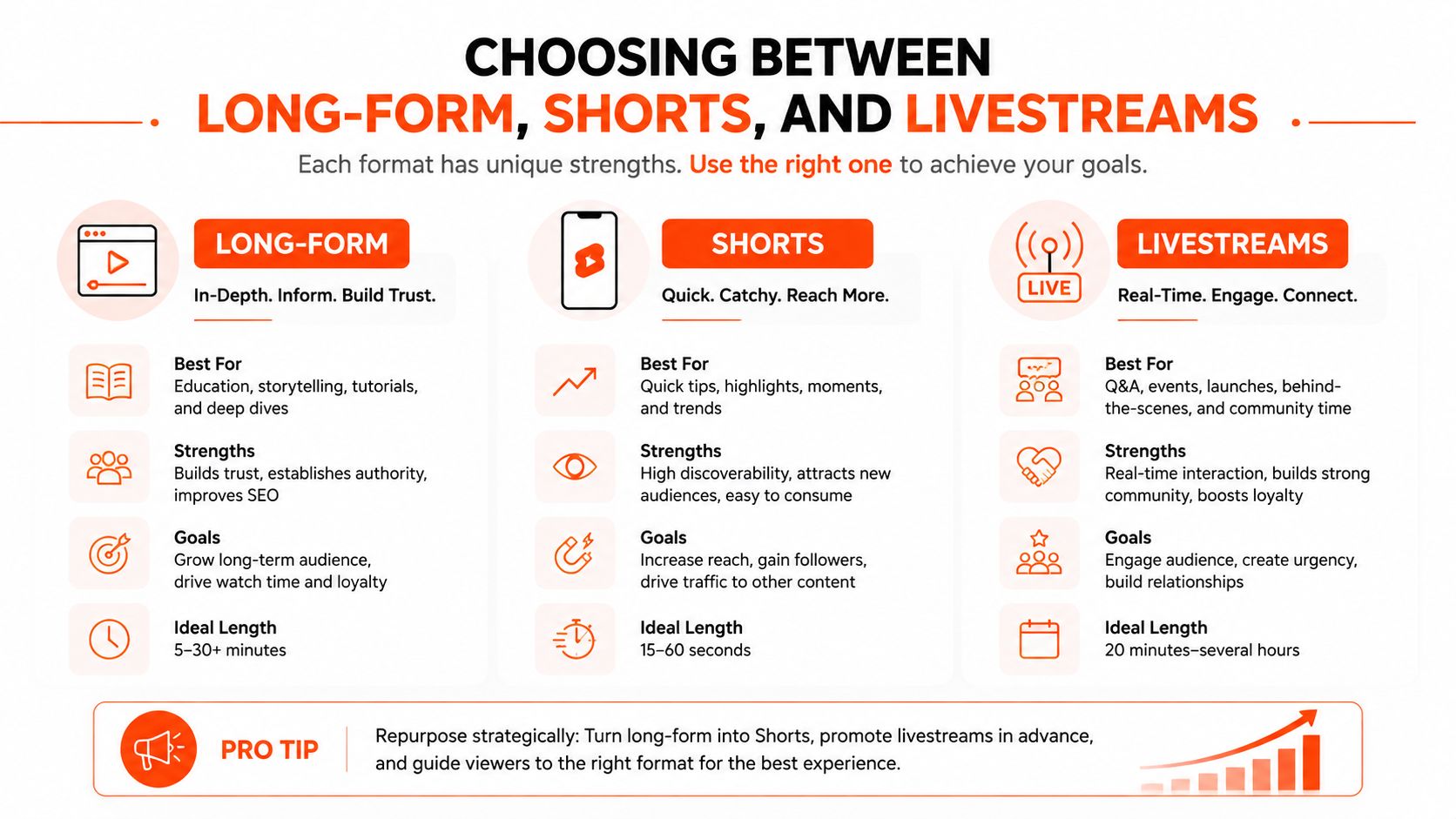
The embedded frame above is useful because the formats are not interchangeable. Long-form integrations win when the product needs explanation. Shorts win when you need fast, scroll-stopping distribution. Livestreams win when urgency, chat, or community interaction can carry the sale.
Long-form is for consideration
Long-form creator placements work best when the product has friction. Reviews, walkthroughs, comparisons, and tutorials let the creator prove the claim instead of just repeating it. That makes them a strong fit for higher-consideration categories and for campaigns where you care about downstream conversion, not just the first click.
The trade-off is cost and production time. Long-form takes more planning, more product familiarity, and tighter creative alignment. It also rewards creators who can retain attention rather than just rack up a click. That's why the best integrations put the value proposition early and then keep the story moving.
Long-form sponsorships usually fail when they wait too long to mention the product. The audience doesn't owe you attention, so the proof point needs to show up before the drop-off.
Shorts is for fast acquisition testing
YouTube Shorts is a different animal. It's better for quick hooks, repeated exposure, and top-of-funnel traffic that can be judged quickly. Recent data collected in 2026 found that 52% of YouTube users are most likely to engage with brands' short-form videos, while long-form is close behind at 49% source. That tells you both formats matter, but not for the same reason.
Shorts usually works best when you already know the message and want to test angles at speed. It's less useful for deep education and more useful for pulling people into the funnel. I like Shorts for offers with a simple demo, a strong visual hook, or a direct-response landing page that can convert without much handholding.
Livestreams are for urgency and real-time proof
Livestreams can be powerful when chat interaction, launches, or community energy matter. They can also feel risky, because you give up control and rely on the creator to keep the product relevant in real time. That's fine if the category benefits from live questions, but it's a poor fit if compliance, structure, or precise messaging matter more.
The data point I keep in mind here comes from attention, not hype. Agentio reported that creator integrations produced nearly five times more minutes of viewer attention than CTV for the same spend, with average placements achieving 85% completion on 94-second integrations source. That's a useful reminder that long-form can preserve message delivery better than most interruptive video formats.
Selecting and Vetting Creators with Data
The easiest way to waste money on YouTube is to sort creators by subscriber count and stop there. Subscriber size tells you almost nothing about whether a placement will move installs, trials, or revenue. What matters is whether the audience fits the offer, whether the creator can retain attention, and whether past sponsored content drove action.

Start with audience quality
The first pass should filter for relevance, not fame. A smaller creator with the right audience often outperforms a bigger one with loose fit, because the message lands in a context the viewer already trusts. That matters especially when you're selling something people compare, research, or delay.
I look for signs that the creator's content naturally supports the product. If they already teach, review, rank, test, or explain, the sponsored segment usually feels less forced. If their channel is mostly entertainment, you can still work with them, but the brief needs to do more of the heavy lifting.
Use sponsored performance as a screen
Past brand work is more valuable than a polished media kit. Look for how the creator handled integrations before, whether the sponsored segment stayed close to the hook, and whether they protected viewer attention. Weak retention on paid segments is a warning sign, even if the organic content looks strong.
A good shortlist usually includes mid-tier voices who repeatedly generate action in their niche. They often cost less than big household names and can be easier to brief, because they've already learned how to keep branded content moving. That doesn't mean macro creators can't work. It means you shouldn't pay for reach you can't justify.
Reduce risk with a vetted partner network
Vetting manually is slow. It also means your team keeps rebuilding the same checks from scratch. A vetted creator network lets you move faster, compare like for like, and reduce the number of bad-fit conversations you have to manage before launch.
One practical option is to work with a partner like Social Cloud, which combines creator selection, campaign planning, and attribution across YouTube, Instagram, TikTok, and Twitch. That kind of setup is useful when your team wants one workflow from shortlist to reporting instead of a stack of disconnected spreadsheets and outreach threads.
Forecasting and Briefing for Measurable Outcomes
Forecasting is where a lot of creator programs become either confident or chaotic. If the team can't estimate views, conversion potential, and budget allocation before the first contract is signed, you're not running a performance program, you're gambling. The goal is to know what a campaign is likely to do before you spend, then brief creators so the content can hit those numbers without sounding like an ad read.
Forecast from the outcome backward
Start with the KPI, not the creator list. If your target is installs, work backward from the install goal to the click expectation and then to the expected view volume. If your target is revenue, do the same thing with CPA or ROAS. This keeps the team honest about whether you're buying enough attention to matter.
Then split the forecast by format. Long-form usually carries more educational weight. Shorts can create cheaper testing volume. Livestreams can create concentrated bursts of intent. A serious forecast treats each one differently instead of trying to average them together.
Brief for retention, not just compliance
Good briefs protect creator voice while still shaping the conversion path. The creator should know the product promise, the proof point, the call to action, and the one detail you can't afford to bury. The trick is to give enough structure that the campaign can be measured, while leaving enough freedom that the delivery doesn't feel scripted.
I care most about where the creator mentions the product, because timing affects whether the audience sees it before attention fades. A proof point near the front of the integration usually performs better than one saved for the end, especially when the creator's audience is likely to skip. The script should make the product feel like part of the story, not a pause in it.
Briefing rule: don't hand creators a wall of claims. Give them the one conversion truth, the one supporting detail, and the one action you want after the video ends.
Update the forecast once signals arrive
Forecasts shouldn't stay frozen after launch. Early views, early clicks, and early save or comment patterns can tell you whether the message is landing or whether you need to shift spend toward a stronger creator or a sharper hook. That's especially true when you're testing both long-form and Shorts in the same quarter.
For teams that want a tighter process, the ROI framing in this measurement guide is a useful companion. It's the kind of operating discipline that stops YouTube from becoming a pile of pretty content with no business readout.
Attribution and Measurement That Actually Works
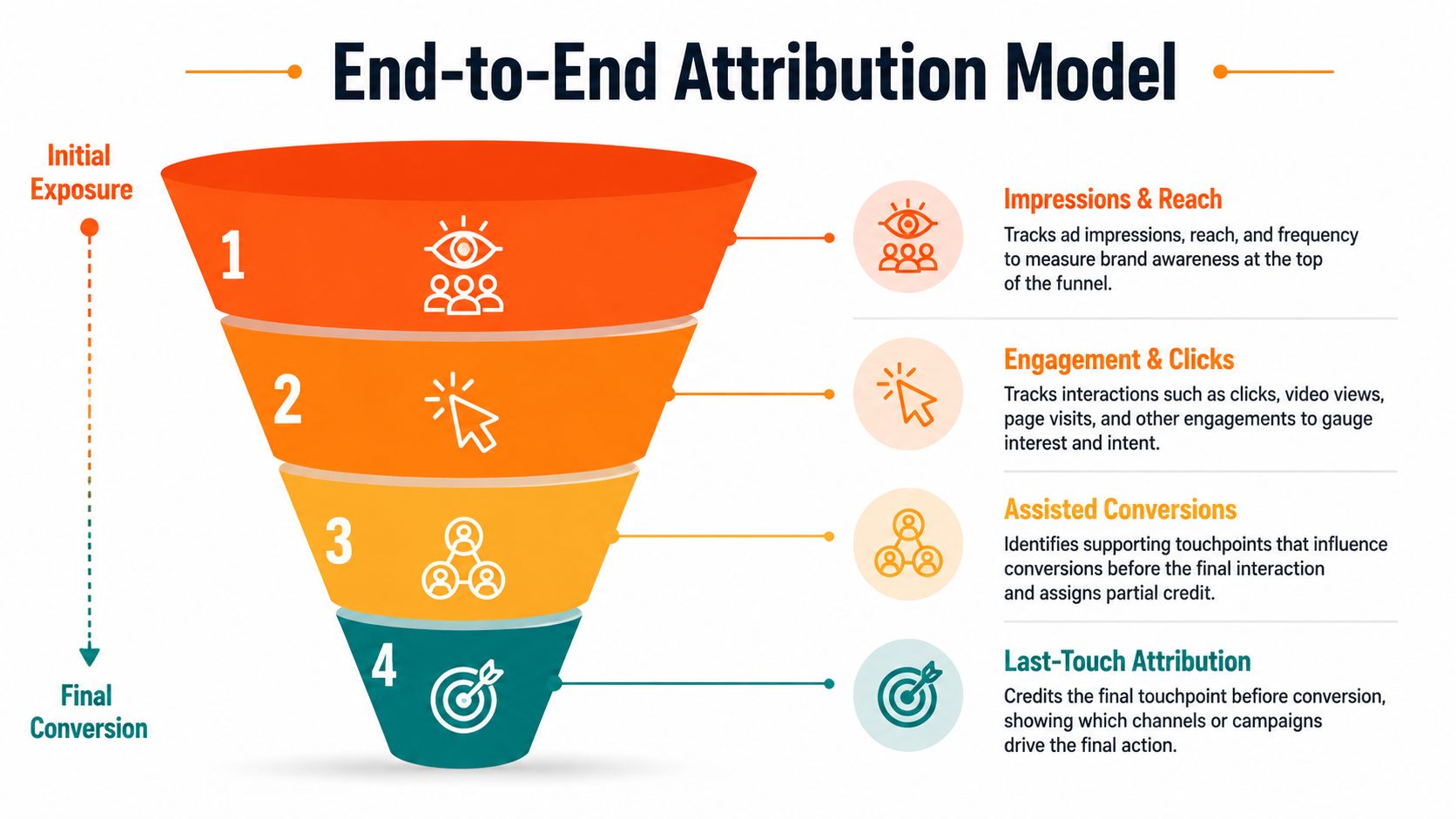
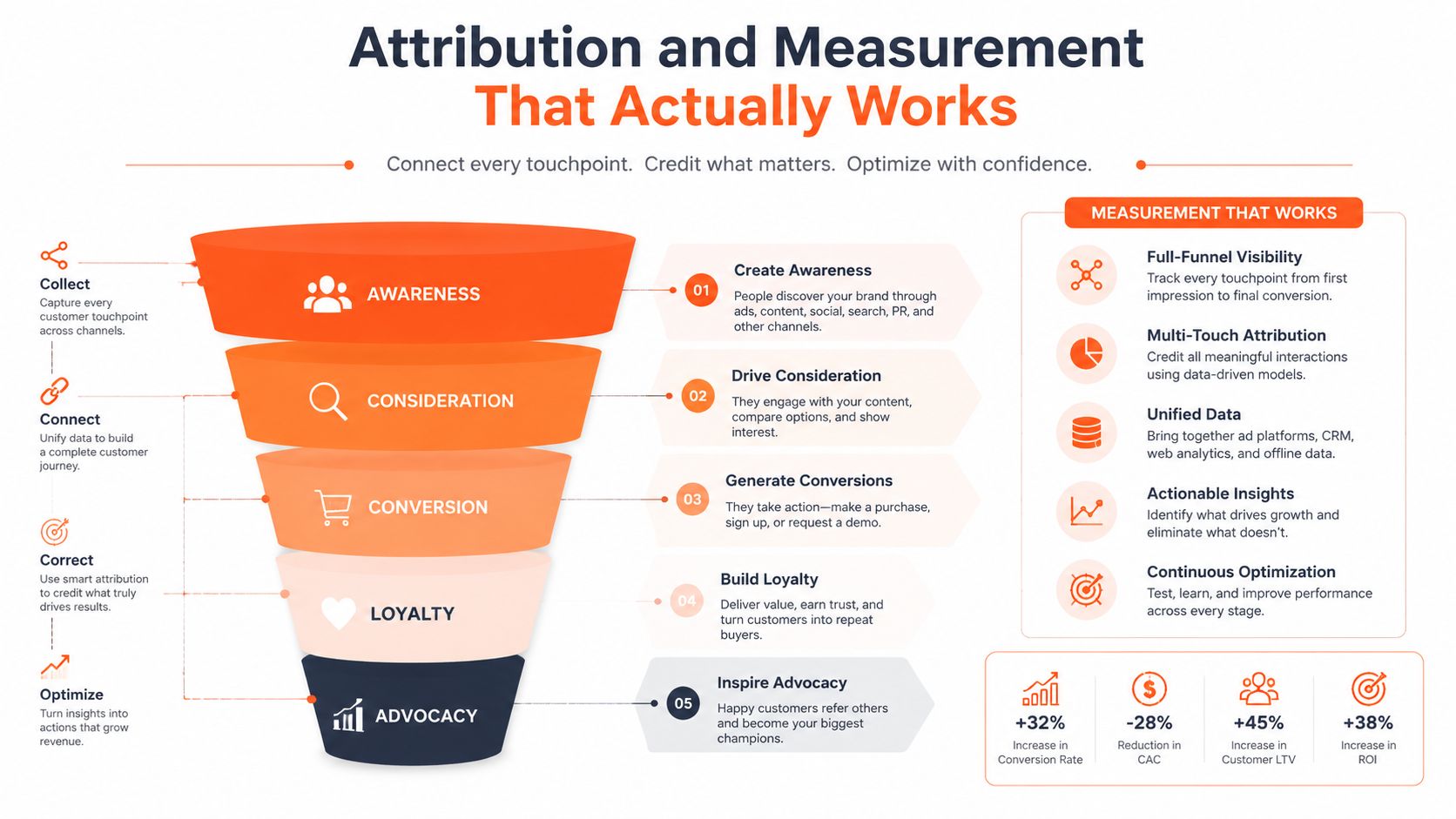
Attribution gets messy when teams pretend a single click tells the whole story. YouTube creator work almost never lives in a straight line from exposure to purchase. A viewer may watch, search later, return through a remarketing ad, and convert days after the original video. If you only measure last-click, you'll credit the wrong touchpoint and make bad budget calls.
Use a stack, not a single signal
The cleanest measurement stack usually combines tracking links, unique promo codes, post-purchase surveys, and view-to-conversion mapping. Each one catches a different piece of the journey. Links are good for direct response. Codes help when clicks are sparse. Surveys capture the influence of the creator when the click happens later or somewhere else.
That matters because creator campaigns often support both direct and assisted outcomes. YouTube creator ads and partnerships can lift awareness and brand equity, as noted in the Kantar data earlier, so the reporting should show both immediate response and upper-funnel contribution. If a creator helps people trust the brand enough to search later, that's real value even if the first touch wasn't the final click.
Model YouTube as multi-touch
Performance teams should stop demanding that every creator placement behave like a paid search ad. YouTube is often one input in a broader path, especially in longer consideration categories like SaaS, fintech, and health. That's why view-through logic, assisted conversions, and incrementality thinking matter more here than they do in purely transactional channels.
The right weekly report should show views, CTR, conversions, and ROAS by creator and format. It should also separate branded search lift, direct response, and assisted conversion patterns where possible. That gives the team enough detail to know whether the issue is the creator, the offer, or the path to purchase.
Keep reporting close to the creative
The cleanest readouts tie performance back to what changed in the video. Did the creator open with the problem or bury it? Did the call to action feel natural? Did the segment hold attention long enough to make the product believable? Those questions tell you far more than a raw view count.
If you want the operating model to hold up, every creator needs a unique identifier and every placement needs a consistent measurement plan. That way, the team can compare formats without guessing which result came from the creator and which came from distribution.
Contracts, Compliance, and Amplification
Once a YouTube program starts to work, the bottleneck usually shifts from ideas to rights, disclosures, and reuse. If those pieces aren't handled up front, the campaign can't be amplified efficiently, and the legal review becomes the reason the best content sits idle. That's a bad trade, because the creator already did the hard part.
Lock usage rights before the video is live
If you want to repurpose creator content, the contract has to say so. That includes the right to use the asset in paid media, on landing pages, in emails, and in other channels where the video can keep driving value after the original upload. Without those rights, you're capped at whatever organic reach the creator can deliver.
Disclosure language also needs to be clear. The creator should understand what has to be stated, where it has to appear, and how the brand wants the partnership represented. Compliance shouldn't be a final review step. It should be part of the brief and contract.
Build amplification into the plan
The strongest creator programs don't stop at upload. They turn the best-performing integration into new assets, such as clipped Shorts, paid social variants, or embedded product content on the site. That's where the economics improve, because one good creator segment can become multiple useful touchpoints.
If a creator says something cleanly once, don't make them repeat the whole story from scratch in every channel. Recut the asset and keep the original trust intact.
Precision gifting and seeding can also feed the same engine when it's done with intent. Instead of sending product to a broad list and hoping for organic noise, seed creators who already make believable content around the category. The result is usually more usable UGC and fewer irrelevant posts.
Industry Playbooks with Real KPIs
Different verticals ask YouTube to do different jobs. That's why a single benchmark usually disappoints everyone. E-commerce teams want conversion efficiency, app teams want installs, SaaS teams want qualified signups, gaming teams want scale and retention, and regulated categories care just as much about message control as performance.
E-commerce and DTC
For e-commerce, I'd lean into long-form reviews, creator demos, and Shorts that show the product in use. The strongest signals are usually CTR, assisted revenue, and repeatable creator fit rather than one-off virality. If a product solves a visible problem quickly, YouTube can work especially well because the creator can show the before and after in a way that feels native.
Apps, gaming, and software
For mobile apps and gaming, Shorts and livestreams are often the faster path to install volume and community interaction. Gaming teams in particular can benefit from live demos, audience questions, and creators who can turn a feature into a playable moment. SaaS and tech teams usually need the opposite, more explanation, more context, and more room for objection handling.
Fintech and health
Fintech and health need careful pairing of creator, message, and compliance. Long-form tutorials and structured explanations tend to fit better than loose social-first content, because the buyer has more questions and fewer reasons to trust a rushed pitch. That's where measurement discipline matters most, since the path from exposure to conversion can be longer and harder to observe.
For teams building a performance playbook, this campaign framework is a good reminder that outcome-linked creator work can be structured without turning every deal into a blunt affiliate-only arrangement.
Your Launch and Iteration Checklist
High-performing YouTube programs start with a sequence, not a pile of creative ideas. Define the business goal, choose the format, vet the creator, forecast the outcome, lock the brief, confirm the contract, launch with tracking, then review the numbers every week and cut what is not working.
A practical launch rhythm
- Set the KPI first. Decide whether the campaign is meant to drive installs, leads, sales, or assisted conversions.
- Choose the format mix by funnel stage. Use long-form for explanation, Shorts for fast testing, and livestreams when real-time trust matters.
- Vet creators on performance, not popularity. Audience fit and sponsored history should outrank subscriber count.
- Forecast before commitment. If the math does not support the goal, the campaign probably will not either.
- Brief for voice and conversion. The creator should sound like themselves, but the product proof and call to action still need to be clear.
- Contract rights and disclosures upfront. That is what makes amplification possible later, and it avoids a scramble when a post starts to work.
- Review weekly. Compare creators, formats, and hooks, then move budget toward the placements that produce signal.
If you need a clean planning template, this influencer marketing campaign framework is a useful starting point for organizing the launch.
How to scale beyond the pilot
Pilots are useful because they show which creator, format, and message combinations deserve more spend. If a creator keeps outperforming, make the next round more specific, not broader. The goal is not to chase more creator names. It is to build a repeatable system that keeps producing measurable outcomes.
Use a simple escalation rule. Keep a creator in test mode until the same hook or integration type shows repeatable efficiency across launches, then increase budget on that format before widening to a new audience segment. Retire underperformers after they miss the forecast two rounds in a row, especially if the creative angle is already clear and the issue is not execution. That keeps spend moving toward the placements that can scale.
A strong YouTube program feels less like a stunt and more like an operating system.