
A growth lead has a fixed creator budget, a skeptical finance partner, and one week to decide where the money goes. The pressure usually pushes teams toward the biggest names and the loudest view counts, even though neither guarantees a useful campaign.
These TikTok influencer marketing examples are worth studying for a different reason. Each one exposes a mechanic a growth team can test: a recognizable sound, a product drop, a character, creator co-creation, community participation, or a repeatable paid format. The headline result matters less than the design underneath it.
Every example below breaks the campaign into three questions. What was the creative mechanic? Which audience lever made people care or participate? What was the measurement gap that a modern team should close? The final takeaway turns the observation into an action you can use in your next brief.
Table of Contents
1. e.l.f. Cosmetics #eyeslipsface Challenge
A branded sound gave e.l.f. Cosmetics a way to turn a campaign into a participation engine. Launched in October 2019 with an original song created with Republic Records and Movers+Shakers, the challenge had accumulated 5.9 billion views on TikTok by July 2020. Later reporting placed the hashtag above 6 billion views, as documented in this campaign account of e.l.f.’s TikTok challenge.
The creative mechanic was a memorable sound tied to the brand name, supported by creators who showed how to build a video around it. That lowered the effort required to join. Users needed a recognizable audio cue and a reason to make their own version, rather than a product catalogue, scripted endorsement, or advanced editing skills.
The audience lever
The audience lever was participation through imitation. Creators seeded the behavior, then consumers adapted the sound into their own content. A sponsored creator post usually ends with the original placement. A repeatable sound and format can continue circulating after paid activity stops.
The audio also connected clearly to e.l.f. without forcing every video to function as an advert. Participants could dance, perform, or interpret the prompt in their own style while preserving the brand association. That balance gave the challenge room to travel beyond beauty-focused content.
The measurement gap
View totals show distribution, not business value. e.l.f.’s wider integrated effort generated 31 million video views and 548,000 new website users in 90 days, with reported effects including a 60% increase in ad recall and a 10% lift in brand awareness, according to the same e.l.f. campaign analysis. The figures broaden the evaluation, but teams still need to connect participation with landing-page behavior, product interest, or conversion.
Reusable takeaway: Build a short, memorable audio asset, seed it with creators, and connect participation to a tracked landing page, code, or product action. Treat views as the top of the funnel, not the verdict.

2. Ocean Spray and the Cranberry Juice Moment
Ocean Spray's cranberry juice moment shows what happens when a creator format feels spontaneous enough to escape the original post. Nate Burleson's playful cranberry juice challenge video spread through TikTok and wider media coverage, with Ocean Spray becoming strongly associated with the moment. The campaign wasn't a conventional sequence of polished sponsored posts. Its power came from humor, recognizability, and an unexpected fit between a legacy product and internet culture.
The creative mechanic was a simple visual gag built around product use. The product wasn't explained through a feature list. It appeared in a behavior people could understand immediately, copy, and reinterpret. That's especially useful for older brands. A familiar product can feel new when a creator places it inside a current cultural format.
The audience lever
The audience lever was surprise plus social proof. People weren't responding to a formal brand announcement. They were responding to a creator-led moment that made the brand feel culturally present. The association then gained strength as more users, media outlets, and brand channels referenced it.
Teams often try to manufacture this type of moment with a rigid brief. That usually removes the very looseness that makes the content work. A better approach is to brief creators on the product truth, the boundaries, and the desired audience action, then give them room to find the joke.
The measurement gap
The obvious risk is confusing attention with durable demand. A sudden increase in mentions can be valuable, but it doesn't automatically prove incremental sales. Track branded search, direct traffic, retailer activity, product availability, social mentions, and sales during the moment. Keep a baseline so the review doesn't rely on screenshots of viral posts.
Use the product truth as the constraint, not a script. The creator should make the product fit the joke, while the brand prepares follow-up content before attention disappears.
A useful follow-up plan includes creator responses, owned-channel remixes, retail availability messaging, and paid amplification of the strongest organic assets. The opportunity is not just to celebrate the original post. It's to turn a culturally relevant moment into a sequence of measurable actions.
Reusable takeaway: Give creators a clear product role and flexible creative space. Prepare amplification and measure search, conversation, traffic, and sales together, because no single metric captures a meme-driven surge.
3. Dunkin' and Charli D'Amelio's Signature Drink
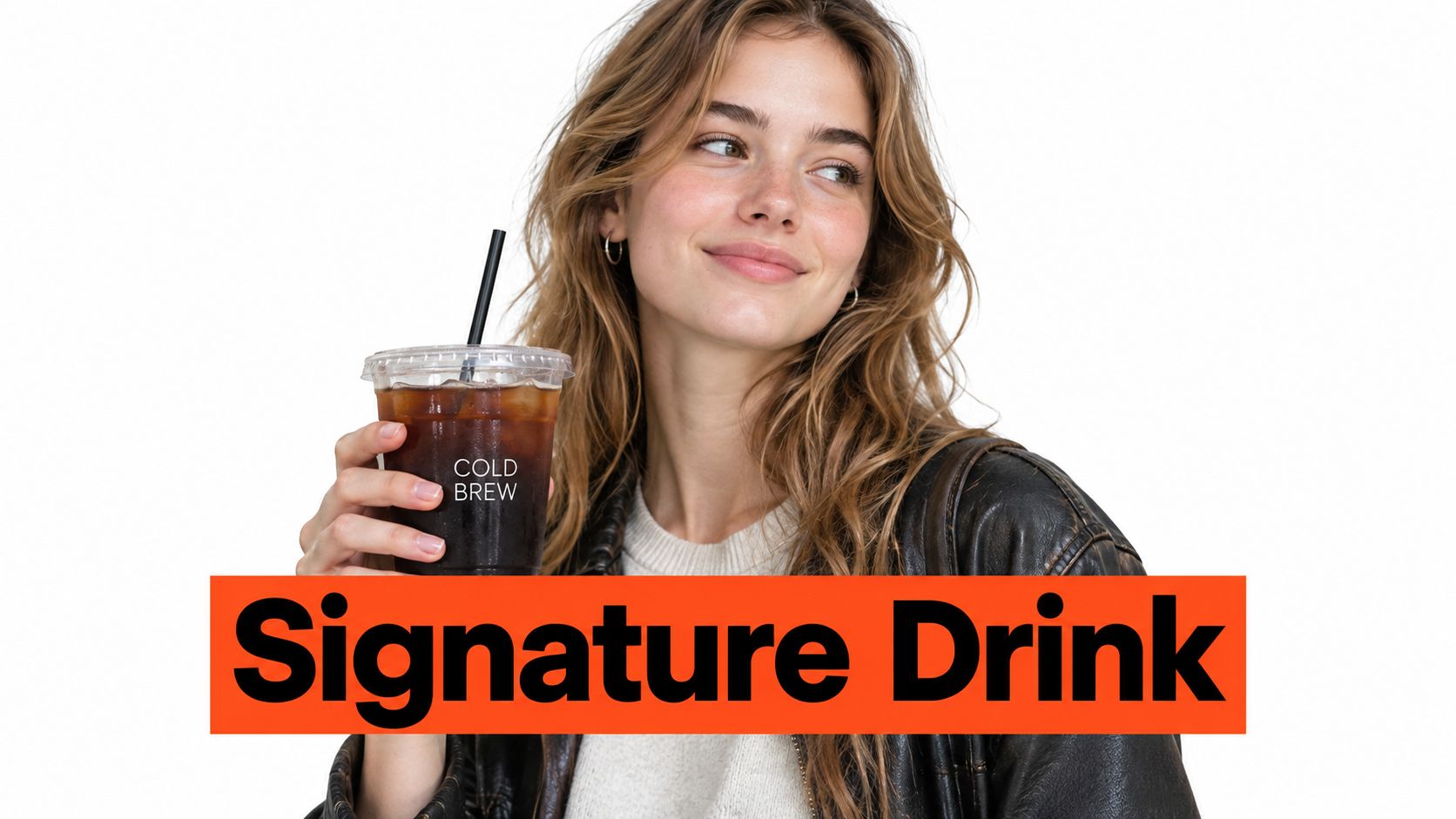
Dunkin' treated Charli D'Amelio as more than a media placement. The brand developed a named cold brew menu item with her in 2020, turning a creator preference into a product experience. That move gave fans a concrete reason to visit or order, rather than asking them only to watch a sponsored video.
The creative mechanic was product co-creation. Charli's existing association with the drink made the partnership easier to understand. Dunkin' then gave that association a physical form in the menu, where the collaboration could live beyond a single post.
The audience lever
The audience lever was identity and access. Fans could order the thing associated with a creator they followed. That creates stronger participation than a generic product mention because the audience can perform the affiliation out in the world.
This model only works when the creator's audience and the product's purchase behavior overlap. A large following is not enough. Look for evidence that the creator's preferences, routines, and community language naturally connect to the category.
A rollout can include:
- A named product: Make the collaboration easy to request, search, and remember.
- A trackable offer: Use a creator-specific code, app offer, or order path.
- A content sequence: Show the launch, ordering behavior, reviews, and customization ideas.
- A retention angle: Measure whether first-time buyers return after the initial curiosity.
The measurement gap
A signature product can generate strong trial without proving repeat demand. Separate first orders, repeat orders, new customers, average order value, and creator-attributed redemptions. If the campaign runs through an app, preserve the creator identifier through the order and later retention events.
The deeper lesson is that co-creation raises the stakes. A creator can make a product more relevant, but the product must still deliver a satisfactory experience. If the menu item, packaging, availability, or ordering flow disappoints, the creator association can amplify complaints as quickly as it amplifies interest.
Reusable takeaway: Use creator co-creation when the audience already recognizes a genuine preference. Build creator-level tracking into the product and ordering experience, then judge the partnership on repeat behavior, not launch excitement alone.
4. McDonald's Grimace Shake Trend
McDonald's launched a limited-time purple Grimace Shake and gave the product a strong character connection through Grimace. TikTok users then created dramatic reaction videos, turning the drink into a meme format. The brand didn't need to dictate every punchline. The product's color, the mascot, and the time-limited context supplied enough raw material for users to invent the behavior.
The creative mechanic was a surprising product paired with a recognizable character. The audience understood the visual instantly. A purple shake and Grimace created a clear prompt without requiring a long explanation.
The audience lever
The audience lever was shared participation through a single reaction format. Users could make their own version while keeping the central structure intact. Limited availability added urgency, although urgency alone doesn't create a trend. The format still needs to be easy to recognize and fun to repeat.
Brands planning similar activity should monitor the conversation in real time. A reaction trend can move away from the intended product message, and the brand needs to decide whether to join, redirect, or stay quiet. Daily sentiment review matters more than a post-campaign summary.
For additional context on how cultural behavior spreads on the platform, see these TikTok trend observations.

The measurement gap
A meme can create enormous cultural visibility while leaving purchase incrementality unclear. Compare stores or audiences exposed to the campaign with a relevant pre-campaign baseline where possible. Track product availability, sales, branded searches, sentiment, and repeat visits. Don't treat every mention as a conversion signal.
Practical rule: Give creators one visual prompt and one clear window of relevance. Don't over-script the reaction, but decide in advance how the brand will handle parody, criticism, and unexpected interpretations.
Reusable takeaway: Combine a limited product, a distinctive character, and a repeatable reaction. Measure both commercial behavior and sentiment, because the same mechanic can generate attention and reputational risk.
5. Fortnite Emotes Inspired by TikTok Dances
Fortnite's use of TikTok dance culture demonstrates how creator-led behavior can become part of an interactive product. The Renegade dance, created by Atlanta-based creator Jalaiah Harmon in 2019, became a defining TikTok trend and was later added to Fortnite's item shop as an emote. The example matters because the audience didn't just watch the dance. Players could buy, equip, and perform a version inside the game.
The creative mechanic was culture transfer from short-form video into an in-game item. That gives the trend a second life and ties social recognition to a monetizable feature. For gaming teams, the format can also support community events, creator challenges, and user acquisition content.
The audience lever
The audience lever was status and self-expression. Players use emotes to communicate identity, humor, and familiarity with internet culture. A TikTok-originated emote can make the game feel connected to what players already discuss outside it.
Speed matters, but credit matters just as much. The debate around attribution for the Renegade dance shows why brands and platforms should identify original creators early, negotiate rights clearly, and compensate creators publicly and fairly. Treating a creator's work as free trend material can damage trust with the exact community a game wants to attract.
The measurement gap
Downloads or item purchases alone won't show the full impact. Track creator-linked installs, first sessions, emote purchases, usage frequency, social sharing, and retention cohorts. Compare players who entered through the creator challenge with other acquisition groups, while keeping the attribution window consistent.
The strongest version of this model connects three activities: a creator introduces the behavior, the game releases an official expression of it, and the community gets a reason to perform it again.
Reusable takeaway: When a trend can become a product feature, move quickly, but secure creator credit, compensation, and usage rights before launch. Measure both monetization and player quality.
6. Duolingo's Brand Persona and Creator Collaborations
Duolingo's TikTok presence is built around Duo, its green owl mascot, and a voice that treats the brand as a character rather than a language-learning utility. The account uses self-aware humor, pop-culture references, and app-related jokes, while creator and fan collaborations extend the same personality into other feeds.
The creative mechanic is character-led consistency. Creators aren't asked to make Duolingo look like a different brand in every placement. They help reinforce a recognizable world, where Duo can be funny, demanding, awkward, or culturally aware.
The audience lever
The audience lever is familiarity. Repeated exposure to a consistent character makes individual videos easier to recognize in a crowded feed. It also gives creators a clear creative partner. They can play against the mascot, react to it, or bring their own humor into the relationship.
Brand voice still needs boundaries. Give creators examples of the acceptable tone, topics that require review, and the product behavior the content should support. Then let them use their own timing and delivery. Overly polished scripts often remove the personality that made the collaboration attractive.
A useful reference for shaping distinct identities is this collection of brand voice examples.
The measurement gap
Persona content often wins on attention before it wins on direct response. Track video completion, profile visits, app-store activity, installs, activation, and retention cohorts. For a language app, an install without a completed learning action is a weak signal. Creator-level identifiers should remain attached through onboarding so the team can distinguish cheap attention from valuable users.
A memorable mascot is an acquisition asset only when the product experience continues the joke.
Reusable takeaway: Define the character and voice before recruiting creators. Let collaborators improvise within clear boundaries, then measure installs and post-install behavior instead of treating engagement as the business outcome.
7. Performance-Driven Spark Ads With Creator Content
Spark Ads turn an organic TikTok post into a paid distribution asset while keeping the post connected to the creator's account. That makes the format useful for e-commerce, app, and gaming teams that want to scale content that already feels native. The key decision is not whether a creator has a large audience. It's whether the post has a strong opening, clear product relevance, and enough evidence to justify paid reach.
The creative mechanic is organic proof followed by controlled amplification. Instead of producing a separate polished advert, the brand tests creator content in its natural environment, then puts budget behind the strongest candidates.
For a practical explanation of the format, see how TikTok Spark Ads work.
The audience lever
The audience lever is native presentation plus social context. The video still looks and feels like a creator post, but the brand can use paid targeting, bidding, and optimization to reach more relevant viewers. This can extend the life of a good post without asking the creator to recreate it as a conventional advertisement.
Rights need to be negotiated before the first upload. Define the usage period, territories, edits, account permissions, whitelisting terms, and music requirements. Teams should also review TikTok sound licensing considerations before scaling audio-dependent assets.
The measurement gap
Paid distribution can make creator performance look better without proving that the creator caused the conversion. Test multiple assets under comparable audience and bidding conditions. Track impressions, view quality, click-through rate, conversion rate, CPA, and incremental outcomes where a holdout or baseline is available.
TikTok's own published examples report that creator-led packages produced up to 2x higher blended ROAS in some campaigns. One conversion-focused example reported a 45% increase in conversions, a 74% ROAS increase, and a 31% reduction in cost per conversion, while another reported a 9.5% sales uplift, €62,000 in incremental value, and 2.4x ROI, as shown in TikTok's web conversion case-study material. These are reported campaign outcomes, not universal benchmarks.
Reusable takeaway: Contract Spark Ad rights upfront, test several creator posts before scaling, and preserve creator-level tracking. Scale the creative signal, not just the creator's follower count.
8. Affinity-Targeted Gifting and UGC Seeding Campaigns
Targeted gifting works best when the product reaches creators who already fit the category, audience, and content style. A beauty, apparel, or wellness brand can treat seeding as both relationship building and content production, but only if it avoids mass outreach with no qualification.
The creative mechanic is product-in-context UGC. A creator receives the product because it belongs in their normal routine, not because the brand wants a generic unboxing from anyone willing to post. The resulting content can support organic distribution, paid usage, or both.
The audience lever
The audience lever is affinity and credibility. A creator whose followers already care about curly hair, running apparel, skin routines, or wellness habits can explain the product in a way a broad lifestyle account may not. Audience fit also improves the odds that the creator will keep using the product after the initial placement.
Before sending anything, review audience geography, content quality, comments, prior sponsored work, and signs of artificial engagement. Give every creator a concise brief with the product truth, required disclosures, prohibited claims, and a flexible creative direction. Secure paid usage rights in writing before repurposing a gifted post.
For a closer look at creator-led UGC workflows, see user-generated content creators.
The measurement gap
Gifting can look inexpensive because the cash fee is limited, but product, shipping, coordination, creative review, and usage rights all have a cost. Use a creator-specific code or tracking link wherever possible. Measure content delivery, qualified views, clicks, conversions, assisted conversions, cost per usable asset, and downstream performance when the post becomes a Spark Ad.
A broader disclosure gap also affects how teams interpret performance. A 2025 peer-reviewed study of 8,871 TikTok videos posted by 97 food and beverage influencers found 1,360 videos featuring branded products. Among videos featuring branded products, 69.3% contained no brand-relationship disclosure, while only one used TikTok's official disclosure label and only one verbally mentioned a contractual relationship, according to the peer-reviewed TikTok disclosure study. Clear disclosure protects trust and makes paid influence easier to distinguish from organic recommendation.
Reusable takeaway: Qualify creators before gifting, attach tracking to every package, and secure repurposing rights before content appears. Treat disclosure as part of measurement quality, not an obstacle to authenticity.
8 TikTok Influencer Marketing Examples Compared
| Campaign / Example | Implementation Complexity 🔄 | Resource Requirements ⚡ | Expected Outcomes 📊 | Ideal Use Cases 💡 | Key Advantages ⭐ | Main Limitations |
|---|---|---|---|---|---|---|
| e.l.f. Cosmetics #eyeslipsface Challenge | Low setup: create sound + seed creators; trend timing unpredictable | Low production cost; creator seeding budget; optional paid amplification | Potentially massive organic reach and UGC volume; brand awareness spike | Beauty & DTC consumer goods with visual demos | High virality potential; reusable sound asset ⭐ | Unpredictable success; hard sales attribution; limited control |
| Ocean Spray Cranberry Juice (Nate Burleson) | Minimal if organic; mostly reactive and opportunistic | Very low paid spend if spontaneous; may need PR/paid follow-up | Rapid awareness/search lift; strong earned media but often short-lived | Legacy CPGs seeking youthful attention | Authentic-feeling, cost-efficient cultural moment ⭐ | Hard to plan; limited messaging control; short duration |
| Dunkin' x Charli D'Amelio Signature Drink | High: product co-creation, ops & retail coordination | High: product development, distribution, POS/promos, tracking | Tangible in-store visits and sales; strong fan-driven demand | Food & beverage brands with physical retail | Drives purchases and store visits; creator ownership builds authenticity ⭐ | Operational complexity; success tied to one creator |
| McDonald's Grimace Shake Trend | Medium: limited release + storytelling + community prompts | Medium: product run, PR, monitoring; social moderation | Very high earned reach; strong Gen Z engagement; meme potential | QSRs and brands with mascots/limited-time items | Low media cost for large cultural moments; easy UGC format ⭐ | Virality can flip negative; momentum unpredictable |
| Fortnite emotes from TikTok dances | Medium–High: licensing, rapid productization, legal checks | Medium: dev resources, legal/licensing, marketplace ops | Monetization via cosmetics; cross-platform audience growth | Gaming publishers and studios focused on UA/monetization | Leverages existing viral culture to drive recurring revenue ⭐ | Creator credit/compensation risk; timing-critical |
| Duolingo's brand persona & creator collaborations | Medium: sustained creative strategy + trend responsiveness | Medium: frequent content production, community management | Strong brand recall, engagement, and retention lift | Mobile apps, SaaS, edtech and habit-based products | Builds memorable persona that fuels organic engagement ⭐ | Requires high-frequency content; tone must be managed carefully |
| Performance-driven Spark Ads with creator content | Low–Medium: permissions, tracking links, ad setup | Medium: paid budgets, creator rights/pay, attribution setup | Scalable, measurable conversions and installs when optimized | DTC e-commerce, mobile app UA, gaming publishers | Preserves native social proof while enabling performance measurement ⭐ | Needs creator permissions; organic success ≠ paid success |
| Affinity-targeted gifting & UGC seeding campaigns | Medium: creator selection, briefs, rights management | Medium: product cost, shipping, contracts, follow-ups | Produces credible, reusable UGC library for ads; variable uptake | Beauty, apparel, wellness DTC brands | Cost-effective UGC production; builds ad-ready content library ⭐ | Not all creators post; rights and attribution require careful management |
Turning These Examples Into Your Next TikTok Test
The eight examples point to a practical sequence. Start with one creator-led format, not a portfolio of unrelated experiments. Choose a branded sound if your audience likes participation, a Spark Ad if you already have promising organic posts, or targeted seeding if your product needs demonstrations and credible use cases.
Write the test around a specific behavior. That might be a product order, an app install, a qualified lead, a repeat purchase, or an in-game action. The creative brief should explain the product truth and the audience problem, while leaving enough room for the creator's delivery to feel native.
Attach a tracked code or link to every placement. If the conversion happens inside an app, pass the creator identifier into the install and onboarding flow. If the sale happens in a store or through a marketplace, add promo codes, post-purchase surveys, or other supporting signals. Don't rely on one attribution method, especially when TikTok discovery can influence people who convert later or elsewhere.
Review the campaign weekly across three layers:
- Attention: Watch views, completion quality, comments, shares, and profile activity.
- Response: Review CTR, landing-page behavior, code use, installs, and conversion rate.
- Business value: Compare CPA, ROAS, new-customer rate, retention, contribution margin, and assisted conversions where relevant.
The measurement gap changes by format. A sound challenge can overproduce views while underproducing attributable orders. A product collaboration can generate trial without proving repeat purchase. A Spark Ad can produce efficient clicks while paid reach makes incrementality harder to isolate. Gifting can generate useful assets, but only if the team values content quality and future usage rather than counting packages sent.
TikTok Shop adds another allocation question for commerce teams. Recent market reporting estimates that TikTok Shop generated approximately $15.1 billion in U.S. gross merchandise value in 2025, up 68% from 2024. Video represented 50% of the format share, livestreaming rose from 10% to 14%, and the Shop tab increased from 32% to 36%, according to this TikTok Shop affiliate commerce analysis. Those figures describe market activity, not guaranteed incremental revenue for every creator program.
Use the data to decide whether fixed fees, affiliate commissions, livestreams, or paid amplification fit your margins and customer behavior. Report contribution margin, new-customer rate, refund rate, commission expense, and incrementality alongside attributed GMV. A top creator can dominate revenue, while a wider group of smaller creators may produce more repeatable learning.
If you want a partner to plan, run, and measure campaigns at that level, Social Cloud works on per-creator attribution for TikTok and other major platforms. Its approach combines creator selection, briefing, usage rights, tracking links, promo codes, post-purchase surveys, and weekly reporting so teams can see which content earns more than attention.
The next test doesn't need to be huge. Pick one mechanic, recruit creators whose audiences already match the behavior you need, define the success threshold before launch, and preserve the identifiers that let finance challenge or validate the result. Keep what the data supports, revise what it doesn't, and avoid copying a viral headline when the underlying mechanic isn't a fit for your product.
Social Cloud plans, runs, and measures creator campaigns across TikTok, YouTube, Instagram, and Twitch, with creator selection, briefs, compliance, usage rights, and per-placement attribution. If you're ready to turn one of these TikTok formats into a measured test, visit Social Cloud to discuss your campaign.