Stop chasing trends without a growth plan. A viral sound, meme, or hashtag isn't automatically a good reason for a brand activation. The useful question is which trend structure supports the outcome you need, whether that's discovery, education, community, live interaction, or conversion.
That matters because TikTok trends move quickly. Independent reporting on a Publicis Groupe APAC study found that nearly half of trends disappear within five days, while only a small minority stay relevant beyond two weeks, as reported by Marketing Interactive's summary of the trend study. A team that spends too long on approvals can miss the format entirely.
The strongest campaigns use lightweight briefs, creator-native execution, and measurement prepared before anything goes live. Evaluate each format against audience fit, production speed, creator freedom, measurable signals, usage rights, and paid amplification potential. Then decide whether the trend deserves organic testing, Spark Ads, or neither.
Table of Contents
- 1. Short-Form Product Unboxing and First Impressions
- 2. Trend Participation with Brand Integration
- 3. Creator-Led Product Comparison and Education Content
- 4. Influencer Duets and Stitch Collaborations
- 5. Behind-the-Scenes and Creator Takeovers
- 6. Creator-Generated UGC and Seeding
- 7. Creator-Hosted Live Streams and Q&A Sessions
- 8. Niche Community Challenges and Hashtag Campaigns
- 9. Conversion-Focused Creator Testimonials and Case Studies
- 10. Multi-Creator Series and Episodic Storytelling
- 10-Point TikTok Trend Comparison
- Turn Trend Signals Into Repeatable Campaigns
1. Short-Form Product Unboxing and First Impressions
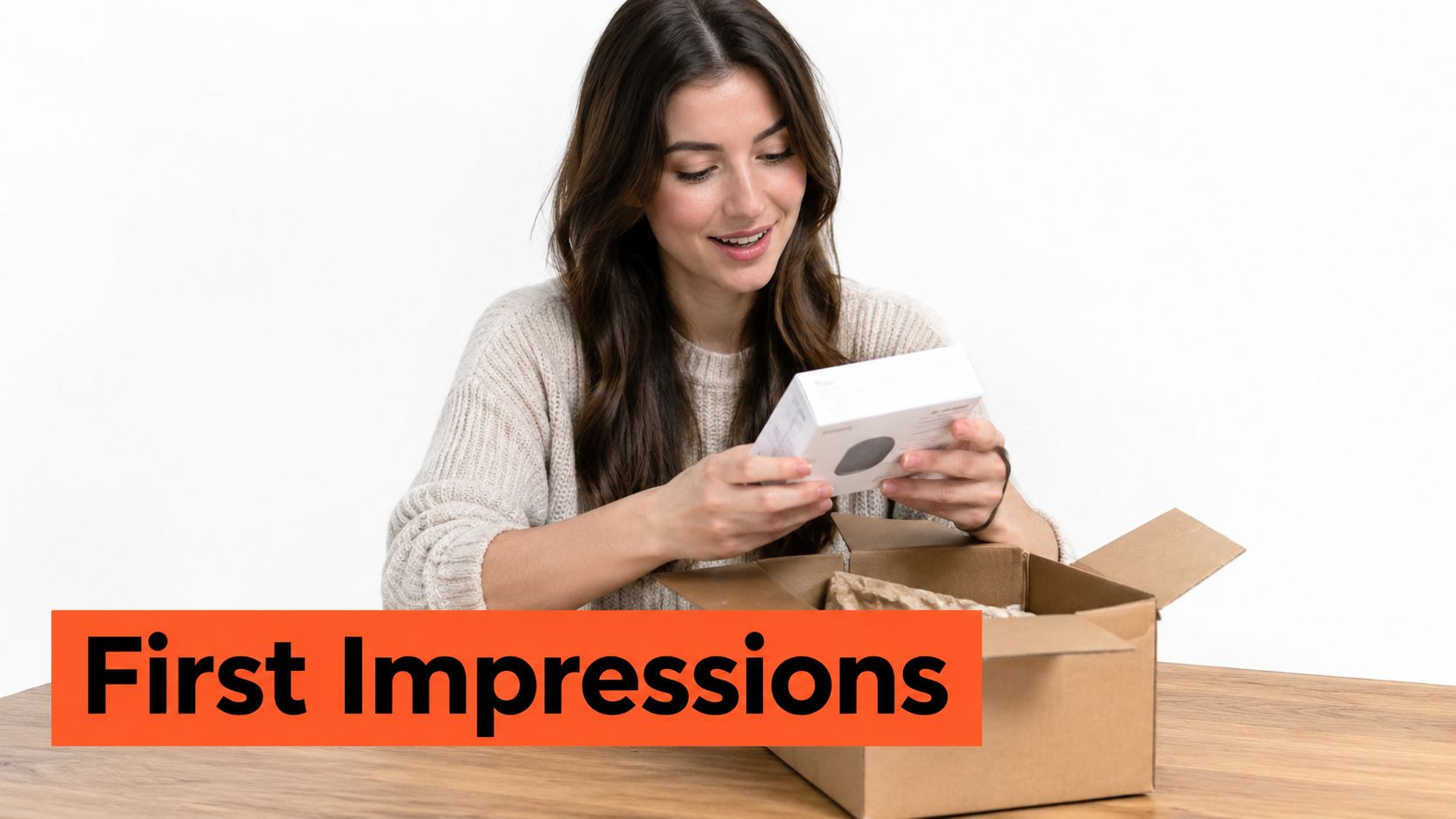
Unboxing works because the audience sees the product before the creator has polished an opinion. The package arrives, the seal breaks, the details appear, and the creator reacts in real time. That sequence gives e-commerce, beauty, technology, gaming, and app brands a natural route into product discovery without forcing a traditional commercial into the feed.
A good brief names the product benefits that must be visible, then leaves the reaction alone. A beauty creator might show texture, application, and finish. A gaming creator could focus on setup, feel, and the first session. A fashion creator might style one item immediately rather than reciting a product description.
Use creator-specific attribution from the beginning:
- Unique codes: Give each creator a code that matches the audience and placement.
- Trackable links: Use separate links for the profile, caption, landing page, and paid version.
- Creative signals: Review clicks, comments that indicate purchase intent, add-to-cart activity, and conversions together.
- Usage permissions: Confirm whether the brand can turn the post into Spark Ads or adapt it for other channels.
Practical rule: Brief the proof points, not the reaction. A creator who sounds surprised, uncertain, or specific can make the product more credible than one who delivers perfect brand copy.
For teams building a repeatable pipeline, influencer video marketing guidance can help connect creator selection, production, and attribution. A reference-driven ad creative tool can also support the process of turning product references into usable creative direction.
2. Trend Participation with Brand Integration
Trend participation is strongest when the brand can enter the joke, structure, or visual language without becoming the joke's interruption. A fit check can feature an apparel collection. A routine format can show how a wellness product fits into a day. A before-and-after structure can make a transformation legible without requiring a long explanation.
The weak version copies a popular sound and places a product in the frame. That creates a familiar post, but not necessarily a reason to remember or buy. The stronger version keeps the recognizable trend mechanic while giving the creator a clear point of view, such as a specific customer problem, product use case, or audience tension.
Keep the briefing responsive:
- Trend window: Approve a flexible concept quickly enough for the format to remain culturally relevant.
- Creator freedom: Offer several possible angles instead of dictating a finished script.
- Brand role: Decide whether the product is the punchline, the solution, the visual reveal, or a supporting detail.
- Measurement: Compare watch-through, saves, comments, profile visits, clicks, and assisted conversions rather than relying on views alone.
A trend can support awareness without supporting action. Add a search-friendly caption, a clear product context, and a landing page that matches the promise in the video. TikTok's 2026 forecast says 2 in 3 searchers use TikTok because they discover useful things beyond their original query, which makes utility a valuable test alongside entertainment. The finding is summarized in TikTok's 2026 trend forecast for marketers.
Brands working with younger audiences may also benefit from Gen Z brand strategy guidance, provided the execution still feels like the creator's normal content.
3. Creator-Led Product Comparison and Education Content
Comparison content earns attention by answering a question the viewer already has. Which payment tool fits a freelancer? Which project management workflow suits a small team? What does a privacy product actually change? A creator who can explain the difference clearly gives complex products a way to compete in a fast-moving feed.
This format works best with people who already teach, review, troubleshoot, or explain within the category. A finance creator can compare practical use cases between payment apps. A cybersecurity specialist can demonstrate how a VPN changes a normal browsing session. A software creator can show the same workflow in two tools and explain where each one creates friction.
The brief should define the decision the viewer is trying to make. Don't ask a creator to list every feature. Ask for a format that makes the choice easier:
- Comparison angle: Product versus an alternative, feature versus feature, or old workflow versus new workflow.
- Proof requirement: Require a screen recording, demonstration, or concrete scenario where appropriate.
- Audience language: Identify the user, problem, and experience level the creator should address.
- Conversion path: Place the trackable destination where the viewer can act after the explanation.
Track retention around the first comparison point, the moment of demonstration, and the final recommendation. A video can attract broad discovery but lose qualified viewers if the explanation starts too slowly. The best organic version often becomes a strong Spark Ad once a concise CTA and relevant context are added.
This format isn't limited to consumer products. B2B SaaS, fintech, health technology, AI tools, gaming services, and cybersecurity products all benefit when creators translate features into decisions.
4. Influencer Duets and Stitch Collaborations
Duets and Stitches turn one creator's content into a starting point rather than a finished asset. A beauty creator can respond to a product tutorial, a gamer can add commentary to a play clip, and a fitness creator can demonstrate a variation on a challenge. The format gives brands a way to connect several voices without making every participant deliver the same video.
The collaboration only feels additive when the creators have a reason to respond to each other. Pairing two people with identical audiences and identical delivery can produce repetition. Pairing a product explainer with a practical user, or an established creator with a credible emerging voice, can create a more useful exchange.
A Duet should add information, personality, or tension. If it only repeats the original clip, the collaboration has no clear job.
Brief each creator separately, but define the shared brand boundaries. One creator might introduce the question while another demonstrates the answer. Another useful structure is a response chain, where each post advances the same product story from a different audience perspective.
Measure the original and response posts as a connected unit:
- Conversation quality: Look for questions, objections, recommendations, and requests for a follow-up.
- Network reach: Identify which creator's audience produces the strongest qualified engagement.
- Sequence performance: Compare the first post, response post, and any follow-up action.
- Paid potential: Secure permission to use the strongest post as a Spark Ad, including creator handles and audio rights where needed.
Don't assume a collaboration succeeded because the second video received attention. Check whether viewers moved toward the product, account, community, or next episode.
5. Behind-the-Scenes and Creator Takeovers
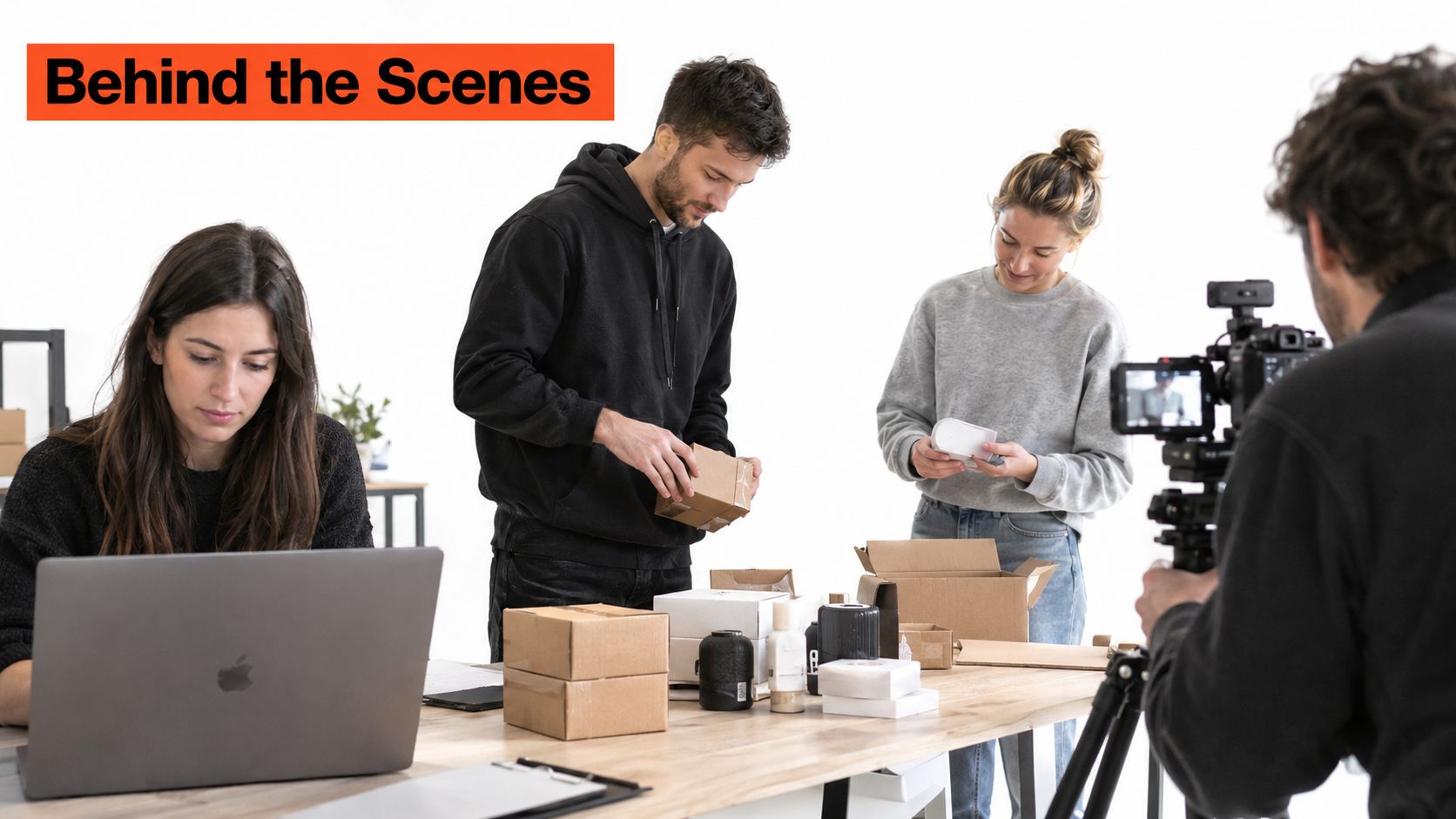
Behind-the-scenes content replaces polished brand distance with access. A warehouse packing order, a game studio testing a feature, a software team building a release, or a health technology team validating a product can give viewers a reason to trust the people behind the offer.
The creator's role should be more than holding a camera in a workplace. Give them access to a process, person, or decision that audiences normally can't see. A creator might ask an engineer why a feature was built, follow an order through fulfillment, or challenge a product team to explain a trade-off in plain language.
Takeovers add a second layer. An employee or creator temporarily running the account can make the brand feel less scripted, but only if the account owner accepts some unpredictability. Excessive approvals can leave the content with the appearance of authenticity and none of its energy.
Build the production plan around access and safety:
- Access boundaries: Mark sensitive rooms, customer data, unreleased products, and confidential screens before filming.
- Story beats: Give the creator a few points to find, not a word-for-word narration.
- Content yield: Capture interviews, process footage, reactions, and short explanations from the same session.
- Repurposing rights: Agree on TikTok, Reels, Shorts, and paid usage before publication.
This format is better for awareness, trust, and brand perception than for an immediate product sale. Spark Ads can extend a strong human story, but paid distribution won't fix a BTS video with no narrative.
6. Creator-Generated UGC and Seeding
Seeding works when the product becomes part of a creator's normal life rather than a compulsory product placement. A style creator can build an outfit around an item. A productivity creator can include software in a workflow. A casual gamer can show how a peripheral fits into a real setup. The audience sees use, not just delivery.
The distinction between gifting and useful UGC is creative freedom. Send enough product information for the creator to understand what matters, then avoid prescribing every line, shot, and claim. A creator should be able to say that a product isn't right for a particular use case if that honesty is part of the partnership model.
For performance teams, seeding needs an operating system:
- Creator tiers: Build a mix of specialist voices and broader lifestyle creators based on audience fit, not follower count alone.
- Attribution: Supply a creator-specific code and link, then record content-level redemptions and conversions.
- Rights: Secure permission to edit, repost, and use the content in Spark Ads.
- Follow-up: Review which creators publish, which formats generate qualified responses, and which assets deserve paid testing.
- Incentives: If bonuses are used, tie them to an agreed business or content signal rather than vague popularity.
UGC can look organic and still fail commercially if the first few seconds don't communicate what the product does. Test different openings, use cases, and proof points while keeping the creator's delivery intact.
Rights are part of the creative brief. A strong seeded video you can't legally repurpose is an asset with limited reach.
The most useful output isn't a single post. It's a library of creator-native demonstrations that can be tested organically, adapted for Reels, and amplified through Spark Ads.
7. Creator-Hosted Live Streams and Q&A Sessions
Live content gives viewers access to questions that edited videos can avoid. That makes it useful for product launches, demonstrations, walkthroughs, shopping events, gaming updates, and community education. The creator brings familiarity, while the brand supplies access, expertise, inventory, or a clear reason to attend.
A live stream needs a program, not just a scheduled broadcast. Set the opening promise, demonstration order, audience prompts, escalation plan, and closing action. A SaaS company might start with a common workflow problem, demonstrate the solution, and reserve the final segment for audience questions. An e-commerce brand might combine product demonstrations with creator styling and direct responses to objections.
Choose hosts for live behavior, not just recorded video quality. The right host can handle silence, confusion, criticism, and unexpected questions without reverting to a corporate script. Brand representatives should know the approved claims and escalation rules, but they should still speak conversationally.
Track the session at several levels:
- Attendance: Record total viewers, peak concurrent viewers, and the points where people leave.
- Interaction: Monitor questions, comments, product clicks, and requests for follow-up.
- Action: Use a stream-specific code or link to connect the broadcast to conversions.
- Afterlife: Cut useful answers into short clips and publish follow-ups for questions the stream couldn't cover.
For teams building a commerce workflow, live stream shopping guidance can help connect creator hosting with product interaction and post-stream measurement.
8. Niche Community Challenges and Hashtag Campaigns
A challenge needs a community reason to exist. “Use our hashtag” isn't a concept. “Show how you solved this problem,” “remix this outfit,” or “teach one useful trick” gives participants a clear contribution while leaving room for personality.
Niche challenges often outperform broad prompts in strategic usefulness because the submissions reveal what a community values. A productivity challenge can surface workflow ideas. A gaming challenge can generate skill demonstrations. A wellness challenge can collect progress stories. A sustainability prompt can make participation about an action rather than a brand slogan.
Start with a small creative test before inviting a wider audience. Ask whether people can understand the rules without a long explanation, whether the format produces visually different submissions, and whether the brand has a credible role in the conversation. If the answer depends on expensive production, the challenge probably has too much friction.
Use the hashtag as an organizing layer, not the only measurement source:
- Participation: Track original submissions, repeat contributors, and the quality of responses.
- Community behavior: Watch remixes, comments, saves, and creator-to-creator references.
- Brand connection: Identify whether the product appears naturally in the use case.
- Paid selection: Choose the clearest, most useful submissions for Spark Ads rather than automatically boosting the biggest post.
Challenges can create volume without creating demand. A simple prompt, a visible example, and regular recognition of strong submissions give the community more reason to continue.
9. Conversion-Focused Creator Testimonials and Case Studies
Testimonials become persuasive when the creator has enough experience to describe a real change in behavior. A one-off mention can create awareness. A detailed account of the problem, decision, setup, and result can help a viewer who is already comparing options.
That difference affects creator selection. Choose someone who has genuinely used the product and can explain where it fits, where it doesn't, and what they would tell a similar customer. A productivity creator can show a workflow before and after adoption. A gaming creator can explain how a setup changed the playing experience. A cybersecurity creator can walk through the practical reason for choosing a tool.
Don't force unsupported outcomes into the brief. Ask creators to use only evidence they can personally verify, such as a workflow demonstration, product history, screenshots, or an account of what they changed. For regulated categories such as fintech and health, review claims and disclosures before publication.
Build a testimonial package with multiple lengths and purposes:
- Discovery cut: Lead with the problem and the creator's strongest personal observation.
- Consideration cut: Explain the use case, feature, or decision criteria in more depth.
- Conversion cut: Give the viewer one clear action and a trackable destination.
- Paid variation: Test the creator's original opening against a version with a clearer CTA.
Measure conversions, qualified leads, repeat purchases, and post-purchase quality where possible. A creator who drives fewer immediate clicks but attracts better-fit customers may be more valuable than one who generates cheap attention.
Spark Ads can work well here because the creator's existing credibility carries into paid distribution. The ad still needs a clear offer and landing page that deliver on the testimonial.
10. Multi-Creator Series and Episodic Storytelling
A series gives a campaign memory. Instead of asking viewers to understand a brand from one isolated post, each episode can answer a new question, introduce a new creator, or advance a visible challenge. A fashion series might show several ways to style the same collection. A gaming series could follow preparation, testing, and competition. A software series could document a founder building a workflow over time.
The risk is commitment without narrative. Multiple creators posting similar videos creates a content calendar, not a series. Give every episode a job, a recognizable thread, and a reason to watch the next installment.
A useful production brief includes:
- Narrative spine: Define the central problem, progression, and final payoff.
- Episode purpose: State what each post must reveal, demonstrate, or resolve.
- Creator roles: Match each participant to a distinct perspective or audience.
- Cross-navigation: Use pinned comments, captions, and profile organization to connect episodes.
- Attribution: Keep links, codes, and campaign naming consistent while preserving episode-level reporting.
- Rights: Approve reposting, compilation, editing, and paid use before the series launches.
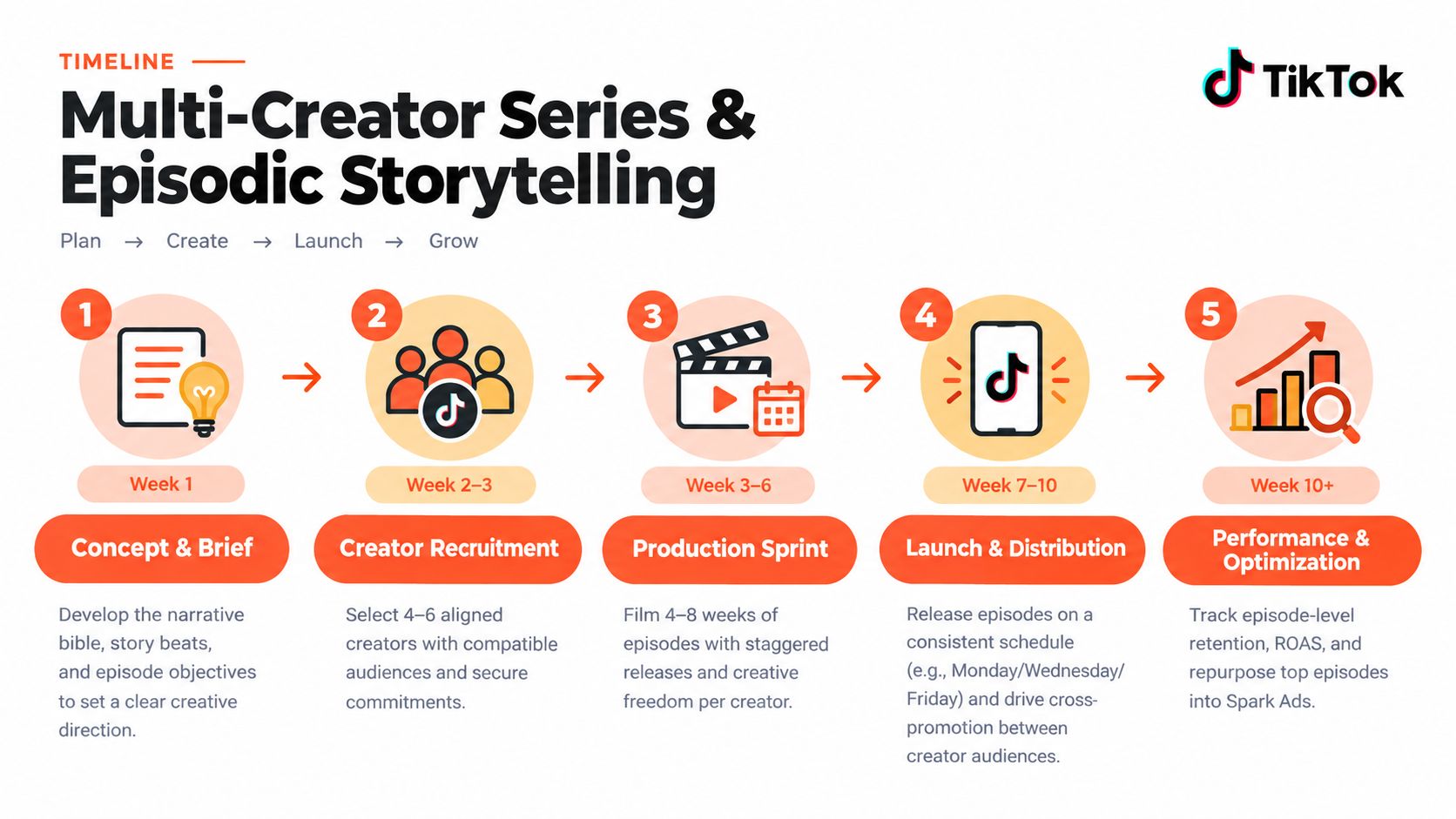
Review each episode before producing the next one. Strong comments can reveal the next question, while weak retention can show that the story is moving too slowly. A series should learn as it runs, not wait until the final compilation.
TikTok's scale makes cross-market storytelling possible, but localization still matters. Independent reporting cited by Exame's overview of TikTok's major markets describes substantial audiences across markets including the United States and Brazil. That creates room for shared concepts with locally relevant creators, language, references, and customer proof.
10-Point TikTok Trend Comparison
| Format / Campaign | Implementation Complexity 🔄 | Resource Requirements ⚡ | Expected Outcomes 📊 | Ideal Use Cases 💡 | Key Advantages ⭐ |
|---|---|---|---|---|---|
| Short-Form Product Unboxing & First Impressions | Low 🔄, minimal setup, quick briefs | Low ⚡, product samples, basic logistics | High engagement & CTR 📊, fast exposure, conversion signals | E‑commerce, DTC, app launches 💡 | Authentic validation & rapid scale ⭐ |
| Trend Participation with Brand Integration | Low–Medium 🔄, rapid turnaround, trend monitoring | Low ⚡, creative briefs, trend trackers | Viral awareness 📊, algorithmic uplift, broad reach | Awareness campaigns, youth-facing brands 💡 | Native feel & algorithm boost ⭐ |
| Creator-Led Product Comparison & Education Content | High 🔄, research, demos, training | Medium–High ⚡, demo access, knowledgeable creators | Consideration + evergreen value 📊, high intent leads | SaaS, fintech, health tech, complex products 💡 | Credibility & deeper education ⭐ |
| Influencer Duets & Stitch Collaborations | Low–Medium 🔄, coordination between creators | Low ⚡, paired creators, scheduling | Cross-audience reach & engagement 📊, network amplification | Collaborative promotions, reactions, challenges 💡 | Two-audience exposure & authenticity ⭐ |
| Behind-the-Scenes (BTS) & Creator Takeovers | Medium–High 🔄, access planning, compliance | Medium ⚡, facility access, approvals, production time | Brand trust & perception lift 📊, emotional resonance | Employer branding, transparency, founder stories 💡 | Humanizes brand; builds trust ⭐ |
| Creator-Generated UGC & Seeding | Low–Medium 🔄, seeding logistics, follow-ups | Medium ⚡, inventory, fulfillment, rights management | High-volume organic assets & awareness 📊, reusable UGC | DTC product seeding, scalable UGC programs 💡 | Authentic volume and cost-efficiency ⭐ |
| Creator-Hosted Live Streams & Q&A Sessions | High 🔄, live risk, moderation, timing | Medium–High ⚡, streaming tech, moderators, promos | Real-time engagement & immediate conversions 📊 | Product launches, live shopping, community building 💡 | Highest engagement & direct conversion potential ⭐ |
| Niche Community Challenges & Hashtag Campaigns | High 🔄, creative ideation, seeding strategy | Medium ⚡, creator cohort, paid seeding, moderation | Exponential organic reach & UGC volume 📊, viral participation | Community activation, purpose-driven campaigns 💡 | Mass participation & network effects ⭐ |
| Conversion-Focused Creator Testimonials & Case Studies | Medium 🔄, requires proven usage and time | Medium ⚡, longer timeline, metrics collection | Strong conversion & measurable ROAS 📊, high-intent outcomes | High-consideration products: SaaS, fintech, health 💡 | High trust + demonstrable results ⭐ |
| Multi-Creator Series & Episodic Storytelling | Very High 🔄, long planning, showrunning | High ⚡, sustained creator commitments, production | Sustained engagement & brand affinity 📊, repeat viewership | Long-term storytelling, product adoption journeys 💡 | Habit-forming engagement and narrative depth ⭐ |
Turn Trend Signals Into Repeatable Campaigns
The strongest strategy for trends on TikTok isn't copying whatever appears on the For You feed. It's building an operating loop that helps the team decide which format deserves attention, which creator can make it credible, and which signal proves that the work is doing its job.
Start by monitoring structures, not only sounds. Look for recurring hooks, response formats, product demonstrations, audience questions, creator personas, and visual patterns. A sound may disappear quickly, while a useful format, such as comparison, unboxing, or live Q&A, can be adapted after the original trend has cooled.
Then match the structure to the funnel objective. Use unboxing and trend participation for discovery when the product can be understood visually. Use comparisons and testimonials when the viewer needs confidence. Use Duets, Stitches, challenges, and series when the campaign needs community behavior. Use live sessions when real-time questions or immediate action are central to the offer.
TikTok is no longer only a passive entertainment channel. TikTok's 2026 forecast reports that 81% of users say the platform gives them a view into real-life product usage, according to Digital Applied's summary of TikTok marketing data. That makes proof-of-use, searchable captions, demonstrations, and creator explanations increasingly important alongside novelty.
Saturation changes the economics of trend participation. Metricool's 2026 study reported 72.10% more videos and nearly 140% more image or carousel posts year over year, while average views fell by 31.30%, reach declined by 28.73%, and interactions fell by 31.17%, as documented in Metricool's TikTok study. The lesson isn't to abandon trends. It's to stop treating trend participation as an automatic growth hack.
Use a practical launch loop:
- Monitor: Collect emerging formats and note their audience, cultural context, and likely lifespan.
- Match: Choose the structure that fits the objective, not the format with the largest visible volume.
- Brief: Give creators guardrails, proof points, disclosure requirements, and a clear action, but don't write their performance.
- Prepare: Secure usage rights, tracking links, promo codes, landing pages, and Spark Ads permissions before publication.
- Review: Check early signals quickly, including retention, comments, saves, clicks, and conversion quality.
- Amplify: Move promising organic assets into paid testing only after confirming that the creator voice and product message work together.
- Learn: Record which hooks, creator types, product angles, and audience segments produced useful outcomes.
A measurement layer such as Social Cloud can help teams manage creator selection, forecasting, per-placement attribution, compliance, reporting, and TikTok Spark Ads in one workflow. It also supports trend-native short-form testing across hooks, creator personas, and product angles. For teams exploring adjacent short-form formats, AIMVG's Reels category offers another reference point for creative development.
The best trend campaign isn't the one that looks most like the feed on launch day. It's the one that teaches the team which creator-native structure can reliably produce the audience and outcome the business needs, even after the original meme has passed.
Social Cloud helps growth teams plan, run, and measure creator campaigns across TikTok and other major video platforms, with creator selection, tracking links, promo codes, usage rights, compliance, reporting, and Spark Ads support. Visit Social Cloud to turn trend testing into a measurable creator campaign.